Quick Answer
Organic pasta sticks together most often because the cooking water is too small in volume, the pasta is overcooked, or it wasn't stirred right after adding it to the pot. Fix these three things and your pasta will separate into perfect strands.
Why Organic Pasta Is Prone to Sticking
Organic pasta, especially fresh or artisanal shapes like pappardelle, has a rougher surface than mass-produced pasta. That texture helps sauce cling, but it also makes the strands more likely to grab onto each other if conditions aren't right. The good news: a few simple adjustments to your cooking method solve the problem completely.
The Biggest Mistake: Not Enough Water
Pasta releases starch as it cooks. In a small pot, the starch concentration gets high fast, creating a gluey environment that makes noodles stick. Use at least 4 quarts of water per pound of pasta. That's a full large pot, not a medium saucepan.
Diagnosis & Fix: Why Your Organic Pasta Sticks
- Symptom: Pasta clumps together in the pot or on the plate, forming a solid mass instead of separate strands or pieces.
- Likely Cause: Too little water (under 4 quarts per pound), no salt in the water, or skipping the initial stir. Overcooking also releases excess starch that acts like glue. Always use a large pot with plenty of water and stir immediately after adding the pasta.
- Corrective Action: Next time, bring a full large pot of water to a rolling boil, add 1-2 tablespoons of salt, drop in the pasta, and stir vigorously for the first 30 seconds. Cook to al dente according to package time, then drain immediately. Do not rinse — the starch left on the surface helps sauce cling. If you're not saucing right away, toss with a drizzle of olive oil. Set a timer for 1 minute less than the package says, then taste-test. Al dente pasta is less sticky.
- When to Stop or Choose Another Option: If your pasta is already a sticky clump, rinse it briefly under warm water to remove surface starch, then toss with oil and reheat in sauce. For future batches, consider a bronze-die extruded pasta like Giadzy organic pappardelle — the rough texture holds sauce better and is less prone to clumping when cooked correctly. Once pasta is overcooked and mushy, there is no fix. Start fresh with a new batch and follow the steps above.
Pasta That Performs
-
Organic Pappardelle Pasta: The long ribbons of our Giadzy organic pappardelle are wider than fettuccine or tagliatelle, invented in Tuscany. Wide ribbons have more surface area that can stick together if the water volume is too low, so using a big pot is extra important for this shape.
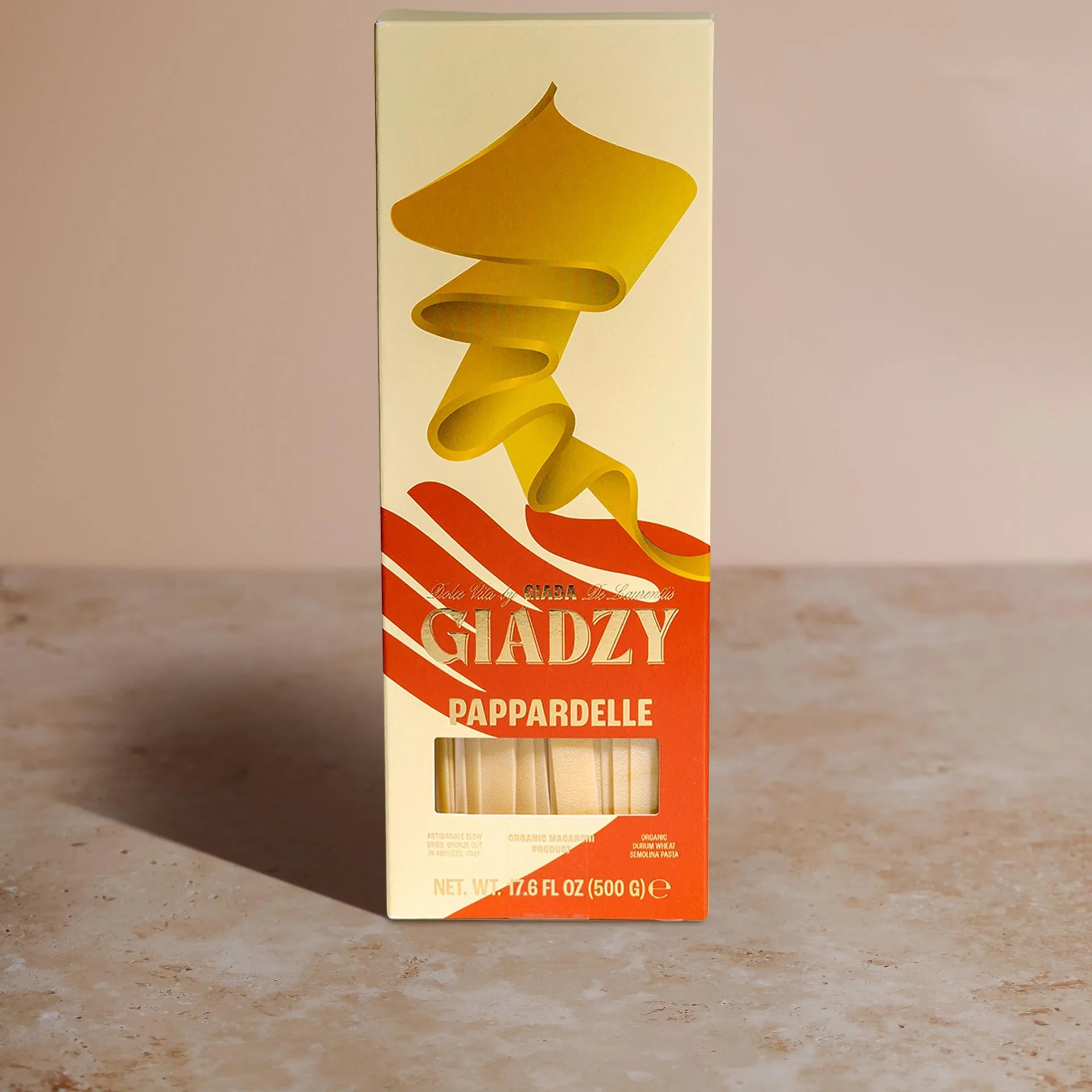
Organic Pappardelle Pasta