Quick Answer
Sterling silver tarnishes fast because sulfur compounds in the air, moisture, and everyday products like perfume and lotion react with the silver. To slow it down, store your necklace in an airtight bag with an anti-tarnish strip and keep it dry and away from chemicals.
Why Tarnish Happens Faster Than You Expect
Sterling silver is 92.5% silver mixed with other metals, usually copper. That copper makes the alloy stronger but also more reactive. When sulfur compounds in the air—think pollution, eggs, or wool—touch the surface, they form a dark silver sulfide layer. The more exposure, the faster the tarnish.
Your own habits speed it up. Wearing your necklace while swimming, showering, or working out exposes it to chlorine, salt, and sweat. Perfume, hairspray, and lotion often contain sulfur-like ingredients that cling to the metal. Even storing it loosely in a drawer lets humid air circulate around the piece.
The good news: tarnish is surface-level and reversible. With the right routine, you can keep your necklace looking bright for months and remove the dark layer when it appears.
What Makes Some Necklaces Tarnish Quicker
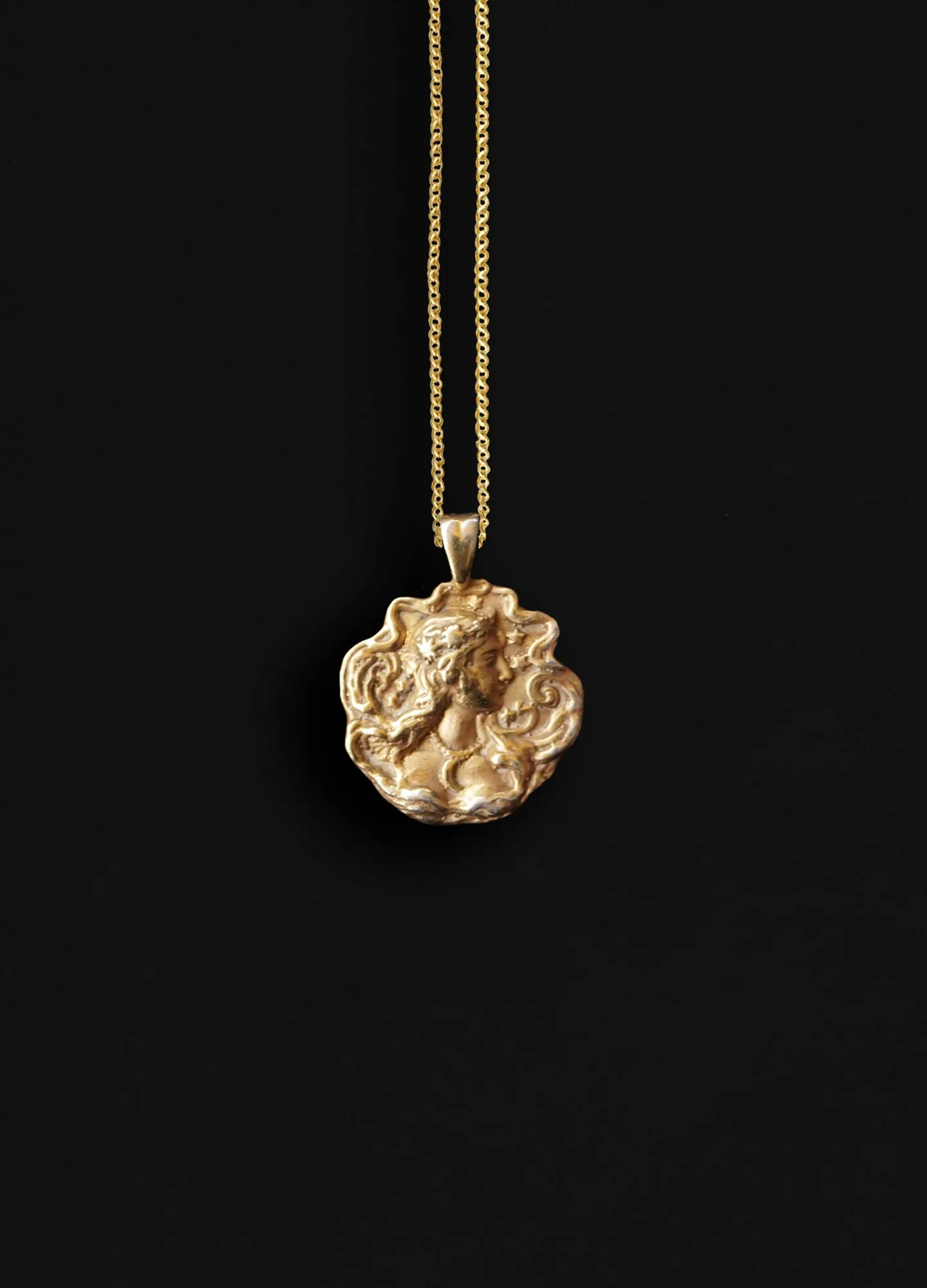
Not all sterling silver behaves the same. Pieces with intricate details—like the Astrea Goddess 18k Gold Vermeil Necklace—have more surface area and tiny crevices where moisture and sulfur can settle. The gold vermeil coating adds a protective layer, but that layer can wear off over time, exposing the silver underneath.
Body chemistry plays a role too. Some people's sweat is more acidic or contains more sulfur, which accelerates tarnishing. If you notice your necklace darkens faster on certain days or during stress, your skin's pH may be the reason.
Understanding these factors helps you target your care routine. You can't change your body chemistry, but you can control how and when you wear the piece.
The Trade-off: Polishing vs. Prevention
Polishing removes tarnish but also removes a tiny layer of metal each time. Over-polishing can wear down fine details and, for vermeil pieces, strip away the gold layer faster. Prevention is gentler and keeps your necklace looking new longer.
That doesn't mean you should never polish. A light, infrequent polish is fine. The key is to make prevention your default and reach for the cloth only when you see dullness.
If you own a vermeil piece, extra caution is worth it. The gold coating is thin, so harsh chemical dips or abrasive cloths can damage it. Stick to a soft cloth and avoid any product labeled 'dip cleaner.'
Diagnose and Fix Your Tarnish Problem
- Symptom: Your necklace shows dark patches, a dull film, or a slight yellow-brown tint, especially around clasps and textured areas.
- Likely Cause: Exposure to sulfur compounds, moisture, or cosmetic products—or the natural wear of a vermeil coating that has thinned over time. Check if you wore it during swimming, exercise, or after applying perfume or lotion recently.
- Corrective Action: Gently wipe the necklace with a soft, lint-free cloth (use a polishing cloth for sterling silver, but avoid abrasive types on vermeil). For stubborn tarnish, use a mild soap and water solution, rinse, and dry thoroughly. Do not use chemical dips on vermeil. After cleaning, store the necklace in an airtight bag with an anti-tarnish strip.
- When to Stop or Choose Another Option: If the tarnish doesn't lift after gentle cleaning, or if you see flaking or a reddish tint (which indicates the base metal is showing), stop polishing and consult a professional jeweler. For vermeil pieces, consider re-plating when the gold layer wears thin.
A Sterling Silver Piece Worth Protecting
-
Astrea Goddess 18k Gold Vermeil Necklace: The Astrea Goddess 18k Gold Vermeil Necklace is crafted in luxurious gold vermeil and made to order in Kefalonia Island. The gold vermeil layer adds a protective coating, but it needs gentle care to avoid wearing away and exposing the silver base.
Astrea Goddess 18k Gold Vermeil Necklace