Quick answer
Most dogs ignore interactive toys because the toy moves too fast, too slow, or unpredictably for their play style—or because the toy is too difficult to activate. Start by matching the toy’s motion to your dog’s natural chase or pounce instinct, then reward even small interactions. If your dog still disengages, simplify the challenge or switch to a toy with a clearer trigger, like a thumb-released slingshot that launches consistently.
Match the toy’s motion to your dog’s play style
Dogs fall into rough play categories: chasers, herders, pouncers, and retrievers. A toy that flies in a straight line may excite a retriever but bore a pouncer. Watch how your dog stalks, freezes, or lunges during play, then choose a toy that mirrors that rhythm. For example, a slingshot-style toy that launches up to 100 feet suits dogs who love long-distance chase; a plush toy that squats and squeaks when batted suits dogs who prefer close-range pouncing.
Check the difficulty level and your timing
Interactive toys often fail because they’re either too hard to trigger or too easy to predict. If your dog must bite a specific spot to make a sound, show them once by squeezing it yourself, then reward any nose-touch or paw-tap. If the toy fires too fast, slow your launch. If it’s too slow, add a quick flick. End the session while your dog still wants more—stop after three or four successful engages, not when they walk away.
Rule out environment and health factors
A dog that suddenly ignores a favorite toy may be distracted by noise, other pets, or a new routine. Try a quiet room with fewer visual distractions. If disinterest lasts more than a few days, or your dog avoids movement altogether, consult your vet—pain or fatigue can look like toy boredom. For everyday slumps, rotate toys weekly and keep sessions under five minutes so novelty stays high.
Interactive toy troubleshooting FAQ
Why does my dog ignore a toy that used to be exciting?
Novelty fades fast. Rotate toys every few days and reintroduce the old one after a week. If the toy has a squeaker, check that it still works—a silent toy often gets ignored. Try a three-toy rotation: one chase, one plush, one puzzle.
How do I teach my dog to play with an interactive toy?
Start with the toy stationary. Let your dog sniff and paw it, then reward any contact with a treat or praise. Gradually add movement—a short roll, then a gentle toss. For slingshot toys, launch only after your dog shows interest in the loaded pouch. Keep sessions under two minutes until your dog initiates.
What if my dog only chases but never brings the toy back?
That’s normal for many dogs. Don’t force a retrieve. Instead, use two identical toys: throw one, and when your dog picks it up, show the second toy to trigger a return. Or switch to a toy you can relaunch from where you stand, like a slingshot-style launcher. Chase is the reward—retrieving is a separate skill.
Are interactive toys safe for aggressive chewers?
Not all are. Check the material: ballistic nylon and reinforced seams resist tearing, but plush toys with squeakers are not chew toys. Supervise play and remove any toy once it shows rips or exposed squeakers. Match durability to chewing style, not just play style.
Product facts to consider
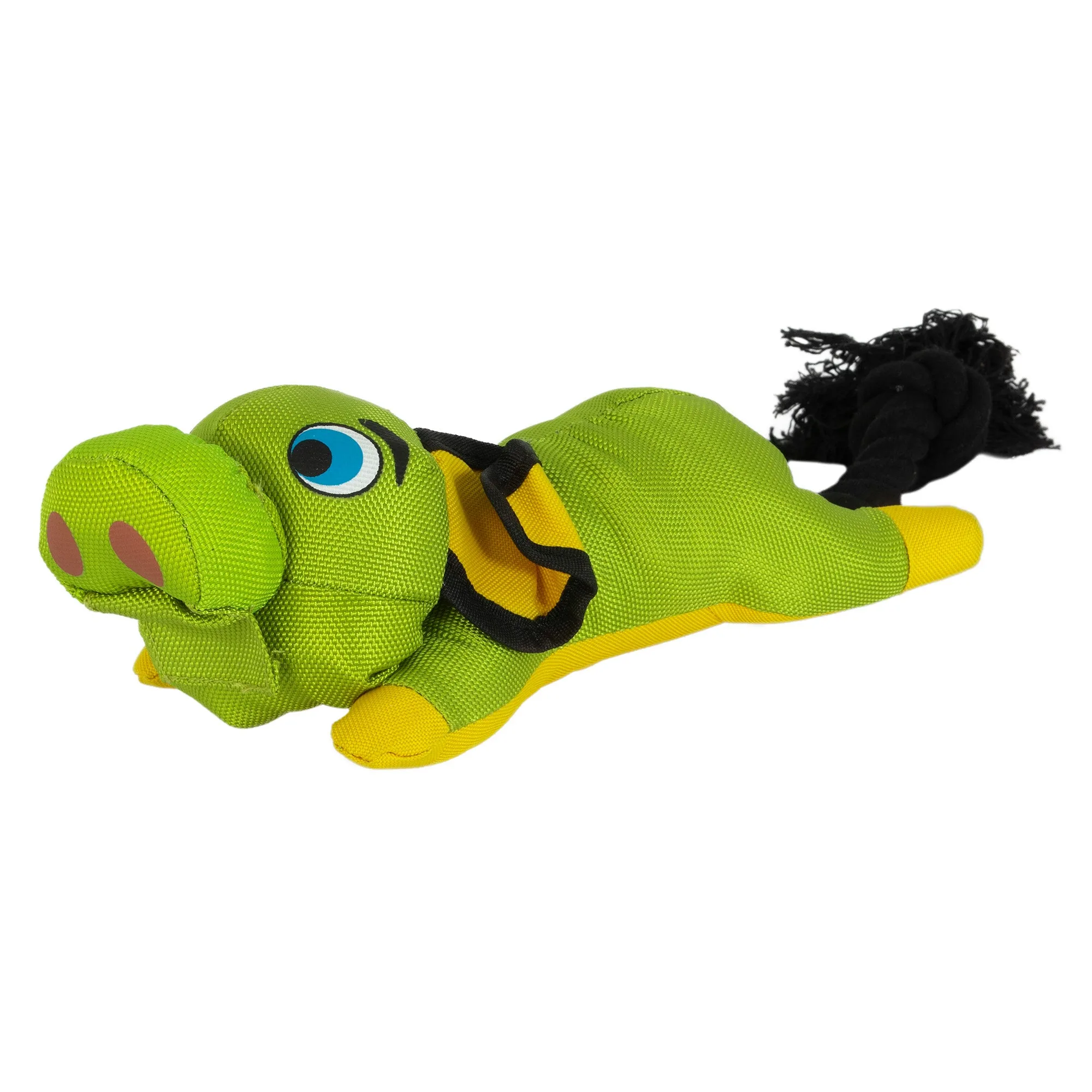
- Hyper Pet Flying Pig Interactive Dog Toy: Hyper Pet Flying Pig Interactive Dog Toy is a thumb-released, slingshot-style toy that can launch up to 100 feet and floats in water. The consistent thumb release removes the need for perfect throwing form, so you can focus on timing and direction—key when a dog loses interest because the toy moves erratically.
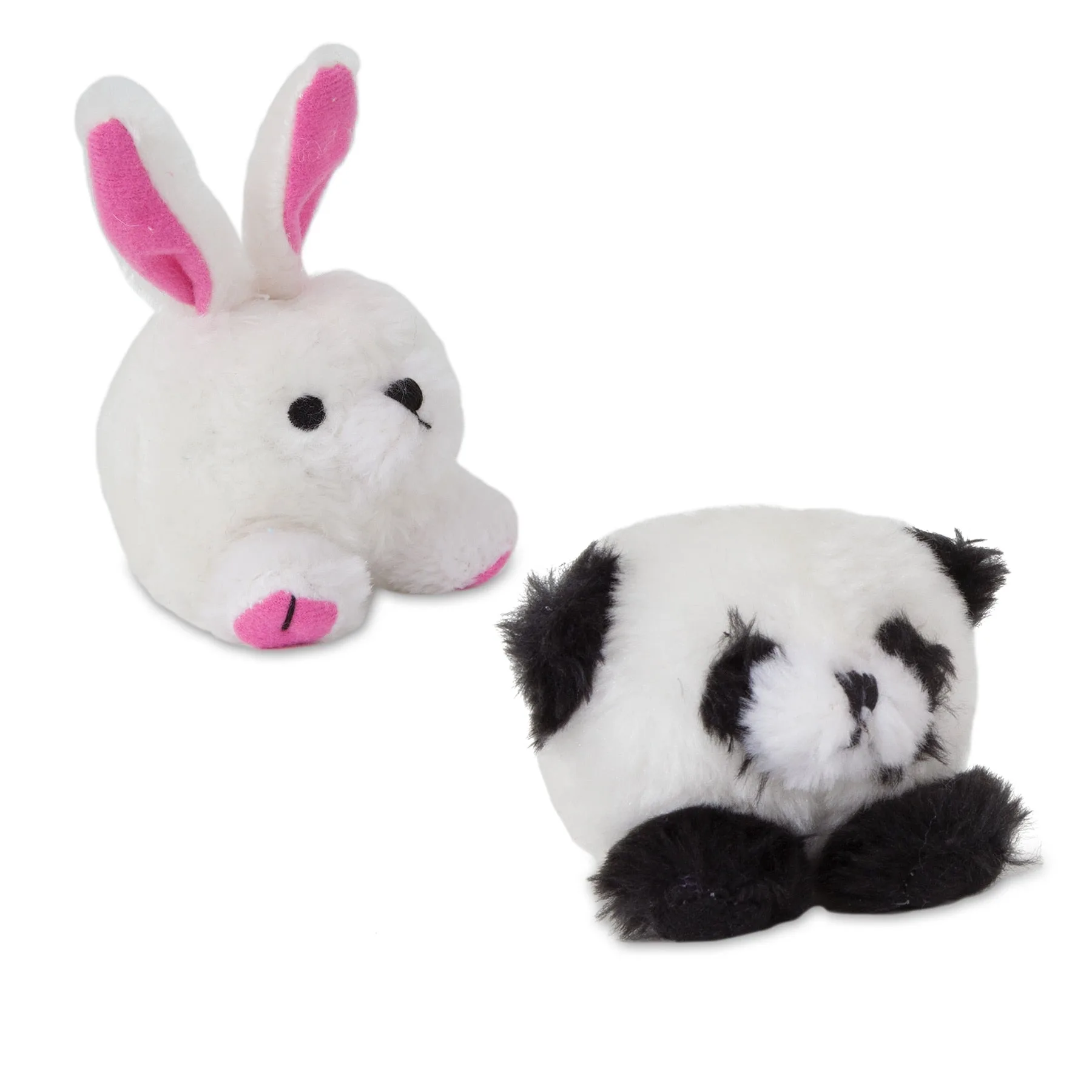
- Zoobilee Small Dog & Puppy Mini Squatters: Zoobilee Small Dog & Puppy Mini Squatters are pint-sized, ball-shaped plush toys with a squeaker, sold in packs of two. For small dogs or puppies who feel overwhelmed by fast-flying toys, these soft, close-range pouncers let you reward gentle engagement without a steep chase.