Quick answer
If your dog refuses to wear a harness, start by checking the fit, then gradually desensitize with treats and short sessions. If the harness still causes stress or discomfort, consider a different style like the Ruffwear Flagline.
Why a harness might feel wrong
A harness that's too tight or too loose can cause rubbing, chafing, or a feeling of being trapped. Dogs are also sensitive to new sensations around their chest and shoulders, so a sudden introduction can trigger avoidance.
Some dogs have had a bad experience—maybe they were pulled or restrained—and now associate the harness with that memory. Understanding the root cause is the first step to solving it.
The role of harness design
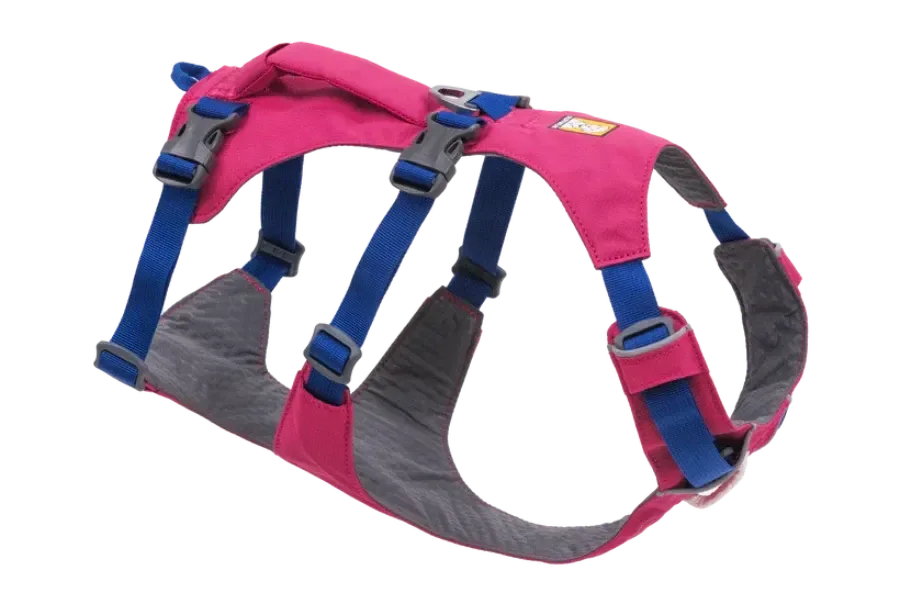
Not all harnesses fit the same. A minimal, lightweight design like the Ruffwear Flagline can be easier for dogs to accept because it doesn't add bulk or restrict movement. It also offers high adjustability, so you can fine-tune the fit to your dog's unique shape.
If your dog has mobility challenges or a sensitive chest, a harness with a load-dispersing panel and a handle can provide support without pressure points.
Diagnose and fix the refusal
- Symptom: Your dog freezes, backs away, or tries to escape when the harness comes out. Observe when the refusal happens—at sight of the harness, during fitting, or once it's on.
- Likely cause: Check the fit: a harness that's too tight can pinch, while one that's too loose can chafe or shift. Also consider a past negative association or simply the novelty of the sensation. If the harness leaves marks or the dog can slip out, it's a fit problem, not a behavior problem.
- Corrective action: Start by letting your dog sniff the harness and reward calm behavior. Then do short, positive sessions: put it on for a few seconds, treat, and remove. Gradually increase the time. Pair the harness with walks or play so it becomes a cue for fun. If your dog still refuses after a week of consistent training, try a different harness style.
- When to stop or switch: If your dog shows signs of extreme stress (panting, trembling, or hiding) or if the harness rubs despite adjustments, stop forcing it. Consider a harness with a different fit or design, like the Ruffwear Flagline, which offers high adjustability and a minimal profile. A harness that fits well and feels comfortable is essential for your dog's long-term acceptance.
Product spotlight
-
Ruffwear Flagline Harness: The Flagline Harness is a fast, light, and comfortable body harness with a nimble design that keeps dogs in their flow. It includes a handle and load-dispersing chest/belly panel, and is highly adjustable with easy on/off. Its minimal, adjustable design reduces the chances of rubbing or discomfort, which can help a dog that's sensitive to wearing a harness.
Ruffwear Flagline Harness