Quick answer
A dull coat is most often a nutrition or grooming issue, not a breed trait. Check your dog's food for a named animal protein and omega-rich fat, brush away dead undercoat weekly, and rule out medical causes with your vet before switching foods. If the coat is dry, brittle, and slow to regrow, book a vet visit first.
Symptom: the coat looks flat, dry, or faded
Dullness rarely appears alone. Run your hand along the back: a healthy coat feels smooth and slightly oily, while a dull one feels dry, rough, or powdery. Look for dandruff, a greasy patch near the tail, or a coat that looks lighter than it did a few months ago. Note whether the change is all over or patchy, and whether the skin underneath is red, flaky, or itchy. That pattern is the clue that separates a grooming problem from a dietary one.
Likely cause 1: the diet lacks a named protein and fat source
Coat condition is built from the inside. Dogs need digestible animal protein for hair growth and omega fatty acids for the skin barrier that keeps hair supple. If the label lists generic 'meat meal' or splits fat across several unnamed oils, you cannot tell what the dog is actually getting. A formula that names its protein, such as white fish or salmon, makes it easier to judge whether the diet is doing the work.
Likely cause 2: grooming strips or buries the coat
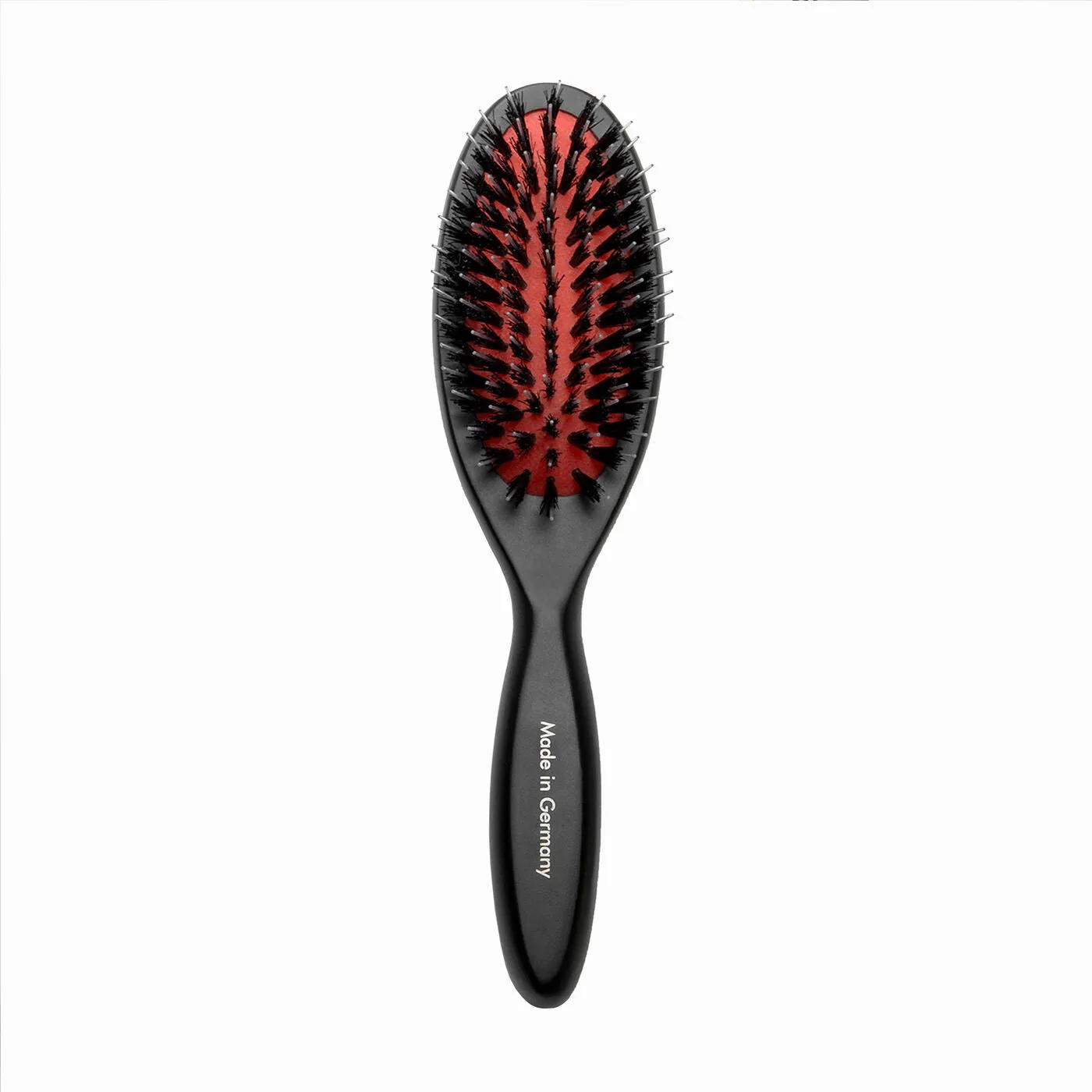
Over-bathing removes the natural oils that give hair its sheen, and under-brushing leaves dead undercoat that traps dull, dusty hair against the skin. Bathe no more than every four to six weeks with a dog-specific shampoo, and brush two to three times a week with a tool matched to the coat type. Rinse thoroughly, because shampoo residue dries into a chalky film that reads as dullness.
Likely cause 3: health or environment
Parasites, thyroid problems, allergies, and seasonal dry air all dull a coat. If the skin is inflamed, the dog is scratching, or the coat changed suddenly without a diet or routine change, that is a medical question, not a grooming one. Cold weather, indoor heating, and hard water also dry hair out, so a humidifier or a final rinse with filtered water can help in winter.
Corrective action: a four-week reset
Pick one change at a time so you can tell what worked. Week one, switch to a food with a named protein and a clear fat source, transitioning over seven days. Weeks two to four, brush every other day and bathe once with a gentle shampoo. Photograph the coat in the same light each week. Most nutritional coat changes need six to eight weeks to show, so do not judge a new food after ten days.
Dull coat diagnosis: symptom, cause, action, stop point
- Dry, flaky coat with no itching: Most often a fat or grooming gap. Add an omega-rich named-protein food and bathe less often with a gentle shampoo. Recheck in six weeks. If the flakes clear, stay the course.
- Greasy coat near the tail with a stale smell: Usually over-grooming or a skin condition rather than diet. Do not add oil on top of a greasy coat; have your vet check the skin first. Stop home fixes and book a vet visit if the grease returns within days of bathing.
- Sudden dullness with weight or appetite change: This points to a medical cause such as thyroid or parasite issues, not food. A diet switch will not fix it and can delay treatment. See your vet before changing food.
- Dullness only in winter: Dry indoor air and less outdoor time are the likely drivers. Add a humidifier, keep brushing, and consider a coat-supportive food through the season. Expect improvement as humidity returns; reassess in spring.
Products that fit a coat-recovery plan
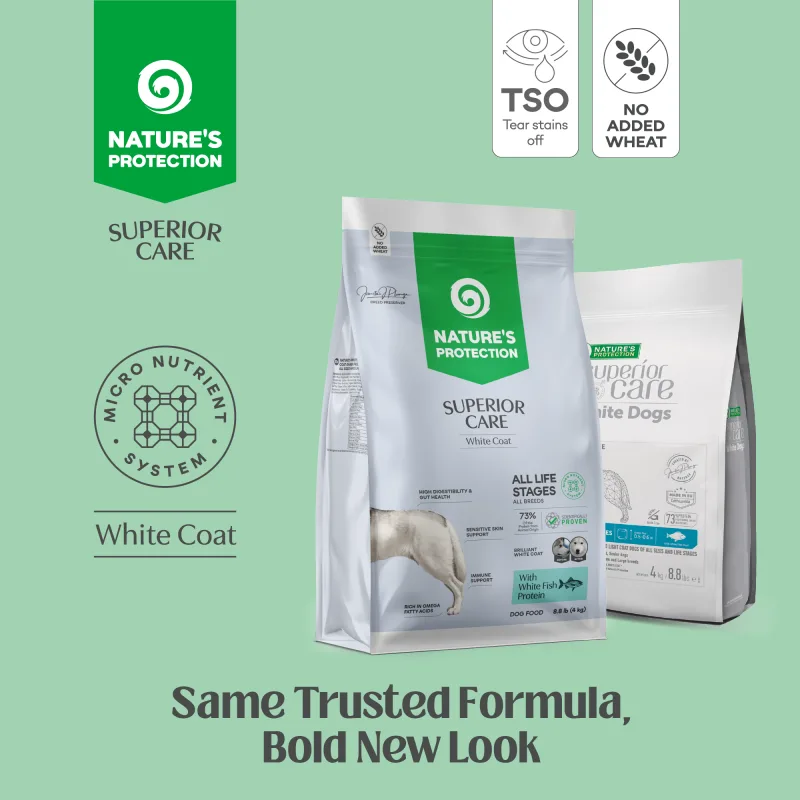
- All Life Stages Dogs Food for Light Coat All Breeds with White Fish: Grain-free white fish formula for all breeds and life stages with white and light-colored coats, positioned to support skin and coat and help reduce brown tear stains. A named fish protein gives you a clear omega source to evaluate, and the light-coat positioning matters if tear staining is part of the dullness you are seeing.
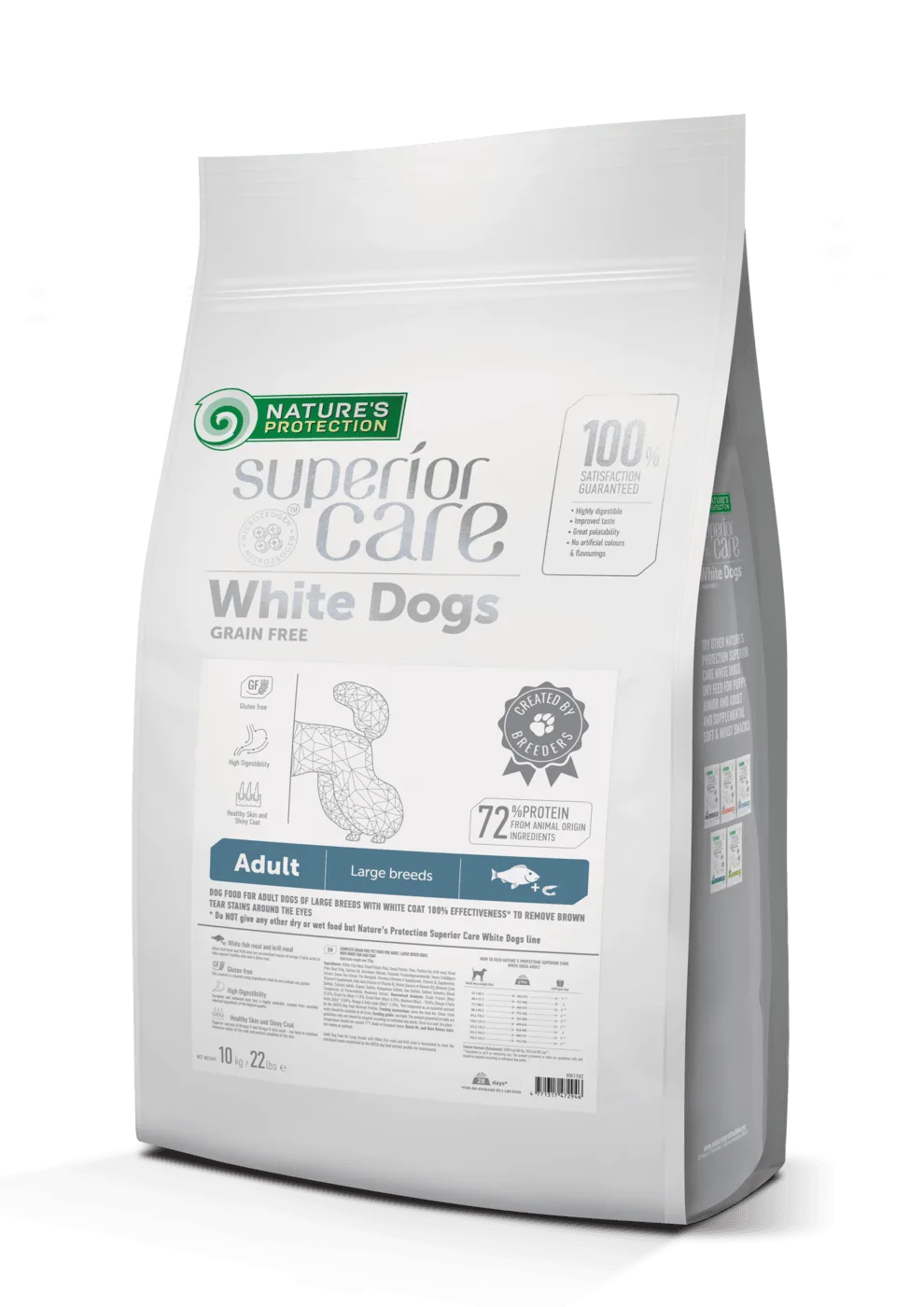
- Adult Dogs Food for Light Coat Large Breeds with White Fish: White fish formula for adult large breeds with white and light-colored coats, positioned to support weight control, skin health, and coat maintenance. Large breeds carry more coat, so a formula that also addresses weight control avoids adding joint load while you fix the shine.
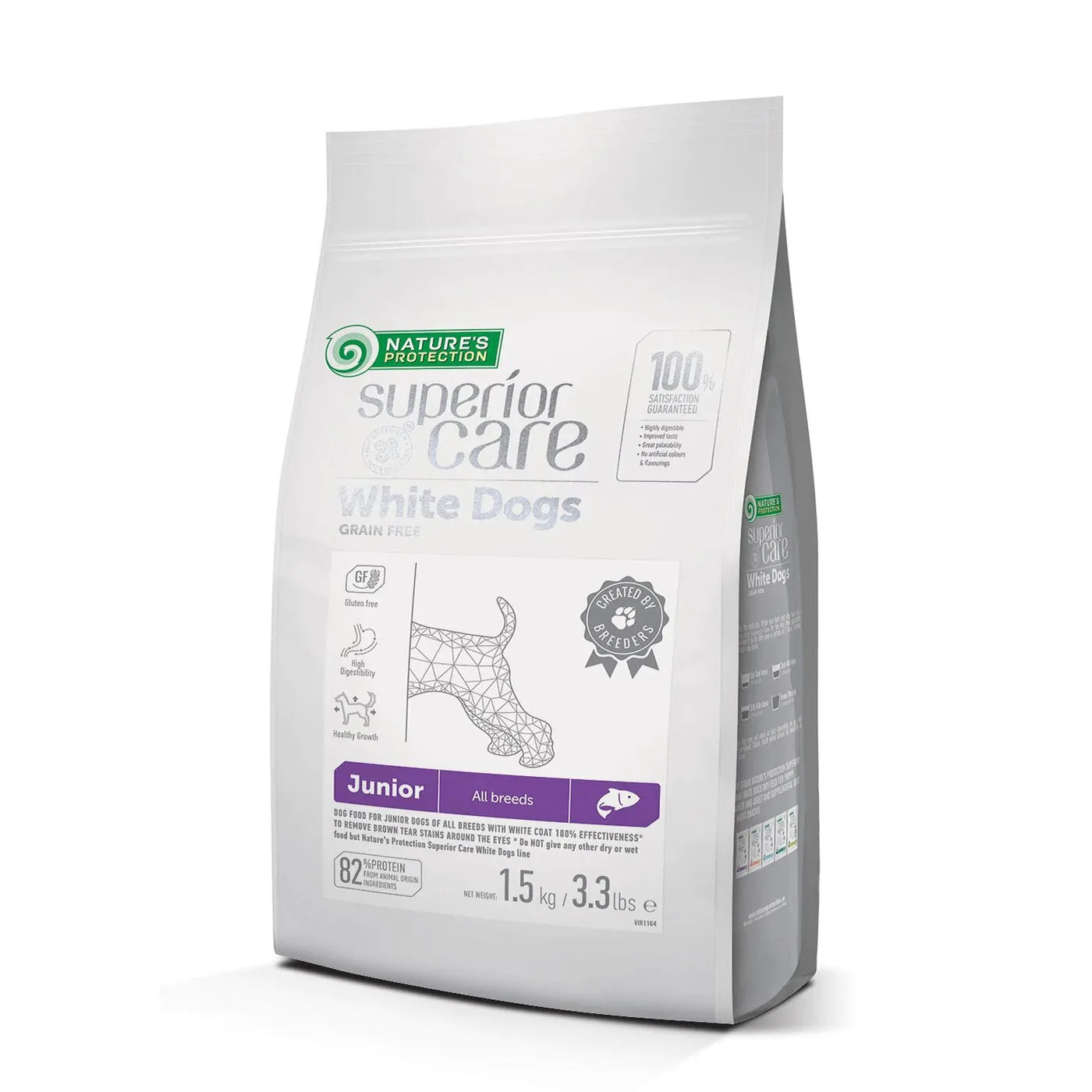
- Junior Dogs Food for Light Coat All Breeds with Salmon: Grain-free salmon formula for junior dogs of all breeds with white and light-colored coats, rich in omega acids for skin and coat. Puppies and juniors are still building coat, so an omega-rich salmon formula supports growth rather than just maintenance.