Quick Answer
No, Montessori does not mean owning fewer toys. It means offering the right toys for your child's current stage, keeping them accessible, and rotating them so play stays focused. A smaller, well-chosen collection often works better than a crowded toy bin, but the goal is quality and fit, not a number.
Montessori
If you have ever felt guilty about the size of your toy shelf, you have probably met the Montessori fewer toys myth. It sounds simple: real Montessori homes are minimal, so more toys must be worse. But that is not what the method actually asks of you.
Montessori is about matching toys to your child's development and giving them room to concentrate. That can look like a small shelf, a toy rotation, or a few larger sets that grow with your child. In this myth check, we separate the claims from the practical choices you can make at home.
Myth: Montessori Means Fewer Toys
The claim is that a true Montessori home has only a handful of toys, so anything more is clutter. The verdict: false. Montessori does not set a toy count. It asks that toys be developmentally appropriate, accessible, and presented in a way your child can use independently.
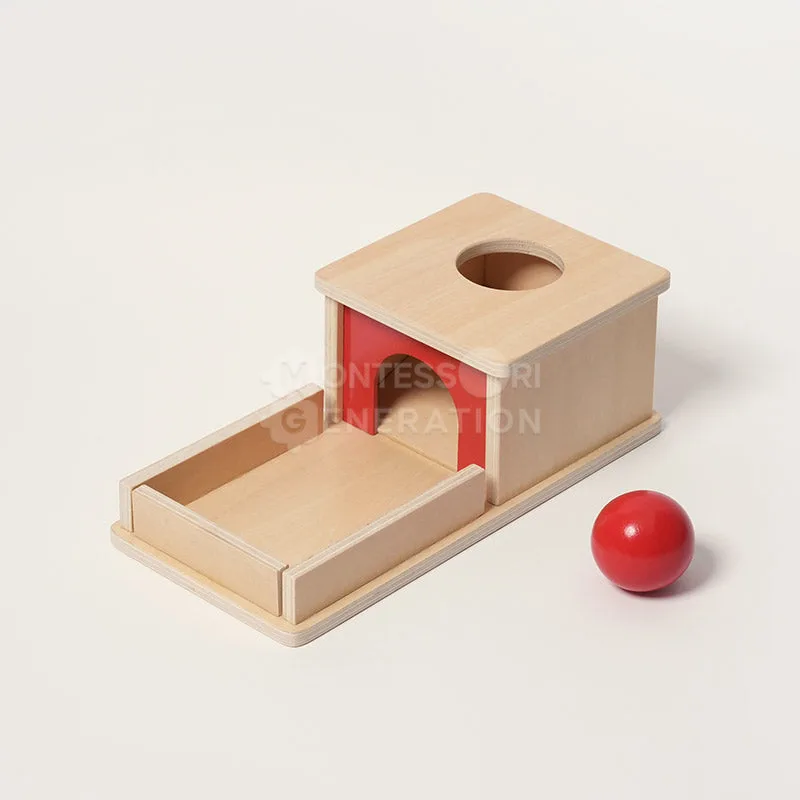
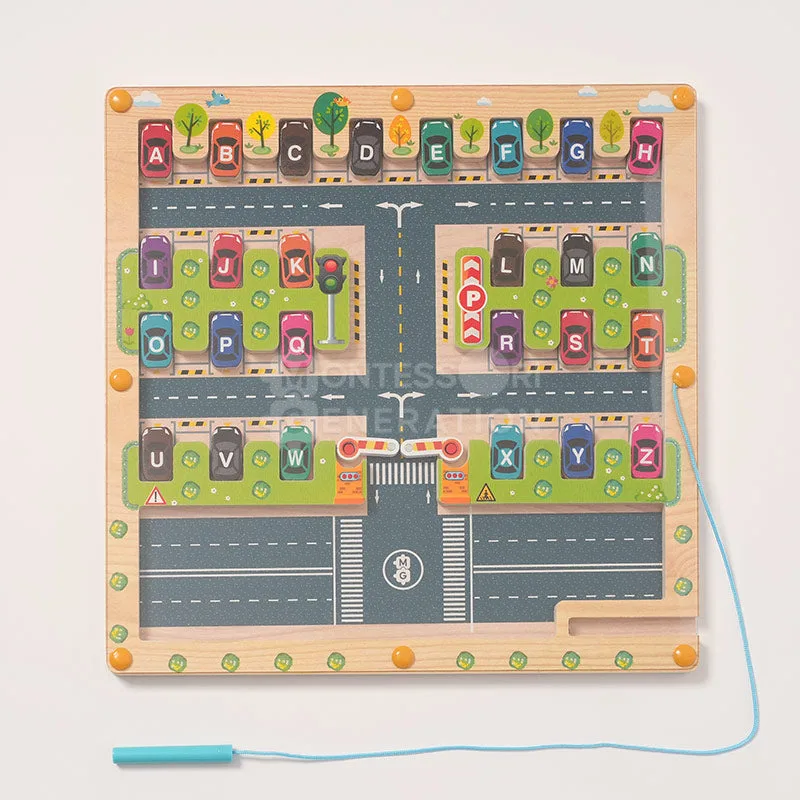
What actually matters is fit. A 6-month-old and a 3-year-old need very different materials, and a single toy rarely covers both. The Montessori Object Permanence Box is designed for ages 6+ months, while the Montessori Alphabet Parking Maze is designed for ages 3+. Keeping both is not a failure of minimalism; it is matching the shelf to the child.
- Check the age guidance on each toy before deciding it belongs on the shelf.
- Keep only what your child can currently use independently.
Myth: Toy Rotation Is Mandatory
Toy rotation is often described as a rule: hide most toys, show a few, swap weekly. The verdict: rotation is a useful tool, not a requirement. It works because it reduces visual overload and brings back novelty, but there is no fixed schedule that makes it Montessori.
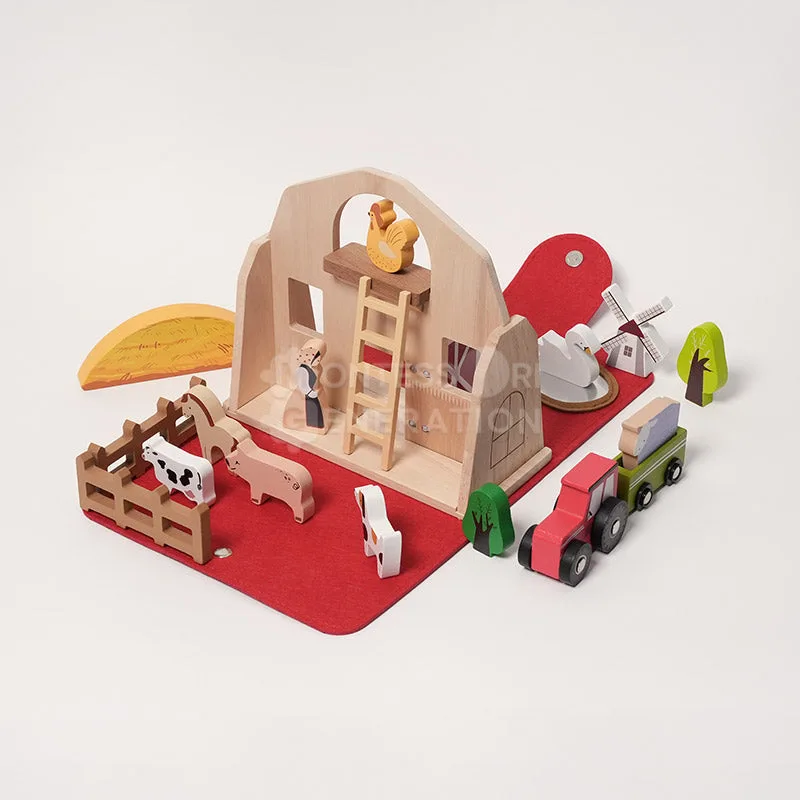
If rotation feels like a chore, start smaller. Put a few out-of-season or outgrown items away and leave the rest. A toy like the Montessori Traveling Farm is a whole farmstead in a bag, so it can stay out for longer stretches without crowding the shelf. The point is to make play easier to start, not to run a storage system.
- Rotate when your child seems bored or overwhelmed, not on a strict calendar.
- Store rotated toys where your child cannot see them, so the return feels new.
Myth: Minimalism and Montessori Toys Are the Same Thing
Minimalism is a design choice about how much you own. Montessori is a developmental approach about what your child can do. They overlap when a calm space helps focus, but they are not the same goal.
You can follow Montessori with a full shelf of wooden toys if each one has a purpose. The Montessori Little Lion Stacker, for example, combines a wooden base, six stacking rings, and a lion topper in one compact toy. That is one item doing several jobs, which is more useful than five single-purpose toys that all do the same thing.
- Ask whether a toy adds a new skill or repeats one you already cover.
- Choose toys that can be used in more than one way as your child grows.
Myth: Montessori Toys Automatically Help Development
A wooden toy with the Montessori name does not teach anything by itself. The verdict: the toy is only half the equation. Development comes from your child using it, repeating an action, and solving a small problem, often with an adult nearby but not in control.
The Montessori Xmas Ferris Wheel is a good example. It comes with a wooden wheel and five Christmas-themed figurines, so the learning happens when a child places, moves, and narrates the figures. A toy that sits on a shelf untouched is not doing developmental work, no matter how well it is made.
- Sit nearby and let your child lead the play instead of directing it.
- Watch for repetition; that is usually where the learning is happening.
Myth: More Toys Always Mean Less Focus
The claim that a big toy collection ruins concentration is too broad. The verdict: too many choices at once can make it harder to settle, but the fix is presentation, not deprivation. A crowded bin with no order is different from a shelf with a few clear options.
Try putting out a small selection and keeping the rest tidy and out of sight. The Montessori Advent Calendar is a good seasonal example: it is a hangable wooden calendar with 25 ornaments, and it works best when it has a clear place and a clear routine. Structure, not scarcity, is what helps focus.
- Use open baskets or a low shelf so your child can see what is available.
- Reset the shelf at the end of the day so tomorrow starts clear.
Myth Check Verdicts
- Montessori means fewer toys: False. Montessori asks for developmentally appropriate toys, not a specific number. A 6-month-old and a 3-year-old need different materials, and keeping both is normal. Verdict: keep what fits your child's stage.
- Toy rotation is mandatory: False. Rotation is a helpful tool for reducing overload, but there is no required schedule. Rotate when it helps your child start playing, not because a rule says so. Verdict: use rotation as a tool, not a rule.
- Minimalism and Montessori are the same: False. Minimalism is about how much you own; Montessori is about what your child can do. A compact multi-use toy can do more for development than an empty shelf. Verdict: prioritize purpose over a toy count.
- Montessori toys automatically help development: False. The toy is only half the equation. Development happens through repeated use, problem-solving, and adult support that stays hands-off. Verdict: the child's play does the work, not the label.
- More toys always mean less focus: Partly true. Too many choices at once can make it harder to settle, but the fix is presentation and routine, not removing most toys. Verdict: structure the shelf before shrinking it.
What the Catalog Actually Tells Us
- Montessori Object Permanence Box: Age: 6+ months. Contains: (1) wooden box, (1) wooden ball. Size: 9.8" x 4.7" x 3.5". Material: high-quality eco-friendly wood, non-toxic paint. A single-purpose infant toy that earns its shelf space because it matches a specific developmental stage rather than adding clutter.
- Montessori Alphabet Parking Maze: Age: 3+. Contains: (1) magnetic maze board, (1) attached magnetic pen. Size: 11.6" x 11.6" x 0.6". Material: high-quality eco-friendly wood, non-toxic paint. A flat, self-contained board that stores easily and gives older children a focused screen-free activity.
- Montessori Traveling Farm: Age: 2+. Contains: (1) transformable farmstead bag, (16) wooden figurines. Size: 9.1" x 4.1" x 8.0". Material: 100% safe, eco-friendly wood, soft but sturdy felt. One set with many pieces can replace several smaller toys, which supports a calmer shelf without reducing play options.
The Montessori fewer toys myth turns a useful idea into a guilt trip. Focus on matching toys to your child's stage, keeping the shelf clear enough to invite play, and rotating only when it helps. Fewer toys can mean better play, but it is the fit and the routine that make the difference, not the number.