Quick answer
Foil deck tarnishing is almost always a handling and storage problem, not a manufacturing defect. Foil is a thin metallic layer that dulls when it is repeatedly touched, exposed to humid air, or pressed against abrasive surfaces. Keep foil decks sealed or sleeved, handle them with clean dry hands, and store them somewhere stable and dry, and the foil will stay bright for years.
What tarnishing actually looks like on a foil deck
True tarnishing is a dull, cloudy, or slightly discolored film over the metallic area. It usually starts at the edges of the foil pattern or on the back design where fingers rest most often. On a gilded deck, the same dulling shows up first along the gilded edge, because that edge rubs against the tuckbox every time the deck goes in or out.
This is different from scratches, which are sharp bright lines, and from print wear, which removes ink and leaves the paper underneath visible. Knowing which one you are looking at matters, because each has a different fix. If the foil looks cloudy but the pattern is intact, it is surface dulling and it is often reversible or at least stoppable. If the foil is physically missing, that is wear, and no cleaning will bring it back.
The three causes that do most of the damage
Handling is the biggest one. Skin oils, sweat, and even the natural moisture on clean fingers leave a thin residue that builds up on foil and dulls it. Shuffling a foil deck overhand, riffle shuffling, and fanning all press that residue into the metallic layer. The more a foil deck is played with, the faster this happens.
Humidity is the second. Foil and the paper underneath expand and contract at different rates when moisture changes. Over time that movement can cloud the foil and, in bad cases, lift it slightly at the edges. A damp drawer, a basement, or a room with big temperature swings is worse for a foil deck than almost anything else.
Friction and abrasion are the third. Foil decks stored loose in a box, stacked against other decks, or carried in a pocket rub against whatever is next to them. That mechanical wear dulls the surface and eventually removes it. The tuckbox itself is a culprit too, because sliding a gilded deck in and out scrapes the gilding.
How to store foil stamped decks so the foil lasts
Store foil decks upright, not stacked flat under weight, and keep them in their tuckbox or in a snug deck sleeve. A sleeve protects the tuckbox and the gilded edges from rubbing against other decks. If you keep several decks together, leave a little space between them so they are not pressing on each other.
Pick a spot with stable temperature and low humidity. A closet shelf inside a climate-controlled room is better than a garage, attic, or basement. Avoid direct sunlight, which can fade printed colors even when it does not affect the foil itself. If you live somewhere very humid, a sealed storage bin with a small silica packet is a reasonable extra step, but do not let the deck sit directly against the packet.
For decks you want to keep mint, leave them sealed. For decks you want to display, a frame or acrylic case keeps hands off the foil entirely. The tradeoff is that you cannot shuffle or play with a displayed deck without taking it out, so decide early whether a given deck is a player or a keeper.
Handling rules that slow foil wear
Wash and dry your hands before handling a foil deck, and avoid lotion, sunscreen, or anything oily. Handle the deck over a clean, soft surface so a dropped card does not slide across a hard table. When you shuffle, prefer a gentle overhand shuffle or a table riffle rather than a tight riffle that bends the cards.
Do not clean foil with alcohol, acetone, or household glass cleaner. Those solvents can strip the foil or the coating around it. If you need to remove light surface residue, a dry microfiber cloth used very gently is the safest option, and even then only on the foil area. If the cloth does not help, stop rather than rubbing harder.
For gilded decks, open the tuckbox by pressing the sides rather than pulling the deck out at an angle. That single habit reduces edge wear more than most collectors expect.
Diagnose your foil deck before you act
- Symptom: cloudy film on the foil, pattern still intact: This is surface dulling from skin oils and moisture. Stop handling the deck with bare hands, wipe very gently with a dry microfiber cloth, and move the deck to a drier, stable spot. If the cloudiness fades, the deck is fine. If it does not, do not rub harder; treat it as permanent and store it as a keeper.
- Symptom: foil looks lifted or bubbled at the edges: This points to humidity swings and paper movement under the foil. Move the deck to a stable, low-humidity location and stop storing it near heaters, windows, or exterior walls. Lifting is not reversible. Once it starts, the goal shifts from repair to preventing it from spreading.
- Symptom: gilded edges look dull or silver in spots: That is edge abrasion from sliding the deck in and out of the tuckbox and from decks rubbing together in storage. Open the box by pressing the sides, and give each deck its own sleeve. If the gilding is already worn through to the paper, no care step will restore it. Keep the deck for display rather than play.
- Symptom: sharp bright lines or missing foil patches: This is physical wear or a scratch, not tarnish. No cleaning, humidity control, or storage change will repair it. Stop trying to fix it. Switch to protective storage and treat the deck as a display piece.
Foil and gilding in the current catalog
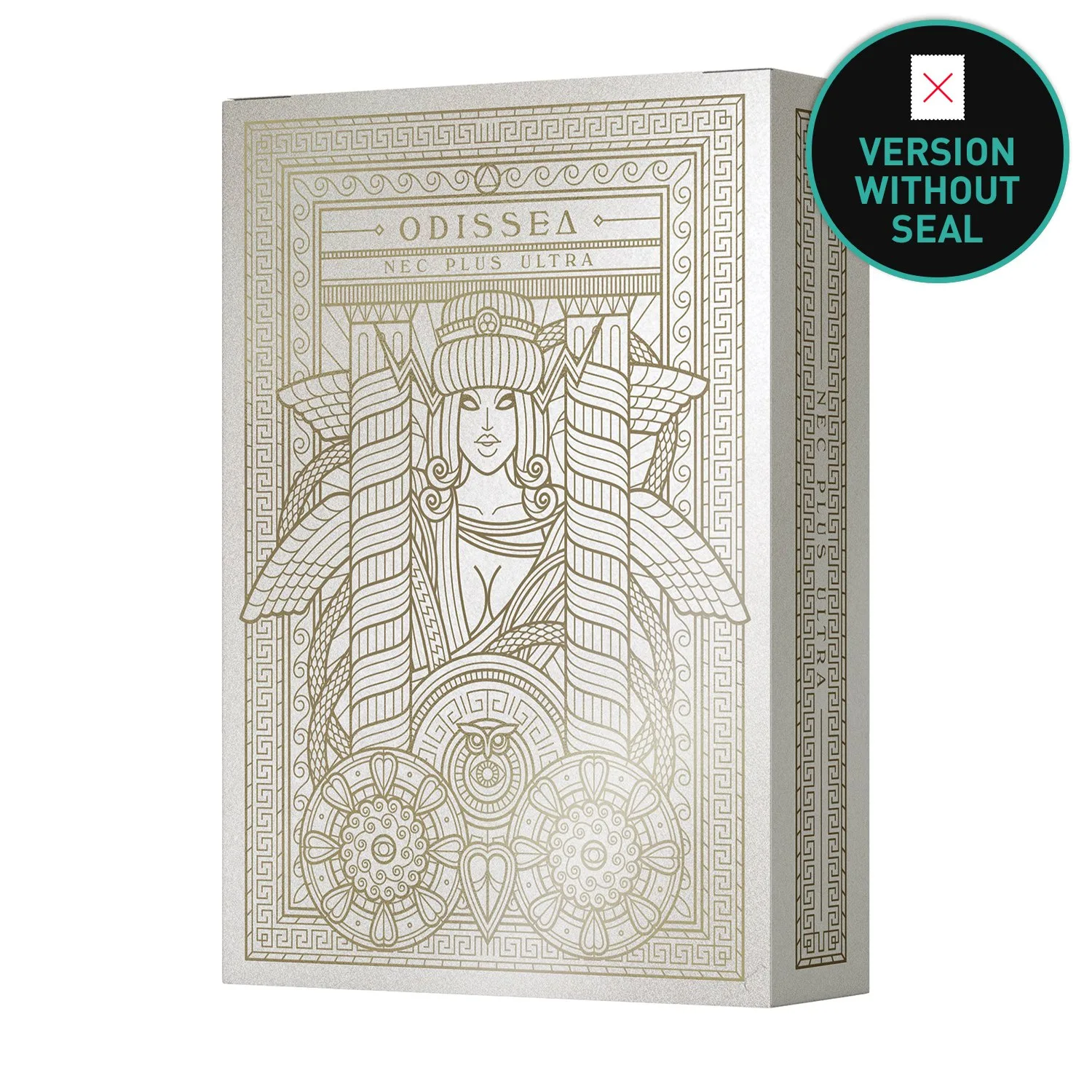
- Nec Plus Ultra No Seal: Nec Plus Ultra No Seal is the final super-limited edition of the Odissea series, with a pearlescent paper tuckbox, foil, and metallic inks on cards printed by USPCC and Gamblers Warehouse; this unsealed edition is not gilded. Because it is unsealed and not gilded, the main wear risk is the tuckbox and card faces rather than gilded edges. Store it in a sleeve and handle the tuckbox by the sides to keep the pearlescent finish and foil clean.
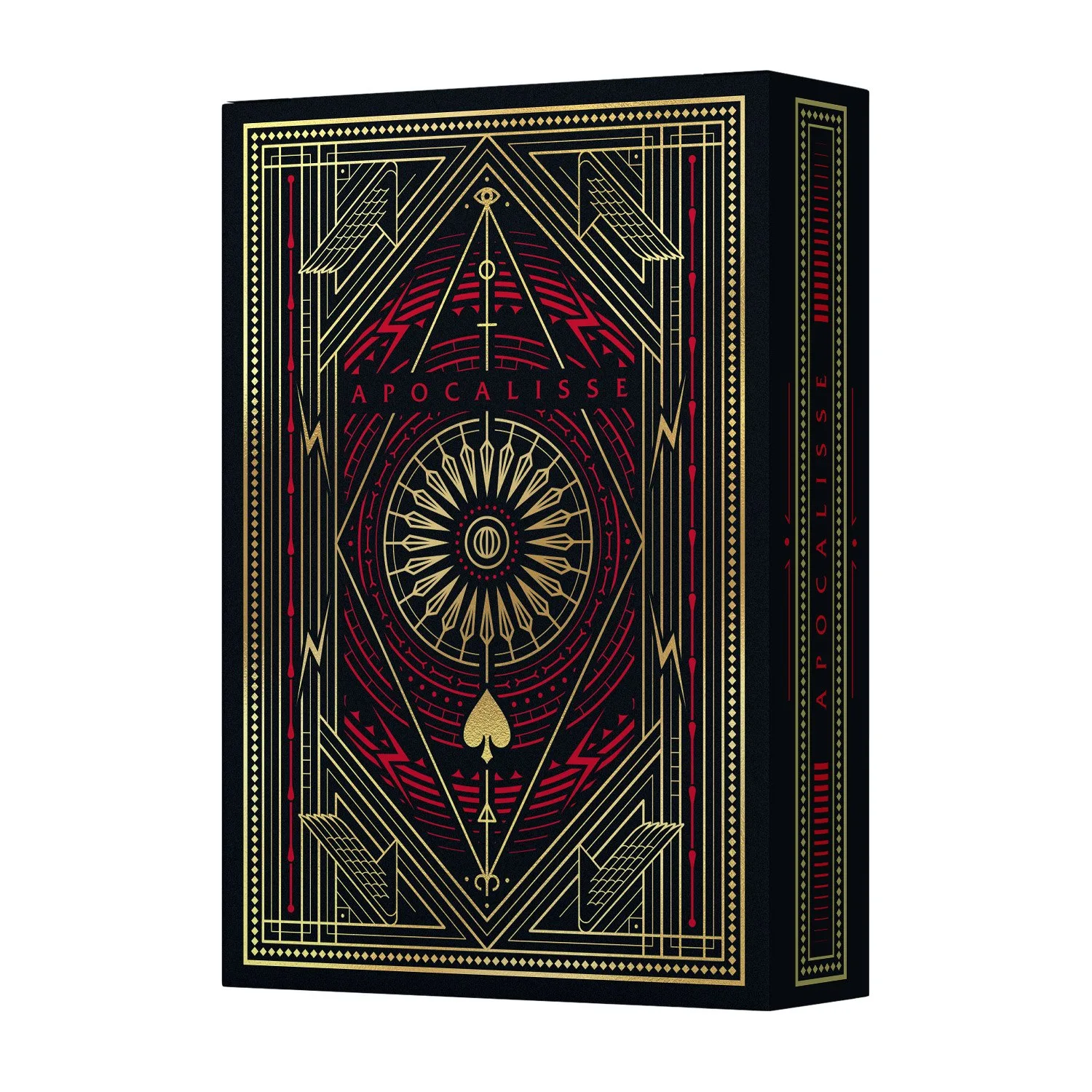
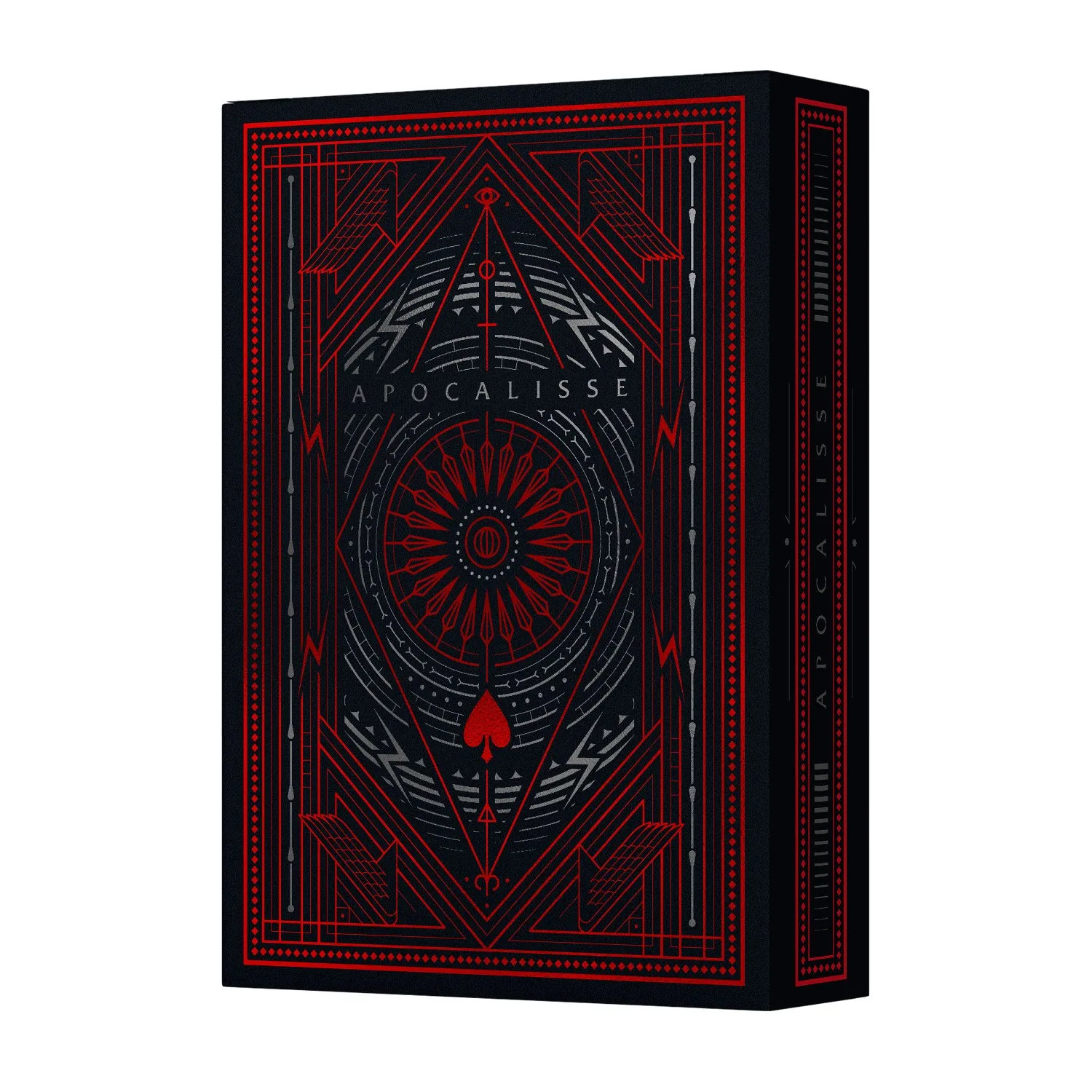
- Hell’s Dragon: Hell's Dragon is a super-limited, numbered gilded version of the Apocalisse main deck, with red gilding, full-bleed foiled backs, two layers of foil and embossing on the tuckbox, a custom seal, metallic inks on card faces, and four jokers, printed by Cartamundi; around 200 decks were made. Red gilding and full-bleed foiled backs give this deck two large foil surfaces to protect. Keep it in the tuckbox or a sleeve, avoid stacking it under other decks, and open the box by pressing the sides so the gilding does not scrape.
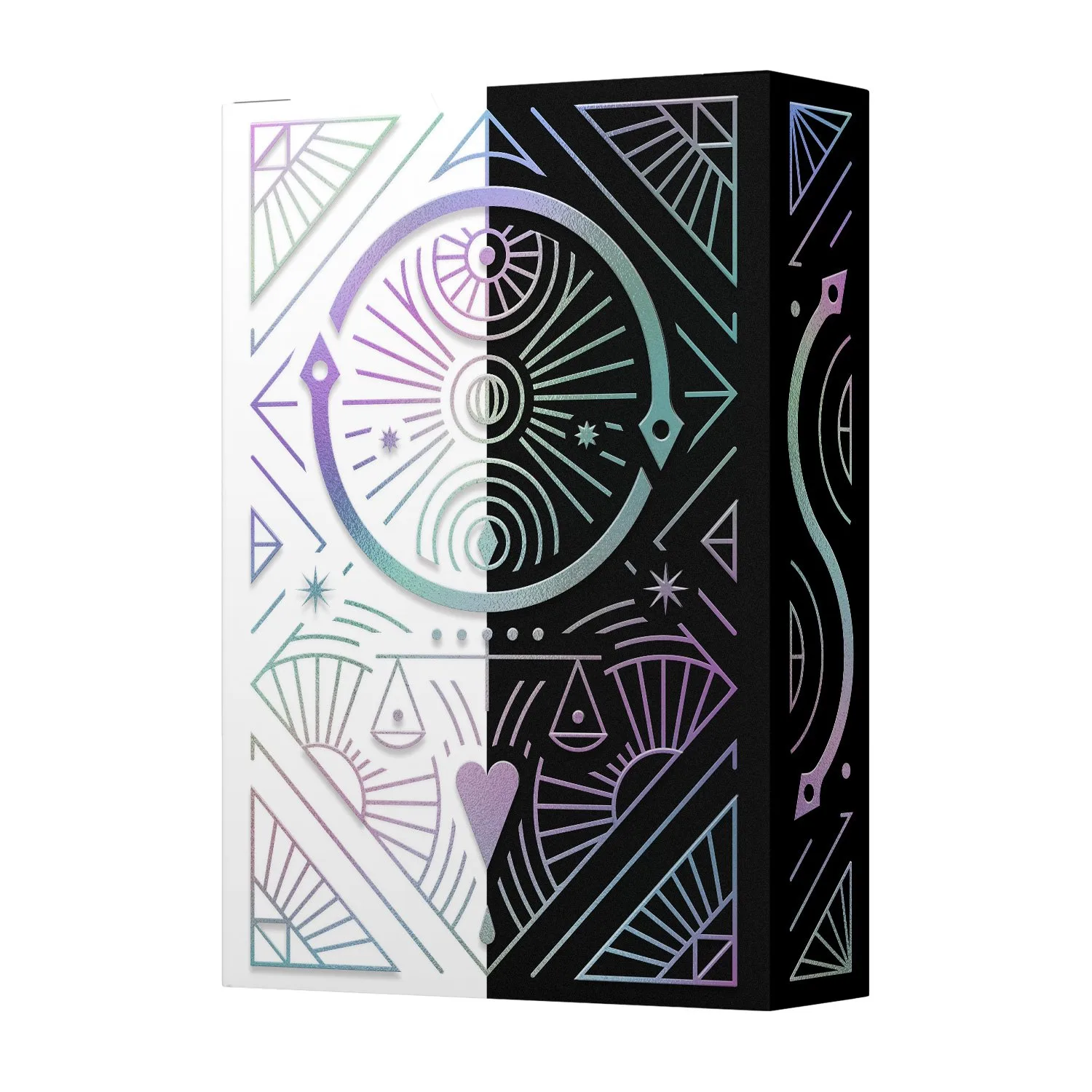
- Dualism Twilight: Dualism Twilight is the main deck of Dualism Chroma, with holographic cold foil on the front and back of the cards, holographic gilding, and a premium tuckbox printed by Boschiero&Newton with paper, inside and outside foil, and embossing; it is sealed and numbered, around 700 made. Holographic foil shows surface dulling and fingerprints more clearly than solid-color foil, so clean, dry hands matter more here. The sealed and numbered format also makes it a natural keeper deck, which means storage quality matters more than shuffle durability.