Quick answer
Frozen dog food thaws unevenly when the outside warms faster than the center, usually because of package shape, freezer placement, or thawing at room temperature. Thaw it in the refrigerator on a rimmed plate, in cold water with the pouch sealed, or in a microwave only if you break up and stir the food partway through. If any part still feels icy or firm after 24 to 48 hours in the fridge, move it to a cold-water bath or break it into smaller portions rather than leaving it out longer.
Symptom: soft edges, hard center
The most common sign of uneven thawing is a pouch or bag that feels soft and pliable on the outside but still has a firm, icy core when you squeeze it. If you portion it at that point, some dogs get a cold, chunky meal while others get a mushy one. The texture difference is not just cosmetic: a partially frozen center can make the food harder to mix evenly, which matters if you are using it as a topper or transitioning a dog onto a new recipe.
Likely cause: package shape and freezer position
Flat pouches and meatball bags freeze in layers. The thin edges thaw first because they have more surface area exposed to air, while the thicker center stays frozen longer. Where you store the package matters too. Food pressed against the freezer wall or stacked under heavier items freezes harder and thaws more slowly than food on a middle shelf with airflow around it. If you freeze multiple pouches together, the ones in the middle of the stack will always lag behind.
Corrective action: thaw in the fridge first
The safest default is to move the portion you plan to feed from the freezer to the refrigerator 24 to 48 hours ahead. Place it on a rimmed plate or inside a sealed container so any juices stay contained. If the center is still firm after 48 hours, do not leave it on the counter to finish. Instead, submerge the sealed pouch in a bowl of cold water for 20 to 30 minutes, checking every 10 minutes. Cold water thaws faster than air but stays below the temperature range where bacteria multiply quickly. Once thawed, keep the food in the refrigerator and use it within the time frame on the package.
- Break up large frozen blocks into smaller portions before thawing.
- Keep thawing food on the bottom shelf of the fridge to avoid drips onto other items.
- Never thaw frozen dog food on the counter or in warm water.
- If you use a microwave, use the defrost setting, stir halfway, and feed immediately.
Serving temperature and texture checks
Aim to serve freshly crafted food at refrigerator temperature or slightly cooler, not ice cold and not hot. If the food feels cold to the touch but is fully pliable, it is ready. If it is still stiff in the middle, give it another 10 to 15 minutes in cold water or break it into smaller pieces and return it to the fridge. For dogs that are picky about texture, let the portion sit in the bowl for 5 to 10 minutes after removing it from the fridge so the chill mellows. Do not leave it out longer than that, especially in warm weather.
When to stop and choose another option
If you have followed the fridge and cold-water steps and the food still has hard icy chunks after 48 hours, stop trying to thaw that whole portion. Break it into smaller meal-sized pieces and thaw only what you need. If uneven thawing keeps happening with the same package shape, switch to a format that freezes in thinner portions, such as individual pouches or smaller bags, so the center does not lag behind. If your freezer runs very cold or you stack food tightly, rotate packages to the front and leave space between them.
Diagnose your thawing problem
- Still icy in the center after 24 hours in the fridge: The package is too thick or was stored against the freezer wall. Move it to a middle shelf, break it into smaller portions, or finish thawing in a sealed bag in cold water for 20 to 30 minutes. If the center is still hard after 48 hours, stop and portion smaller.
- Outside is mushy but inside is cold: The food thawed too fast at room temperature or in warm water. Discard any portion that sat out more than two hours, and switch to refrigerator or cold-water thawing for the next meal. Never refreeze food that thawed warm.
- Thaws unevenly every time with the same package: The format may be too thick for your freezer setup. Try a thinner pouch or pre-portioned meatball bag, and leave space between packages so cold air circulates. If uneven thawing continues, change the package shape rather than the thaw method.
Products that thaw more evenly
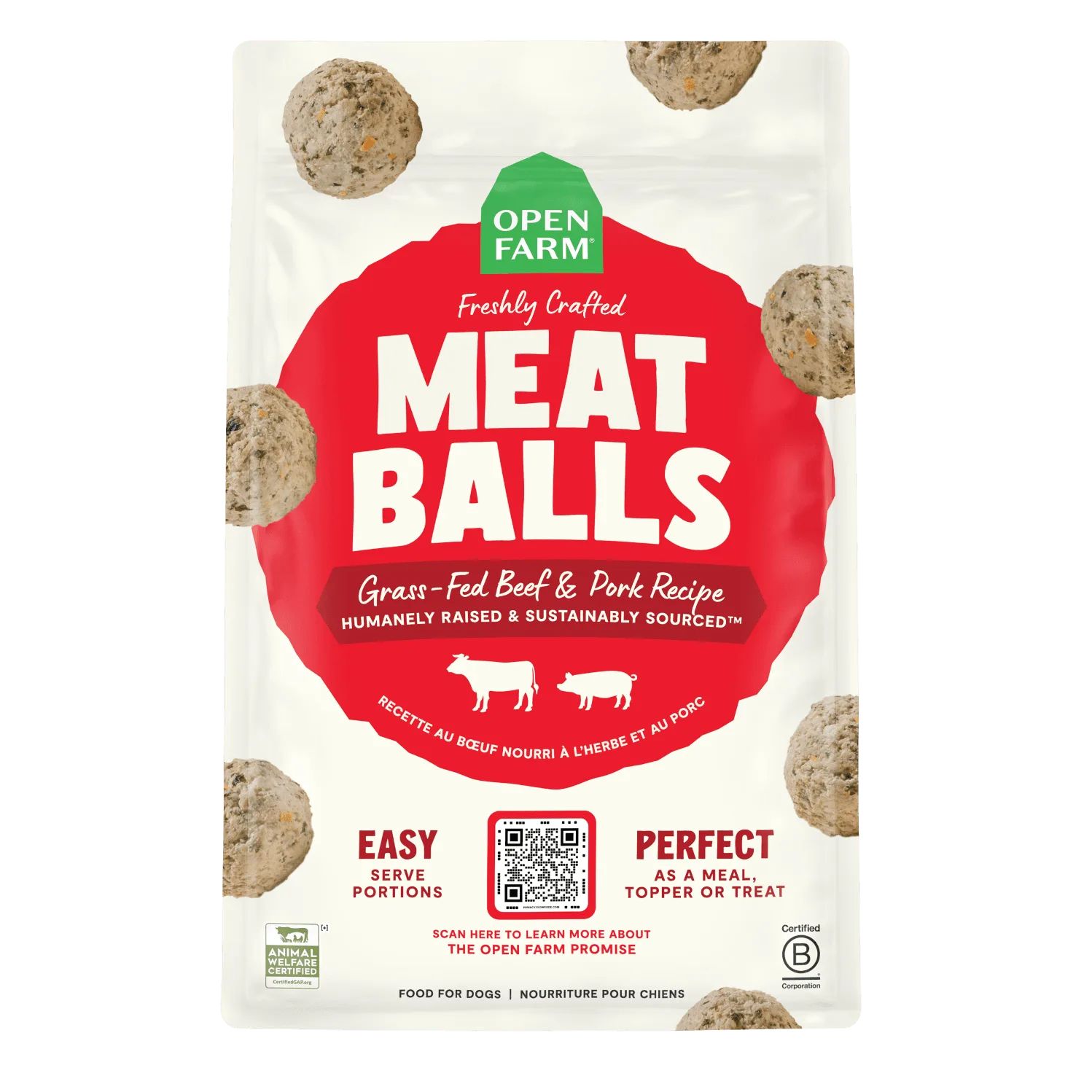
- Grass-Fed Beef & Pork Freshly Crafted Meatballs for Dogs: Grass-Fed Beef & Pork Freshly Crafted Meatballs for Dogs ships frozen in a 13.5 lb box with 6 x 36 oz bags, and the meatballs are easy to portion as a meal, topper, or treat. Smaller meatballs and separate bags thaw faster and more evenly than one large block, so you can pull just what you need and reduce the chance of a hard center.
- Goodbowl Grass-Fed Beef Freshly Crafted Recipe: Goodbowl Grass-Fed Beef Freshly Crafted Recipe ships frozen in pouches and is described as gently cooked with humanely raised beef, beef liver, and non-GMO veggies, grains, and superfoods. Pouches lie flat and thaw more predictably in the refrigerator, which makes them a practical choice if you want to portion by pouch rather than break up a larger bag.