Quick answer
Handmade dolls cost more because they're made by people who are paid fairly, in small batches, with materials that take time to source and assemble. The price reflects real labor, not markup. When you buy from a fair trade doll brand, you're paying for ethical doll making — and that's a feature, not a flaw.
Myth: Handmade dolls are overpriced versions of mass-produced toys
A mass-produced doll might cost less at checkout, but that price often hides underpaid labor and rushed production. Handmade dolls are made by artisan partners who are paid a living wage, often in small workshops rather than factories. The cost difference isn't a luxury tax — it's the real cost of ethical production. For example, Hazel Village's Red Linen Bonnet for Dolls is handmade by artisan partners in Cambodia. That means every bonnet supports skilled work, not assembly-line speed.
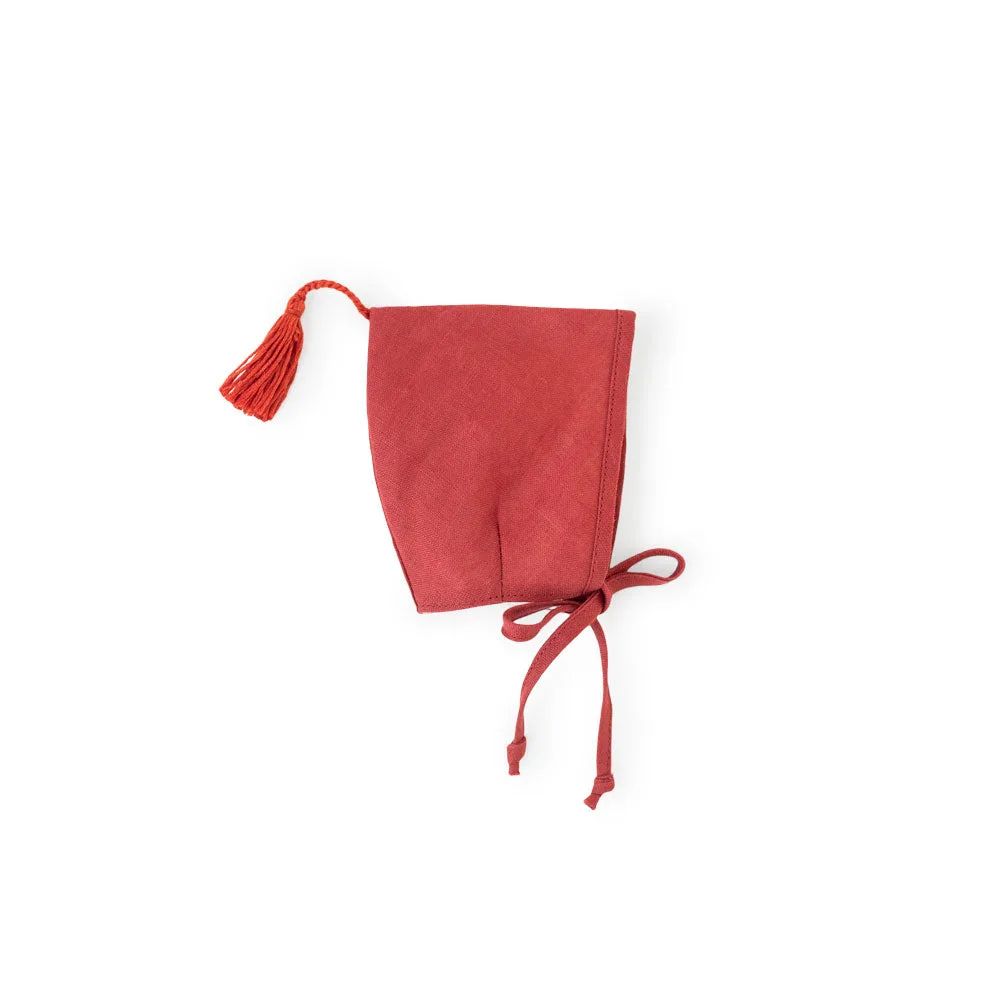
Red Linen Bonnet
Myth: You're just paying for the brand name
With handmade dolls, you're paying for materials and time. Consider the Strawberry Bag for Dolls: it's made from wool felt with hand-embroidered strawberry seeds and a leafy lid that snaps shut. Hand-embroidery alone takes far longer than printing a design. The cross-body strap is a twisted cotton cord in pink, yellow, and green — details that require hands, not machines. That labor is the product. The brand name is just how you find it.
Myth: Ethical doll making means lower quality or fewer options
Ethical production often means better quality because artisans can focus on durable construction. The Ruffled Eyelet Skirt for Dolls has three ruffled tiers of white eyelet cotton embroidered with flowers, a custom brocade ribbon waistband, and a full lining with velcro back closure. That's not a compromise — it's a garment built to last through play. Small-batch production does mean fewer units, so popular items sell out. But the tradeoff is that each piece gets attention a factory line can't match.
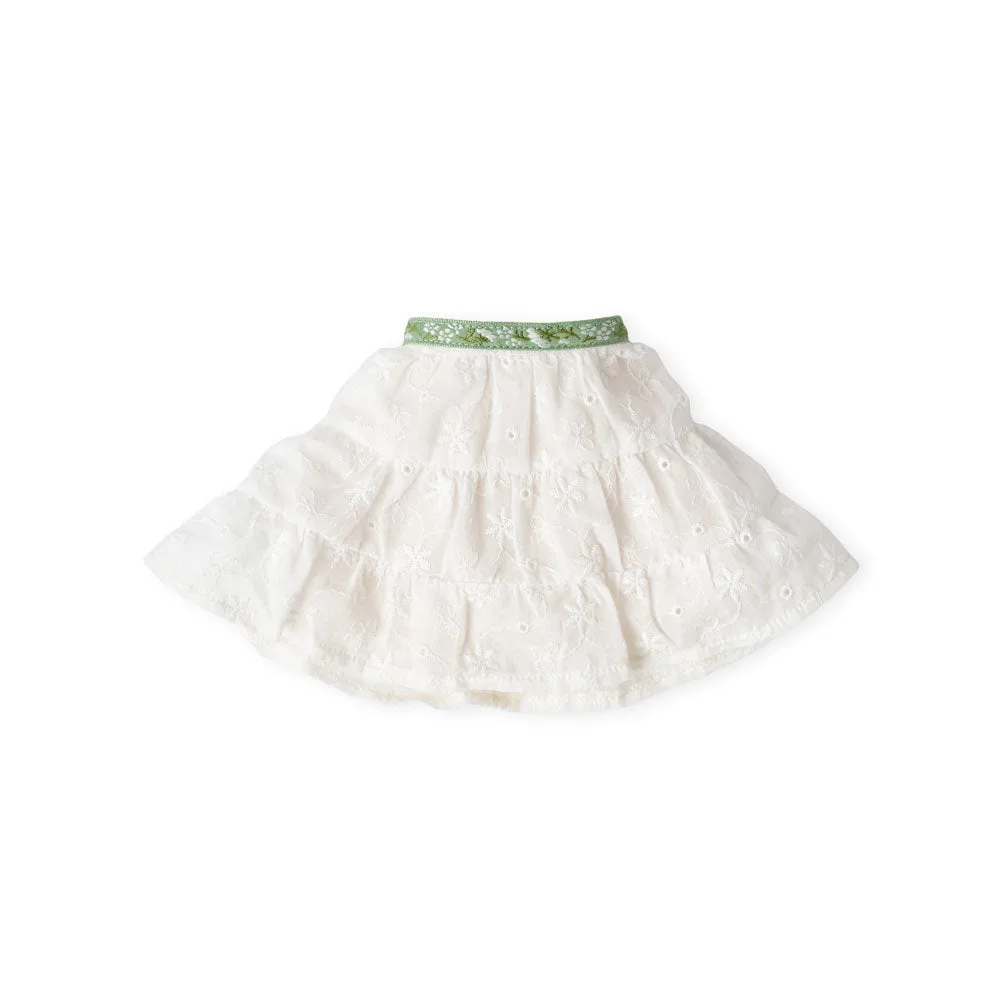
Ruffled Eyelet Skirt
How to evaluate the value of handmade toys
Look for transparency about who made the item and where. If a brand mentions artisan partners by region, that's a good sign. Check materials: wool felt, linen, cotton, and hand-embroidery are labor-intensive and durable. Consider cost per use — a well-made doll outfit that survives years of play may cost less over time than replacing cheap alternatives. Finally, ask what happens to the people who make the toys. Fair trade doll brands build long-term relationships with makers, which stabilizes communities.
Verdicts on common claims about handmade doll cost
- Claim: Handmade dolls are only for collectors: Handmade dolls and outfits are designed for play. The Strawberry Bag has a snap closure so items don't fall out, and the Ruffled Eyelet Skirt uses velcro for easy dressing. These are practical features for kids, not display-only details. Verdict: False. Handmade means durable enough for everyday play.
- Claim: You can't tell where the money goes: Look for specific production information. Hazel Village states that the Red Linen Bonnet and Ruffled Eyelet Skirt are handmade by artisan partners in Cambodia. That's a concrete supply chain detail you can verify. Verdict: Check the label. Transparency is the marker of ethical doll making.
- Claim: Cheaper dolls are just as good: Mass-produced dolls may use printed details and less durable materials. Handmade items like the Strawberry Bag use wool felt and hand-embroidery, which take more time but hold up better. The lower upfront price often means replacing items sooner. Verdict: Compare cost per year of use, not just sticker price.
What handmade looks like in practice
- Strawberry Bag for Dolls: The Strawberry Bag for Dolls is made from wool felt and embellished with hand-embroidered strawberry seeds; its leafy lid fastens with a snap, and the cross-body strap is a twisted cotton cord in pink, yellow, and green. Hand-embroidery and a snap closure show the kind of detail that takes time — and that you won't find on a printed mass-market bag.
- Red Linen Bonnet for Dolls: The Red Linen Bonnet for Dolls is made from linen in a classic red shade with a pixie-ish shape and a scarlet braided tassel, handmade by artisan partners in Cambodia. Knowing the country and the artisan partnership tells you the production is traceable and the labor is skilled.
- Ruffled Eyelet Skirt for Dolls: The Ruffled Eyelet Skirt for Dolls has three ruffled tiers of white eyelet cotton embroidered with flowers, a custom brocade ribbon waistband, and is fully lined with a velcro back closure, handmade by artisan partners in Cambodia. Multiple tiers, embroidery, and a full lining are all time-intensive steps that explain the price — and mean the skirt holds up to repeated dressing.