Quick answer
If your herbal tea tastes weak, first check the water temperature, then the amount of tea, and finally the steep time. Most weak cups come from water that is not hot enough, too little tea, or steeping for less than five minutes. Fix those three and you will usually get a fuller flavor without adding more tea.
Why herbal tea tastes weak even when you steep it
Herbal teas are not made from Camellia sinensis leaves, so they do not release flavor the same way black or green tea does. Dried flowers, roots, and bark need hotter water and more contact time to open up. If you treat herbal tea like a delicate green tea, you will likely get a pale, watery cup. The fix is not more tea first; it is checking your water temperature and steep time.
The three brewing mistakes that make herbal tea weak
Most weak herbal tea comes down to one of three problems. Water that is not hot enough will not extract flavor from dense ingredients like chamomile flowers or roots. Too little tea leaves the water with nothing to pull from. And a steep time under five minutes often stops before the flavor has fully developed. Correct these in order: temperature first, then amount, then time.
- Water temperature: Use water just off a rolling boil, around 200-212°F, for most herbal teas.
- Amount: Start with 1 heaping teaspoon of dried herbal tea per 8 ounces of water.
- Steep time: Let it steep for at least 5 minutes, and up to 7-10 minutes for roots or dense flowers.
How to make herbal tea stronger without making it bitter
Unlike true teas, herbal teas do not become bitter from long steeping in the same way. That means you can safely extend the steep time to get more flavor. If you want a stronger cup, increase the tea amount slightly or steep longer, but do not squeeze the tea bag or press hard on the leaves. For loose herbal tea, use a strainer that gives the leaves room to expand. If you are using a teapot, a steep-and-serve model lets you control the timing and then drain the tea so it does not sit in the water.
When to stop adjusting and choose a different herbal tea
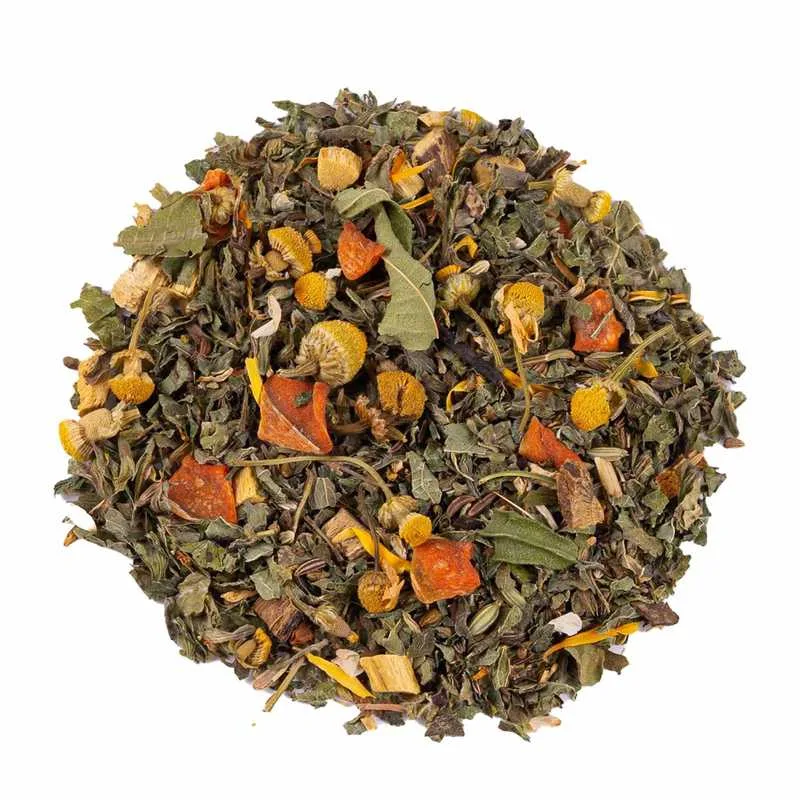
If you have tried hotter water, more tea, and a longer steep, and the cup still tastes weak, the tea itself may be too old or the blend may be naturally light. Some herbal teas, like chamomile, are meant to be delicate. If you want a more robust flavor, look for herbal blends with roots, spices, or dried fruit. If you prefer a caffeine-free cup with a fuller body, try a dessert tea with a black tea base, but check the caffeine content if that matters to you.
Diagnose your weak herbal tea
- Water not hot enough: If the water is below 200°F, the flavor compounds in flowers and roots will not fully dissolve. Heat water to just off a boil and pour immediately. Fix this first; it is the most common cause of weak herbal tea.
- Too little tea for the water: If you are using a pinch or a small tea bag for a large mug, there is not enough material to flavor the water. Use 1 heaping teaspoon per 8 ounces. Measure your tea; do not eyeball it if the cup tastes thin.
- Steep time too short: Under 5 minutes, many herbal teas have not released their full flavor. Extend to 7-10 minutes for dense ingredients like roots or large flowers. If the tea still tastes weak after 10 minutes, the issue is likely the tea itself or your expectations for that blend.
Products that help you brew a stronger cup
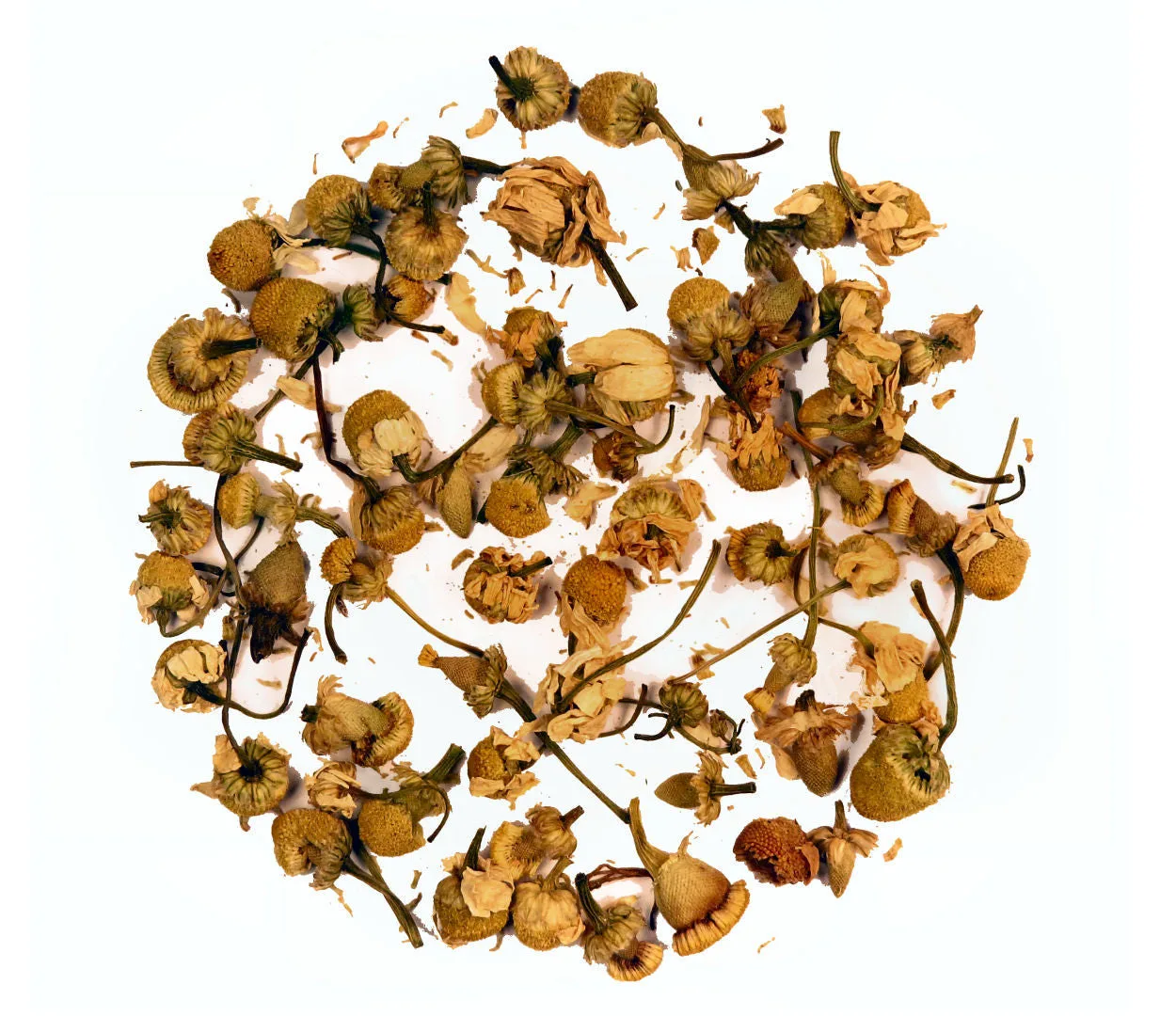
- Egyptian Chamomile: Egyptian Chamomile is a caffeine-free herbal tea with a light, floral flavor, grown in the Nile River Valley. A light herbal tea like this benefits from hotter water and a full steep to bring out its flavor. If you prefer a stronger cup, you can increase the amount or steep longer without bitterness.
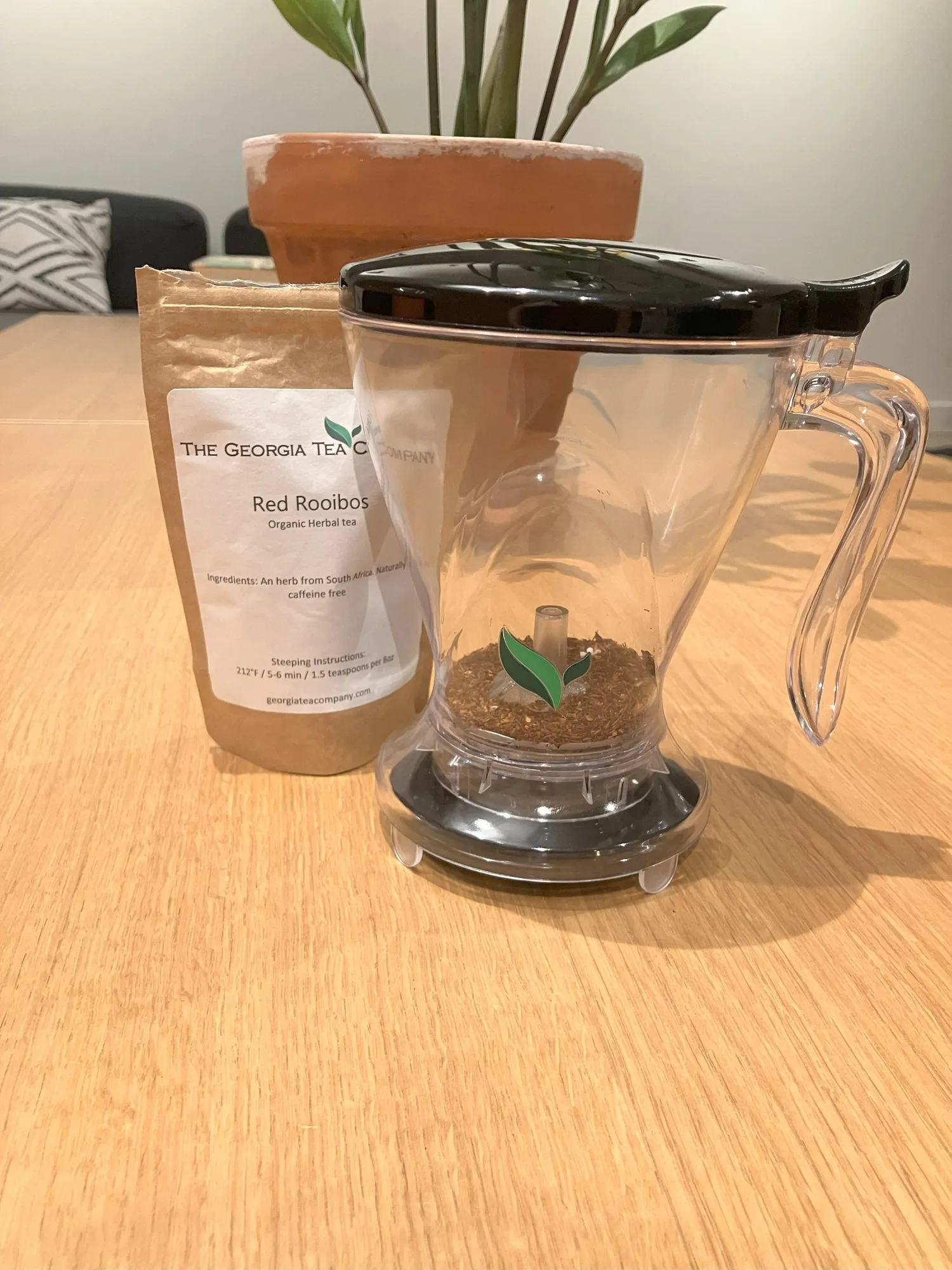
- Simple Steep and Serve Teapot: The Simple Steep and Serve Teapot holds about 18 ounces and comes with two strainers and a coaster. You add hot water, let it steep, then place it on your mug to drain. This gives you control over steep time and prevents the tea from sitting in water and getting weaker or stronger than you want.