Quick answer
Glaze nail polish usually peels because the nail bed wasn't properly prepped, coats were applied too thick, or the free edge wasn't sealed. Fix it by starting with a clean, dry, lightly buffed nail, applying thin even layers, and capping the tip with each coat.
The real reason your glaze manicure peels
Peeling almost always traces back to one of three things: leftover oil or moisture on the nail plate, layers that are too thick, or missing the free edge. Glaze formulas rely on a clean, slightly textured surface to bond. If you skip the prep pad or buffing step, the polish has nothing to grip and will lift in sheets.
Another common culprit is applying a thick coat thinking it will save time. Thick layers cure unevenly and trap solvents, creating weak spots that chip and peel. The fix is simple: two or three whisper-353567">whisper-thin coats, each fully cured before the next.
How to fix peeling glaze polish right now
If the peeling is only at the tips or edges, you can often salvage the manicure. Gently buff the lifted area with a fine-grit buffer, wipe with a prep pad, and apply a thin top coat over the whole nail, making sure to cap the free edge. Cure fully.
If the polish is peeling in large sections or near the cuticle, the bond is already broken. Trying to patch it will look uneven. In that case, remove the entire manicure with a soak-off remover like One Gel Magic Off Remover Kit, then reapply from scratch with proper prep.
Prevention: build a peel-proof routine
Start with dry hands—no lotion, cuticle oil, or hand cream for at least 30 minutes before application. Push back cuticles, lightly buff the nail surface to remove shine, and wipe each nail with a prep pad until no residue remains on the pad.
Apply each coat as thin as possible. If you see streaks or bubbles, the layer is too thick. Cure each coat fully, and always cap the free edge—run the brush along the tip of the nail with every layer, including the top coat.
Diagnosis: Is it worth fixing or should you start over?
- Symptom: Peeling only at the free edge: The polish lifts in a thin line along the tip of the nail but the rest of the manicure looks intact. Fix it: Buff the tip lightly, wipe with prep pad, apply a thin top coat, and cap the edge. Cure fully.
- Symptom: Peeling in large sheets near the cuticle or middle of the nail: The polish lifts away from the nail plate in patches, often within 24–48 hours of application. Start over: The bond is compromised. Remove the entire manicure with a soak-off remover, then reapply with proper prep and thin coats.
- Symptom: Peeling with visible bubbles or wrinkling: The polish surface looks uneven, with tiny bubbles or a wrinkled texture, and then starts to peel. Fix it (if caught early): Lightly buff the top layer, wipe clean, and apply a fresh thin top coat. If bubbling is severe, remove and reapply with thinner layers.
Products that help your glaze manicure last
- Moment in Time: Semi-cured lilac and semi-sheer nude gel nail strips featuring pressed flowers and gold details with mega volume and maximum shine. Application includes prep steps: clean nails with soap and water, shape, push back cuticles, use enclosed prep pad to ensure nails are clear from oils and residue. The moment-353673">Moment in Time strips come with a prep pad, making it easy to follow the correct prep routine that prevents peeling. The semi-cured formula also allows for thin, even application.
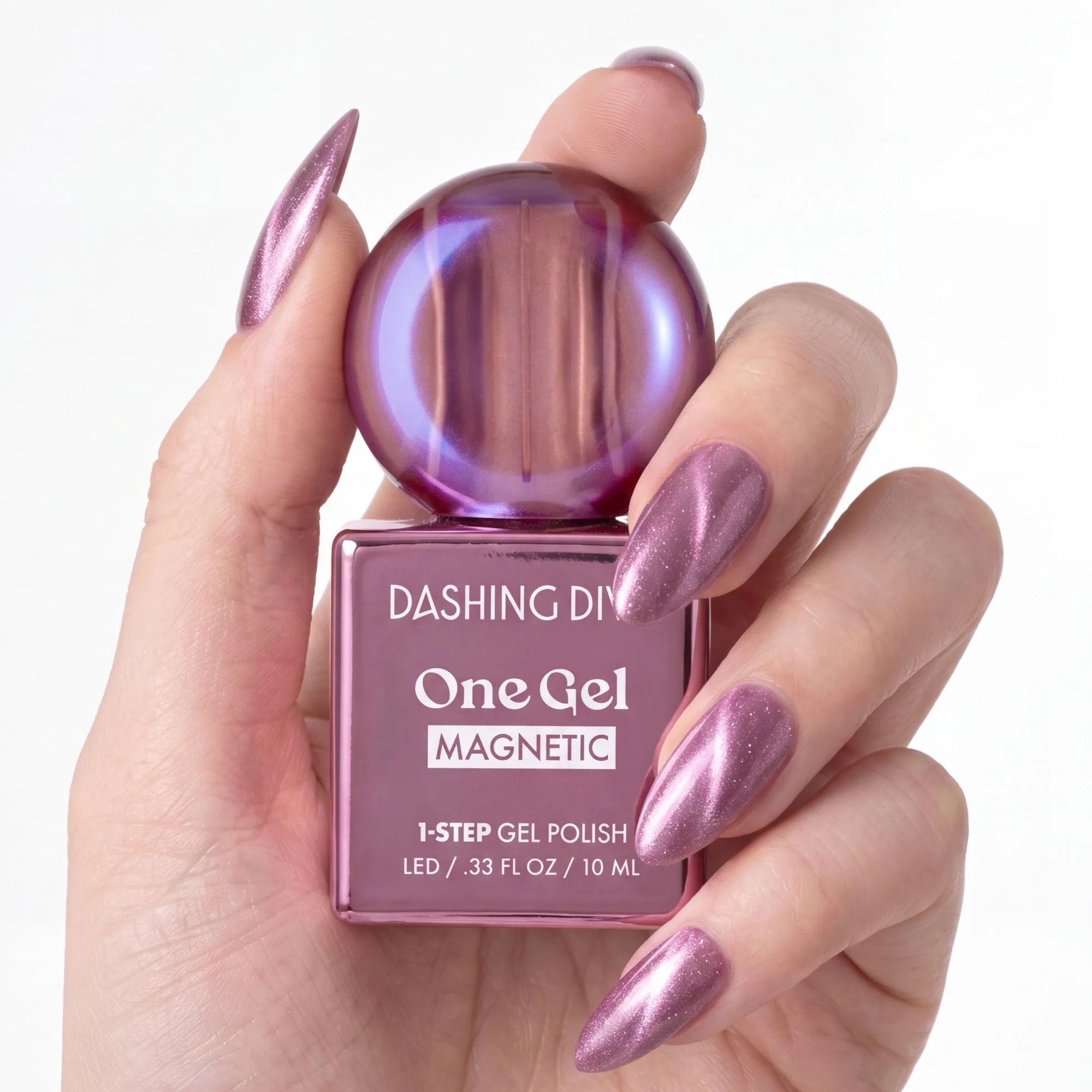
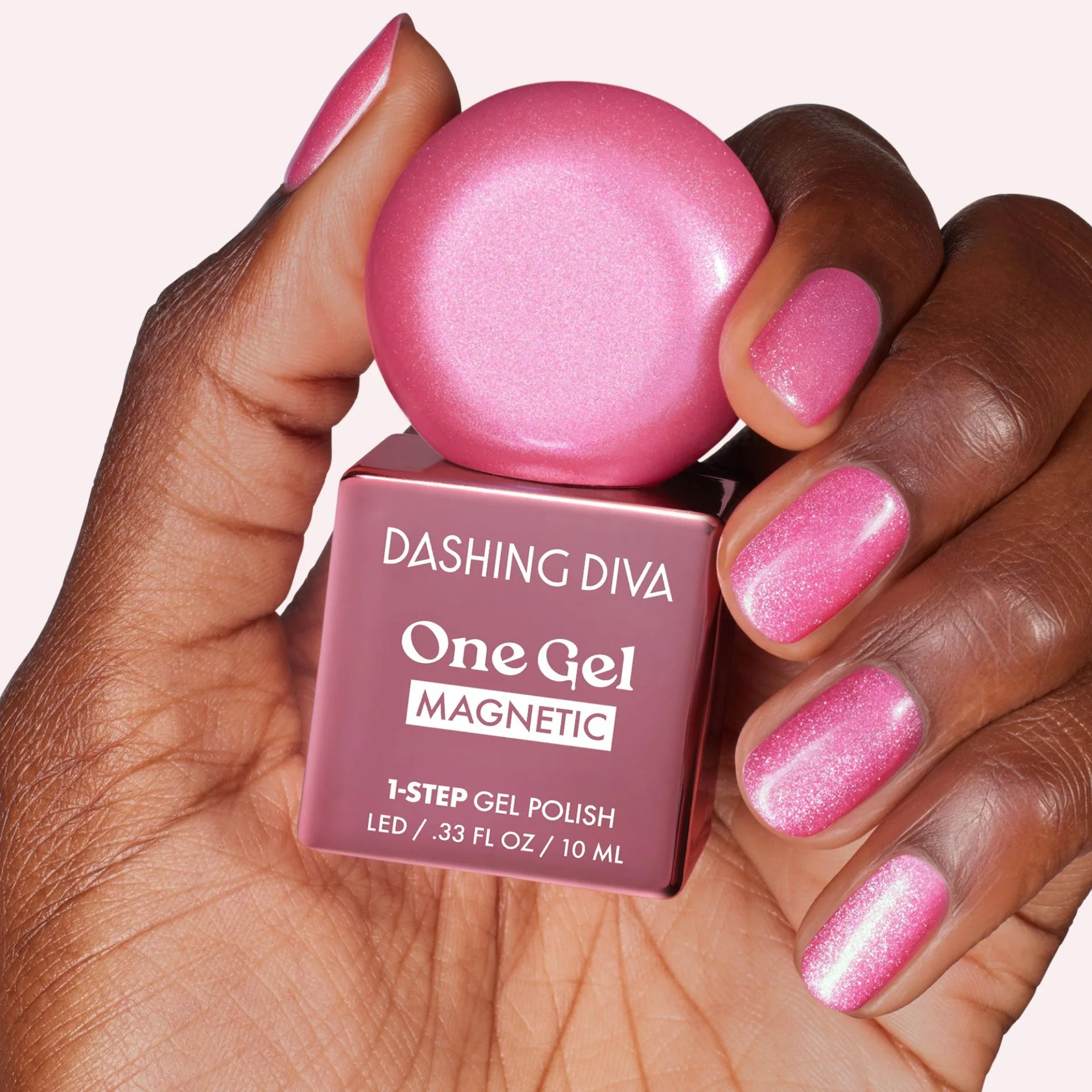
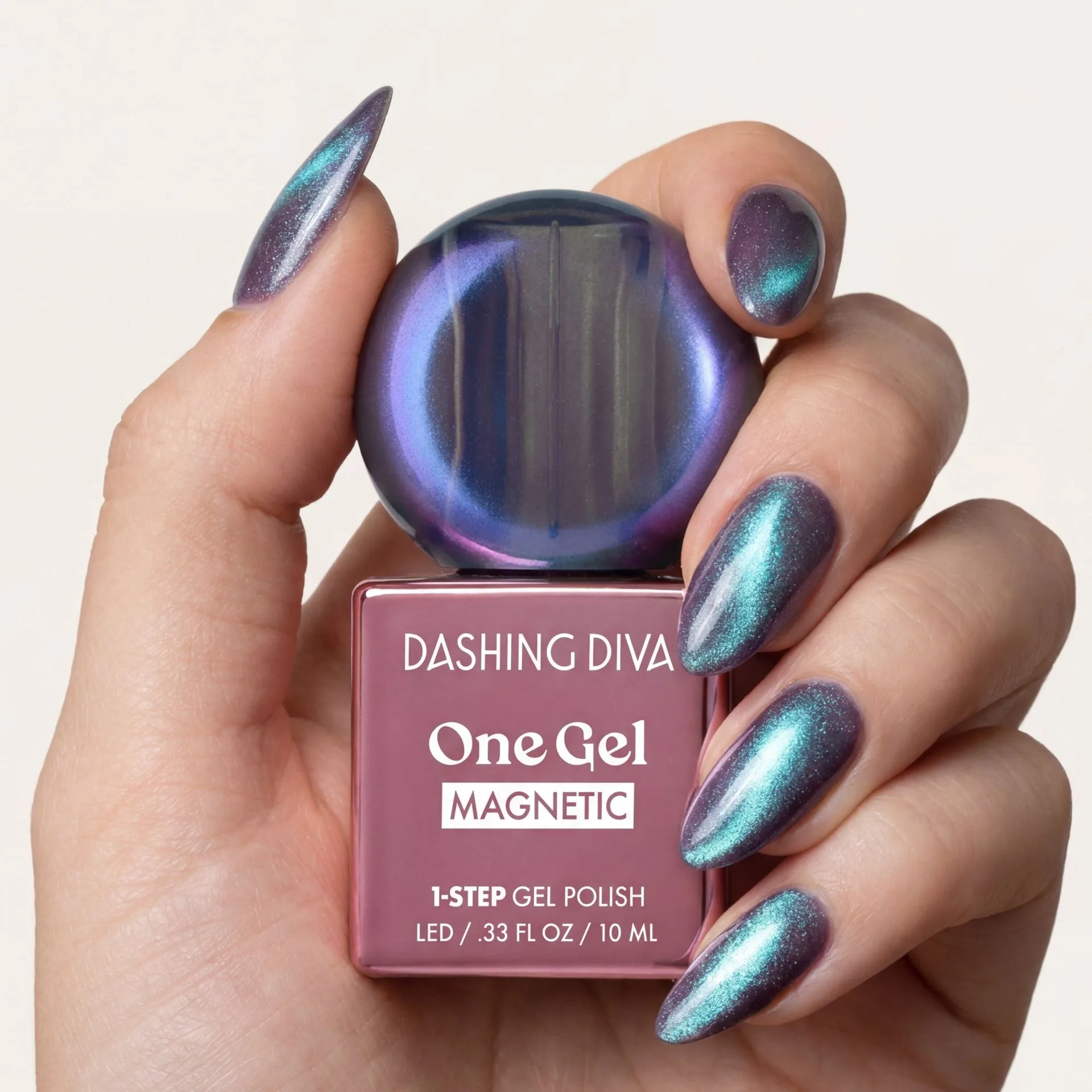
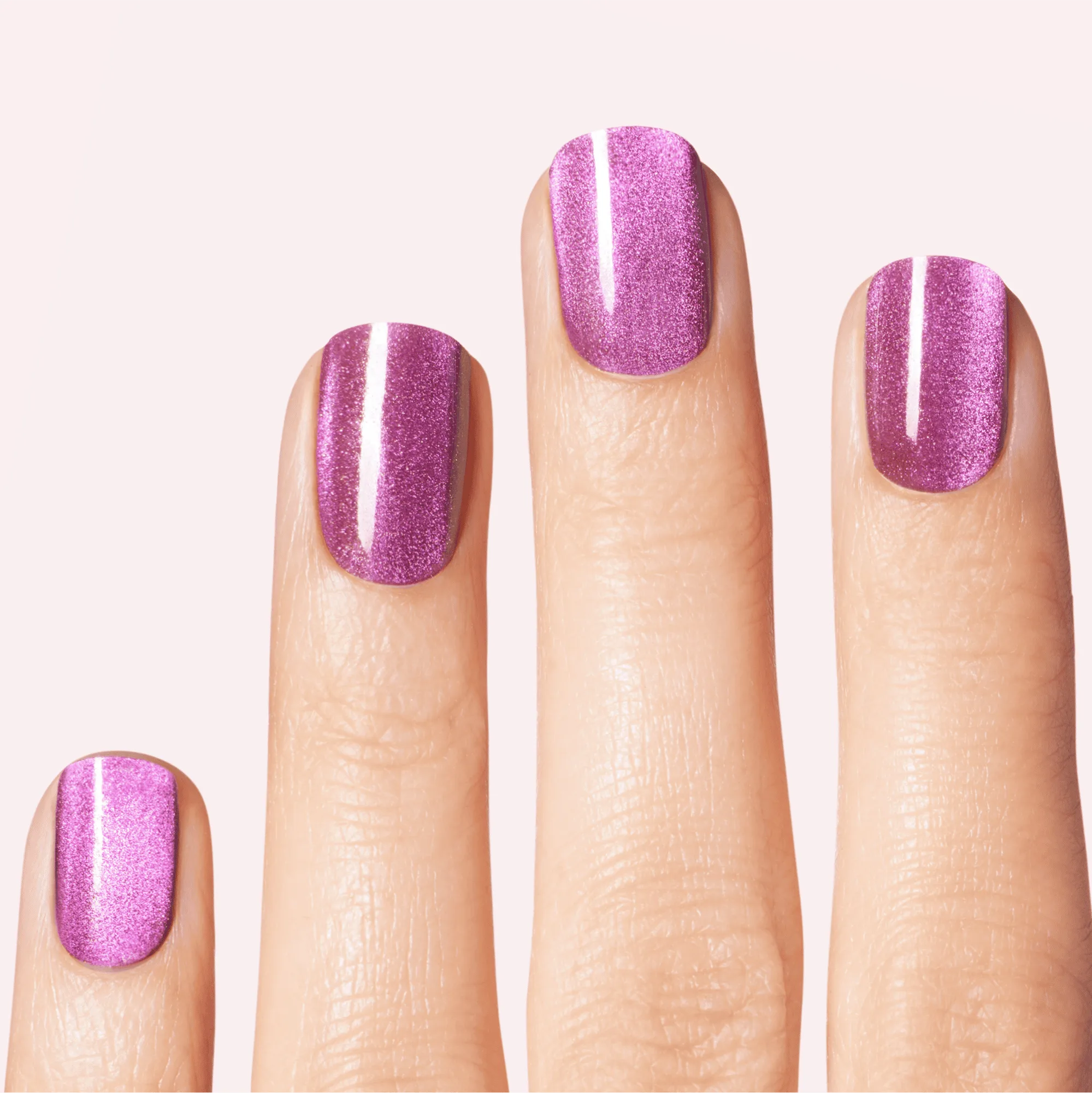
- Villainous: Berry pink gel nail polish that starts off shimmery and transforms into a magnetic finish once activated with our magnet tool. Easily removes with our One Gel Magic Off Remover Kit, sold separately. If you prefer liquid gel polish, Villainous gives you control over coat thickness. Pair it with a proper remover kit to avoid damaging your nails when you need to start over.