Quick answer
Most needlepoint canvas warping comes from uneven stitching tension or from storing a stitched piece rolled or damp. If the canvas is still on the stretcher bars, unpin it and let it rest flat for a day. If it stays wavy, block it damp and pin it square to dry. If the mesh itself is bent or creased, the canvas is damaged and blocking will not save it.
You pull your canvas off the stretcher bars and it will not sit flat. One corner curls, the middle bows, or the whole piece looks like a potato chip. This is one of the most common needlepoint canvas problems, and it is almost always fixable if you catch it before you finish the piece.
The fix depends on the cause. A canvas that warps because of tight stitching tension behaves differently from one that warped because it sat in a humid closet. This guide walks through the symptom, the likely cause, the corrective action, and the point where you should stop and choose another option.
Symptom: the canvas bows or curls while you are still stitching
If the canvas pulls away from the stretcher bars or the mesh looks distorted while you work, the problem is usually tension. Pulling each stitch too tight compresses the mesh in one direction and stretches it in another. Over a few inches, that uneven pull turns a flat grid into a curved surface.
This is the easiest stage to fix. Stop stitching, unpin the canvas, and let it rest flat on a clean surface for a few hours. If it relaxes, re-pin it with even tension and continue with a lighter hand. If it stays bowed, move to blocking before you stitch another row.
- Check that your stretcher bars are square before you pin the canvas. A twisted frame will warp the canvas no matter how even your stitches are.
- Use thumbtacks or staples every inch or so along each edge, not just at the corners.
- If one area of the canvas feels tighter than the rest, that is your tension problem area, not the whole canvas.
Symptom: the canvas is flat on the frame but warps after you remove it
This is the classic fix warped needlepoint canvas scenario. The canvas looked fine while pinned, then curled the moment you took it off the bars. The cause is usually a combination of tight tension and the canvas remembering the shape it was held in. Hand-painted canvases can also relax differently across the design because the paint adds stiffness in some areas and not others.
Blocking is the standard correction. Dampen the canvas evenly with a spray bottle, pin it face down on a blocking board or corkboard, and pull it square using the mesh lines as your guide. Let it dry completely, usually overnight, before you unpin it. Most warped canvases relax after one or two blocking sessions.
- Pin along the mesh grid, not the painted design. The mesh is your true square.
- Do not soak the canvas. Damp is enough. Soaking can loosen the paint on hand-painted designs.
- If the canvas still curls after two blockings, the mesh may be stretched beyond recovery.
Symptom: the canvas smells musty or the warp came on after storage
Canvas that warps after sitting in a closet or basement usually warped from moisture, not tension. Humidity swells the mesh, and if the canvas dries while folded or rolled, it keeps that shape. This is common with projects stored in plastic bags in damp rooms.
Block the canvas as above, but let it dry in a room with moving air rather than a closed container. Once it is flat and dry, store it flat between two pieces of acid-free board or roll it around a wide tube, not a narrow one. Avoid plastic bags for long-term storage because they trap moisture.
- Store finished or in-progress canvas flat if you have the space. Rolling is second best, and only around a wide tube.
- Keep canvas away from radiators, windows, and damp basements.
- If the canvas has visible mold, do not stitch it. Discard it.
Symptom: the mesh itself is bent, creased, or crushed
Sometimes the warp is not tension or moisture but physical damage. If the mesh threads are bent, crushed, or creased, no amount of blocking will restore the grid. This happens when canvas is folded sharply, stored under heavy objects, or pressed with a hot iron. A creased mesh will show in your finished stitches because the holes no longer line up.
This is the point where you should stop and choose another option. If the damaged area is small and outside the design, you can sometimes stitch around it. If it runs through the design, replace the canvas. Stitching on a bent grid is frustrating and the finished piece will not hang square.
- Hold the canvas up to a light. If the mesh lines wobble or cross unevenly, the grid is damaged.
- Never iron needlepoint canvas directly. If you must press, use a dry iron on low with a pressing cloth, and only on the back.
- A damaged canvas is not a blocking problem. It is a replacement problem.
How to block a warped needlepoint canvas step by step
Blocking is the most reliable fix for needlepoint canvas warping that comes from tension or moisture. You need a blocking board or corkboard, rustproof pins, a spray bottle with clean water, and a square ruler or T-square. Work on a surface that can stay undisturbed overnight.
Mist the back of the canvas lightly until it is damp but not wet. Pin one edge square, then the opposite edge, pulling gently until the mesh lines are straight. Work your way around, checking square as you go. Let it dry completely before removing the pins. If the canvas is still damp when you unpin it, it will warp again.
- Pin every half inch to an inch along each edge for even tension.
- Use the mesh grid, not the painted border, to check square.
- If you are blocking a finished piece, block before you finish it into a pillow, ornament, or frame.
Warp diagnosis: match the symptom to the fix
- Canvas bows while still on the frame: Uneven stitching tension is pulling the mesh out of square. Unpin, let it rest flat, then re-pin with even tension and stitch more loosely. Fix this before you finish the row. It gets harder to correct later.
- Canvas was flat on the frame but curled after removal: The canvas memorized the shape it was held in. Block it damp, pin it square using the mesh grid, and let it dry overnight. One or two blockings usually solve this. If it curls a third time, the mesh is stretched.
- Canvas warped after storage and smells musty: Moisture swelled the mesh. Block it, dry it with moving air, and change how you store it. Flat is best, wide tube is second best. Stop storing canvas in plastic bags or damp rooms.
- Mesh threads are bent, creased, or crushed: This is physical damage, not tension or moisture. Blocking will not restore a bent grid. Stop and replace the canvas if the damage runs through the design area.
Canvas facts that affect warping and blocking
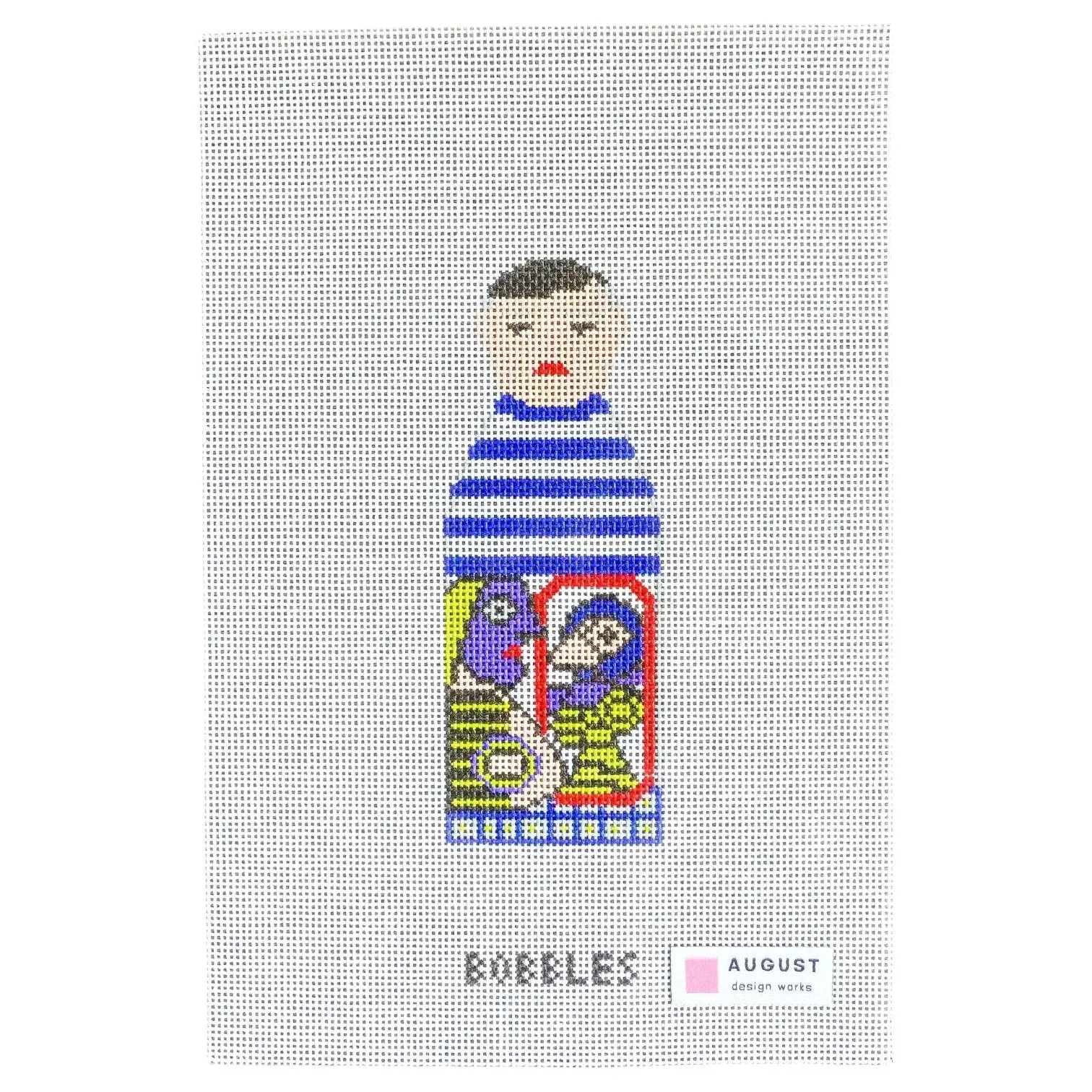
- Picasso Bobble - Needlepoint Canvas: Hand-painted needlepoint canvas in the Bobbles Series, designed to be stitched, displayed, and collected. Hand-painted canvases can have slightly different stiffness across the design because the paint varies. That is normal, but it means you should block based on the mesh grid, not the painted areas.
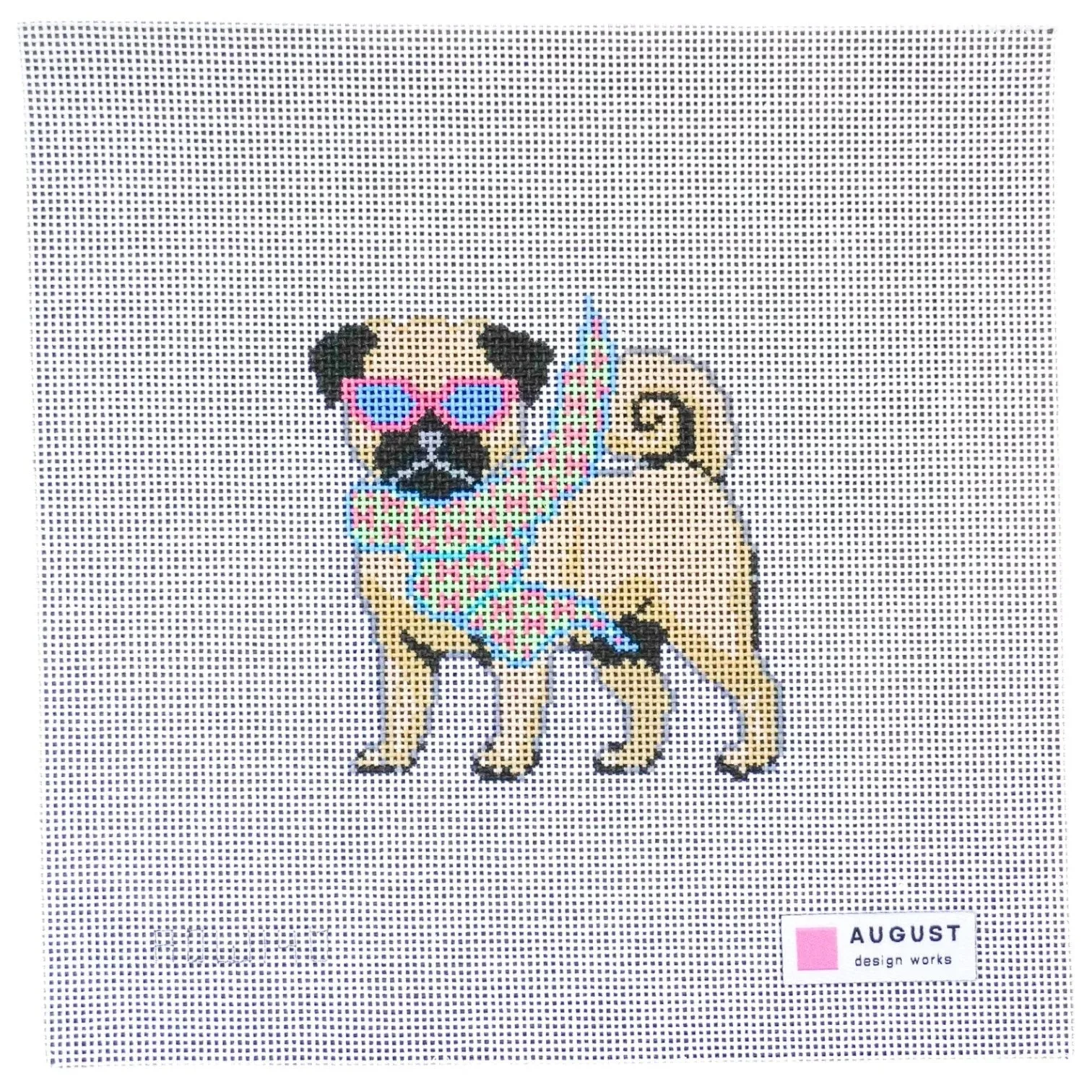
- https://augustdesignwork.com/products/bougie-pug-wholesale-044896469e46bbccb6addd13-1481522Bougie Pug - Needlepoint Canvas (Wholesale): 7.5 × 7.5 canvas size, 3.5 × 3.5 design size, 18 mesh. Hand-painted and may vary. Does not come with thread. A 7.5-inch canvas is small enough to block flat on a standard corkboard. The 18 mesh grid is fine, so pin carefully and use the mesh lines to check square.
- First of All I'm A Delight - Needlepoint Paperweight Kit (Wholesale - EXCLUDES THREADS): A complete self-finishing needlepoint paperweight kit designed for easy finishing. Threads are not included in wholesale orders. If you are stitching a small kit like this, block the canvas before you assemble the paperweight. A warped canvas will not sit flat in the glass, and the finished piece will rock on a desk.
Needlepoint canvas warping is usually a tension or moisture problem, and blocking fixes most cases. Check the mesh grid before you blame the canvas, block it square, and let it dry fully. If the mesh itself is bent or creased, replace the canvas rather than fighting it. Your finished stitches will look better on a flat grid.