Quick answer
Most rabbits refuse hay because of one of four things: dental pain, stale or poor-quality hay, a diet too rich in pellets and treats, or stress and illness. Check the hay first, then the mouth, then the overall diet. If your rabbit has stopped eating entirely, is drooling, or hasn't produced droppings in 12 hours, treat it as an emergency and contact your vet.
Check the hay before you blame the rabbit
Hay sits in a bag or box for months, and its smell and texture fade long before it looks obviously spoiled. A rabbit with a sensitive nose may reject hay that seems fine to you. Open a fresh bag, smell it, and squeeze a handful. Good hay smells sweet and grassy, not dusty or musty, and it should bend rather than snap. If it crumbles to powder in your hand, that batch is past its best.
Rabbits also have strong preferences. A rabbit that happily ate a soft meadow hay may turn its nose up at a coarse stalky batch, and vice versa. If you've recently switched supplier, brand, or cut, try offering the old type alongside the new one in separate piles so you can see which one actually gets eaten.
Store hay in a dry, ventilated container rather than a sealed plastic bin, which traps moisture and encourages mould. Keep it out of direct sunlight and away from damp walls. Buy in quantities you can use within a few weeks rather than months.
- Smell the hay: sweet and grassy is good, musty or dusty is not.
- Squeeze a handful: it should bend, not snap or turn to powder.
- Offer two types side by side to test preference.
- Store in a ventilated container away from damp.
Rule out dental pain and gut stasis
Rabbit teeth grow continuously, and a rabbit with a sharp spur or an overgrown molar will often drop hay first because it requires the most chewing. Watch for drooling, dropping food, eating with the head tilted, or preferring soft treats over hard hay. These are signs to book a vet check rather than to keep experimenting with different hays.
Gut stasis is the other urgent possibility. A rabbit that has stopped eating hay and is also quiet, hunched, or passing few or no droppings needs veterinary attention quickly. Hay refusal on its own is worth watching for a day; hay refusal combined with any of these other signs is not a wait-and-see situation.
If your rabbit is still bright, still eating pellets and vegetables, and still producing normal droppings, you have more room to troubleshoot at home before calling the vet.
- Drooling, dropping food, or chewing on one side: book a dental check.
- Quiet, hunched, or no droppings for 12 hours: contact your vet now.
- Bright, eating other food, normal droppings: continue troubleshooting.
Look at how much you're feeding besides hay
Hay should make up the bulk of a rabbit's diet, with a small measured portion of pellets and a modest amount of leafy greens. If pellets are always available, many rabbits will simply fill up on them and leave the hay. Measure pellets rather than topping up the bowl, and offer them at a set time so your rabbit learns that hay is the food that's always there.
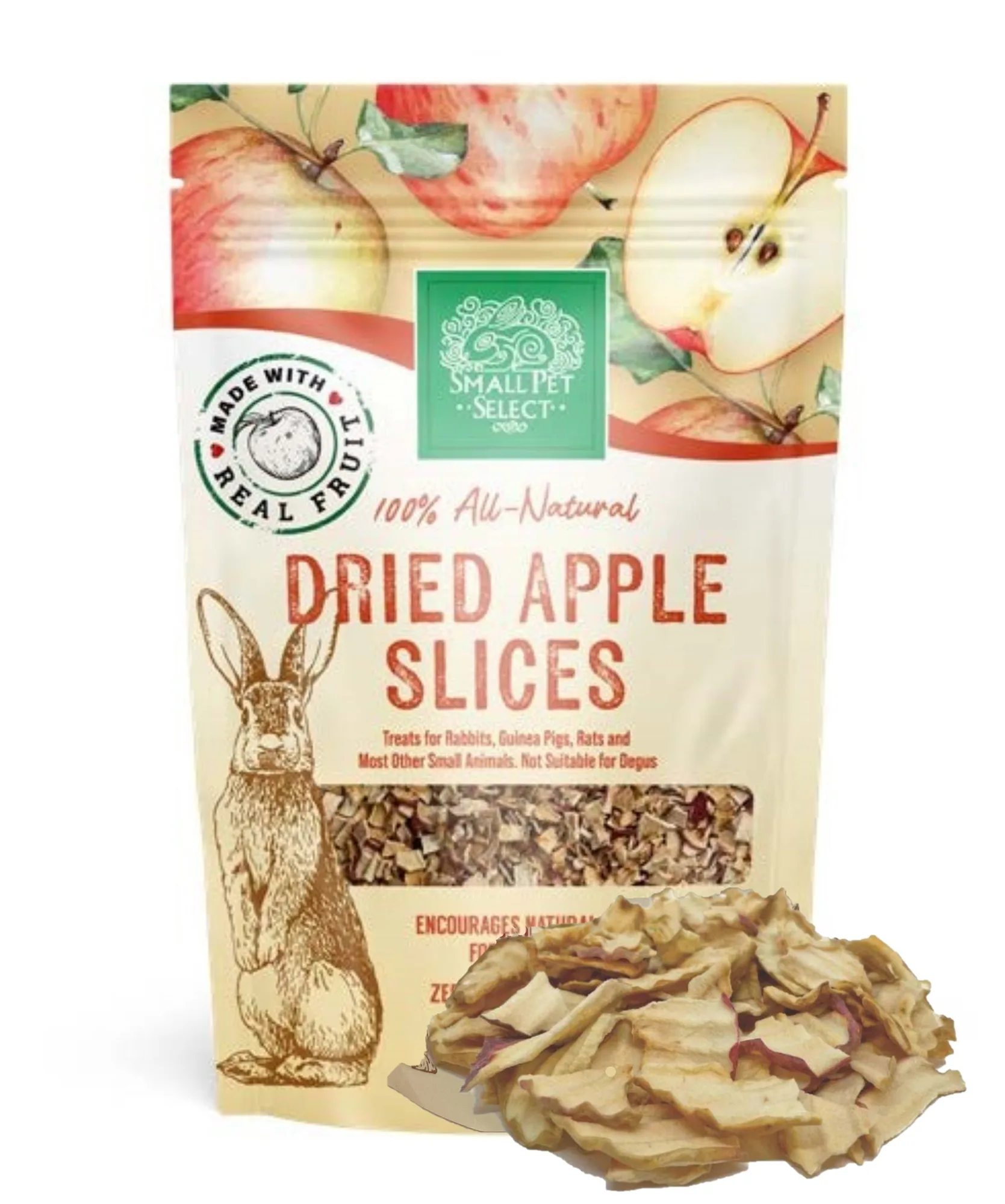
Treats are the other common culprit. A rabbit that gets a sweet treat every time it begs will hold out for the treat and skip hay. Keep treats small, occasional, and used as a reward rather than a substitute for forage. Dried Apple Slices, for example, are a genuine treat rather than a hay replacement, so they belong in a small daily portion or a training reward, not in the hay rack.
If you're reducing pellets, do it gradually over a week or two rather than cutting them off overnight. A sudden drop can trigger a hunger strike in a rabbit that has been used to a rich diet.
Make hay more appealing without disguising it
Presentation matters more than most owners expect. Rabbits often eat more hay from a rack at nose height than from hay scattered on the floor, and they eat more when the hay is refreshed twice a day rather than topped up once. Remove soiled hay before adding fresh, because a rabbit will refuse hay that has been urinated on even if the rest of the rack is clean.
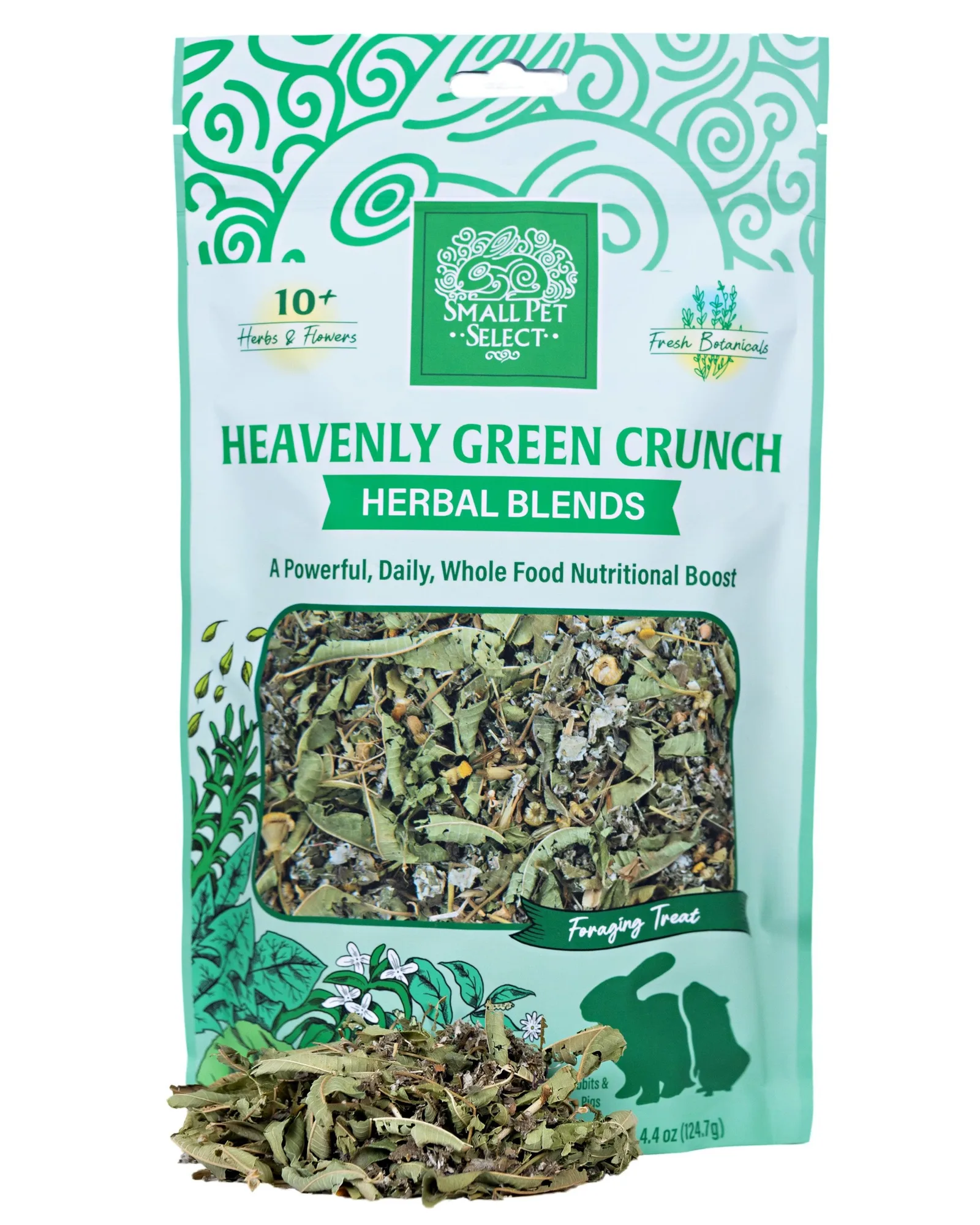
You can also make hay more interesting by mixing in a small amount of a herbal forage blend. Heavenly Green Crunch Herbal Blend is designed for rabbits and guinea pigs and can be scattered through hay to encourage foraging, which mirrors how rabbits naturally search for food. The goal is to make the hay itself rewarding, not to replace it.
Try offering hay in more than one place: a rack, a corner pile, and a small pile near the litter tray. Rabbits often eat while they toilet, so a hay rack next to the litter area is one of the simplest changes you can make.
- Refresh hay at least twice a day and remove soiled hay first.
- Offer hay in more than one location, including near the litter tray.
- Scatter a small amount of herbal forage through the hay.
- Avoid hiding hay under pellets or treats.
When to stop troubleshooting and see a vet
If you've tried fresh hay, a different type, a measured pellet portion, and better presentation for two or three days and your rabbit is still refusing hay, that's the point to stop guessing. A vet can check the teeth properly, feel the abdomen, and rule out underlying illness that you can't see at home.
Guinea pigs follow much the same pattern: a guinea pig not eating hay needs the same checks for dental problems, stale hay, and too many pellets or treats. Guinea pigs have an additional need for vitamin C, but hay refusal itself is usually a dental, freshness, or diet-balance issue rather than a vitamin problem.
Don't wait for weight loss before acting. Rabbits and guinea pigs can lose condition quickly once they stop eating, and early intervention is far easier than treating a rabbit that has already gone into stasis.
Diagnosis: match the symptom to the likely cause
- Symptom: refuses hay but eats pellets and greens normally: Likely cause: diet imbalance, stale hay, or a presentation problem. Corrective action: measure pellets, refresh hay twice daily, and offer two hay types side by side. Stop and see a vet if there is no improvement after three days. This is the most common and most fixable pattern.
- Symptom: drools, drops food, or chews on one side: Likely cause: dental pain from a spur or overgrown molar. Corrective action: book a vet appointment for a dental check rather than changing hay again. Do not wait for weight loss. Dental problems need professional treatment, not a new hay brand.
- Symptom: quiet, hunched, or no droppings for 12 hours: Likely cause: gut stasis or another urgent illness. Corrective action: contact your vet immediately. Do not attempt home remedies first. This is an emergency, not a hay-preference issue.
- Symptom: eats hay only in small bursts, then stops: Likely cause: boredom or a hay rack in a poor location. Corrective action: move hay near the litter tray, add a second hay station, and scatter a little herbal forage through the hay. Small environmental changes often restore normal hay intake.
Products that help with hay refusal
- Heavenly Green Crunch Herbal Blend: Heavenly Green Crunch Herbal Blend is a herbal forage blend made for rabbits and guinea pigs, designed to add variety to a small animal diet. Scattering a small amount through hay can encourage a fussy rabbit to forage and eat more hay, while adding variety to a diet that may have become too pellet-heavy.
- Dried Apple Slices: Dried Apple Slices are a naturally sweet treat made from 100% natural apples with no added sugars or artificial ingredients. Useful as a small training reward while you reduce richer treats, but they are a treat rather than a hay substitute, so keep portions small so they don't crowd out hay.