Quick Answer
If your storm glass isn't forming crystals or changing as expected, the most common fixes are to relocate it away from direct sunlight and drafts, and to give it a few days to acclimate to a stable temperature. If it still doesn't respond, it may be a sealed unit that needs replacement.
Understanding How a Storm Glass Works
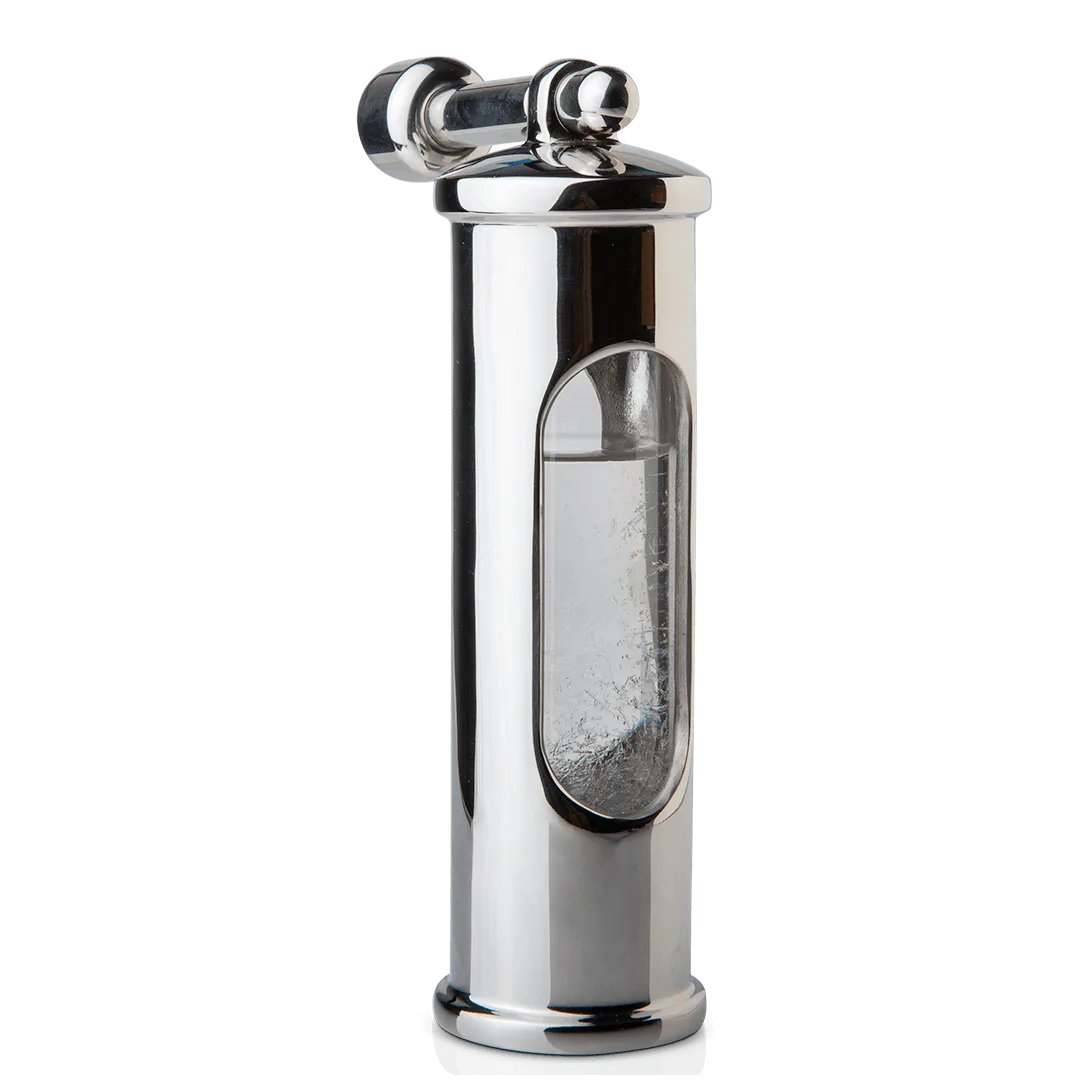
Storm glasses, like the Storm Glass from Art of Play, contain a sealed glass tube filled with a mixture of chemicals that crystallize in response to temperature and pressure changes. The crystals form and dissolve as conditions shift, which is why they're often used as a decorative barometer or weather glass. However, they're not precision instruments—they're more about visual charm than exact forecasts.
Because the liquid inside is sealed, you can't adjust the mixture yourself. If the glass is cracked or the liquid has evaporated, the device won't work and should be replaced.
Common Misconceptions: Storm Glass vs. Galileo Thermometer
People often confuse storm glasses with Galileo thermometers, but they work differently. A Galileo thermometer uses floating glass bulbs to indicate temperature, while a storm glass relies on crystal formations. If you're expecting temperature readings from a storm glass, you'll be disappointed—it's not designed for that. For accurate temperature, use a Galileo thermometer or a standard thermometer.
Storm Glass Troubleshooting Diagnosis
- Symptom: No crystals at all: Check if the glass is placed in direct sunlight or near a heat source. Move it to a location with stable, indirect light and allow 24-48 hours for crystals to form. If crystals still don't appear after 48 hours, the liquid may be compromised.
- Symptom: Crystals stay frozen or don't change: Rapid temperature swings can cause the glass to 'lock up'. Keep it in a room with consistent temperature (around 65-75°F) and avoid drafts from windows, doors, or air vents. Stable temperature is key; expect changes over several hours, not minutes.
- Symptom: Liquid looks cloudy or has particles floating: This is normal after shipping or when the glass is disturbed. Let it sit undisturbed for a few days to settle. If it remains permanently cloudy, the seal may be broken. If the seal is broken, replacement is the only option—do not attempt to open or refill it.
Product Spotlight
-
Storm Glass: Storm Glass is a meteorological instrument with antiquarian charm, said to predict weather like a 17th century sea captain's device. Its visual appeal makes it a lovely desk piece, but treat it as a decorative conversation starter rather than a reliable forecast tool.
Storm Glass