Quick answer
Most creaking, squeaking, and stiffness in a new leather bag is normal and comes from stiff fibres, tight stitching, or hardware rubbing. Use the bag regularly and apply a small amount of leather conditioner only if the leather feels dry. If the noise comes from a metal fitting or the leather cracks, stop and contact the maker or a repair specialist instead of forcing it.
A new leather bag that creaks, squeaks, or feels hard can be disappointing when you expected softness from day one. The good news is that most of these sounds and sensations are temporary, and they usually settle as the leather flexes with use. The key is knowing which noises are harmless and which ones signal a problem you should not try to fix yourself.
This guide separates the symptom from the likely cause, gives you a safe corrective action, and tells you when to stop and choose another option. It covers stiff new leather bags, leather bag creaking noise, and how to soften leather safely without ruining the finish.
Why new leather bags creak or squeak
Leather is a natural material made of tightly packed fibres. When a bag is newly made, those fibres are still rigid, and the layers of the bag have not yet learned to move together. As you carry it, the leather flexes, the stitching settles, and the hardware finds its place. That movement produces the creaking or squeaking you hear, especially around the handle, strap, or flap.
A second common source is friction between two surfaces: leather rubbing against leather, a strap rubbing against a buckle, or a lining rubbing against the outer shell. This is mechanical, not a defect. It usually fades within a few weeks of regular use as the surfaces polish each other and the bag takes on your carrying pattern.
- Carry the bag daily for short periods rather than leaving it folded in storage.
- Open and close the closure gently a few times to help it settle.
- If the squeak is at a metal joint, check whether the fitting is loose before assuming it is the leather.
Why a new leather bag feels hard or stiff
Stiffness is often a sign of quality, not a flaw. Firmer leathers hold their shape, resist slouching, and protect the bag's structure over years of use. A stiff new leather bag may simply need time and body heat to relax. The fibres soften as the bag is handled, and the areas that bend most, such as the strap and the opening, will loosen first.
The finish also matters. Some leathers are finished with a protective coating that makes them feel firmer and more weather-resistant. That coating can make the bag feel hard at first, but it also means the leather is easier to wipe clean. If you want a soft, slouchy feel from the start, choose a bag described as soft or flexible rather than trying to force a structured bag to change character.
- Do not soak, stretch, or hang the bag with weights to speed up softening.
- Let the bag soften naturally through normal use and handling.
- Store it stuffed with tissue or a clean cloth to help it keep its shape while it relaxes.
How to break in a stiff leather bag safely
The safest way to break in stiff leather is consistent, gentle use. Carry the bag for a few hours at a time, open and close it normally, and let your hands and body heat do the work. Avoid forcing the leather to bend in ways it was not designed to bend. If a strap or flap feels tight, use it as intended rather than pulling it beyond its natural range.
If the leather feels dry rather than just firm, a small amount of leather conditioner can help. Apply a pea-sized amount to a clean cloth, work it into the leather in a thin layer, and let it absorb. Test on a hidden area first. Conditioner adds moisture and flexibility, but it cannot turn a structured bag into a soft one, and using too much can darken the leather or leave a residue.
- Condition only when the leather feels dry, not simply because it is new.
- Use a conditioner made for the type of leather your bag uses.
- Wipe away excess conditioner and let the bag dry naturally, away from direct heat.
When to stop and choose another option
Stop trying to fix the bag yourself if the noise comes from a metal fitting that is loose, bent, or grinding. Hardware problems need a repair specialist or the maker's support, and forcing them can scratch the leather or break the fitting. Stop also if you see cracking, peeling, or a tear forming at a stress point. These are signs of damage, not stiffness, and conditioner will not repair them.
If the bag remains uncomfortably hard after several weeks of regular use, it may simply be the wrong leather for your preferences. A structured bag is designed to stay structured. In that case, look for a bag described as soft, flexible, or slouchy rather than continuing to treat the one you have. Choosing the right leather from the start is easier than changing it later.
- Contact the maker if a fitting is loose or the leather cracks.
- Do not use heat, oil, or home remedies to soften leather.
- If softness is your priority, shop for soft leather styles instead.
Diagnosis: match the symptom to the fix
- Creaking or squeaking from the leather itself: Most common in new bags as stiff fibres and stitching settle. Carry the bag regularly and let it flex naturally. If the sound fades over a few weeks, no action is needed.
- Squeaking at a metal fitting or buckle: Friction between metal and leather or a slightly loose fitting. Check whether the fitting moves or feels loose. If the fitting is loose, stop and contact the maker or a repair specialist.
- Leather feels hard but not dry: This is normal for structured or coated leathers. Use the bag and let it soften gradually. Do not force it; if you want softness now, choose a soft leather style instead.
- Leather feels dry, rough, or stiff: Apply a small amount of leather conditioner to a clean cloth and work it in thinly. Test on a hidden area first. Stop if the leather darkens unevenly or feels tacky.
- Cracking, peeling, or a tear at a stress point: This is damage, not stiffness. Conditioner will not repair it. Stop and seek professional repair or maker support.
What different leathers feel like
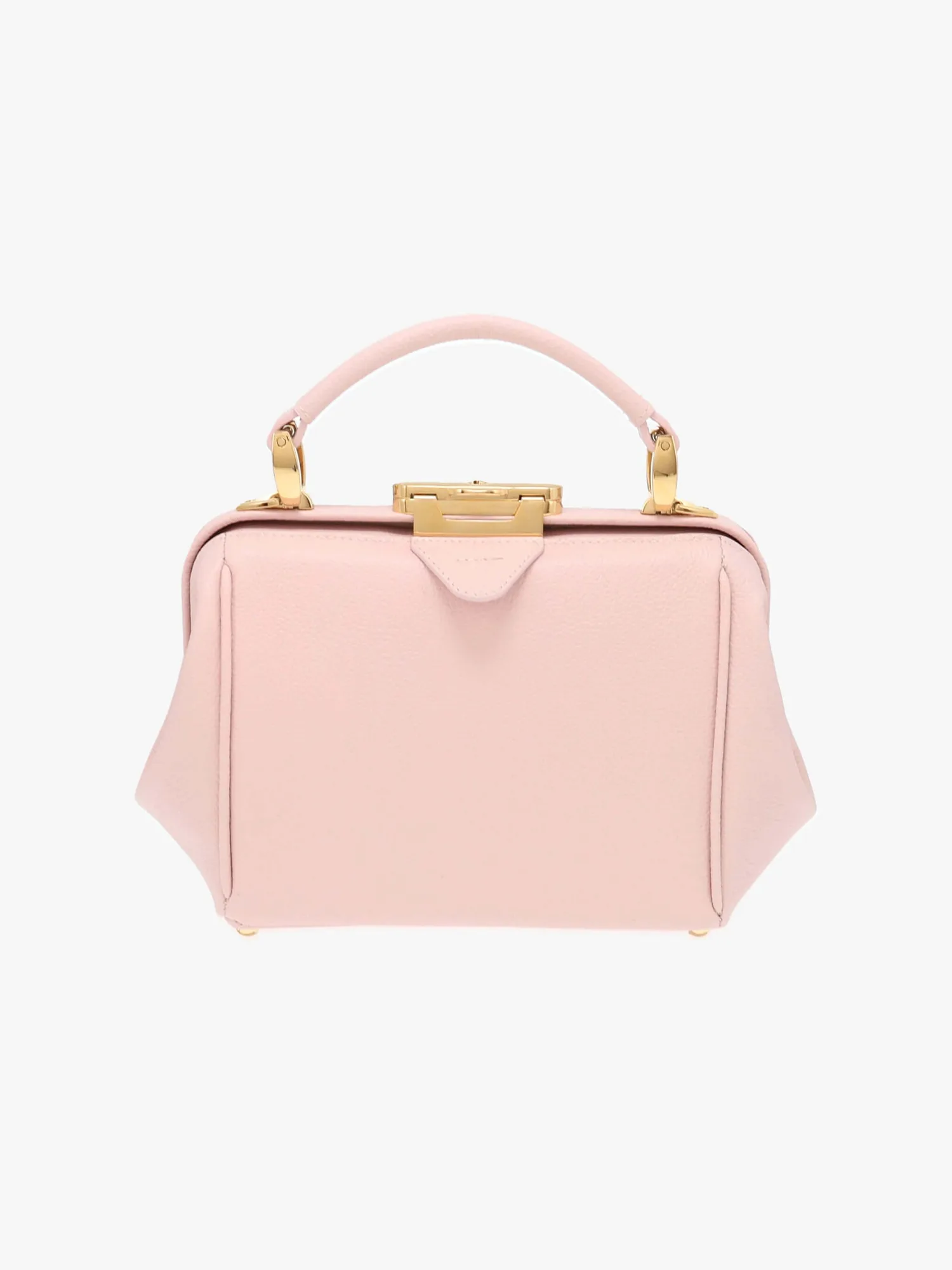
- The Mini Sophie - Strawberry Ice Cream: Premium soft and flexible calf grain leather. This leather is described as soft and flexible, so it is likely to feel comfortable sooner and creak less than a firmer, more structured leather.
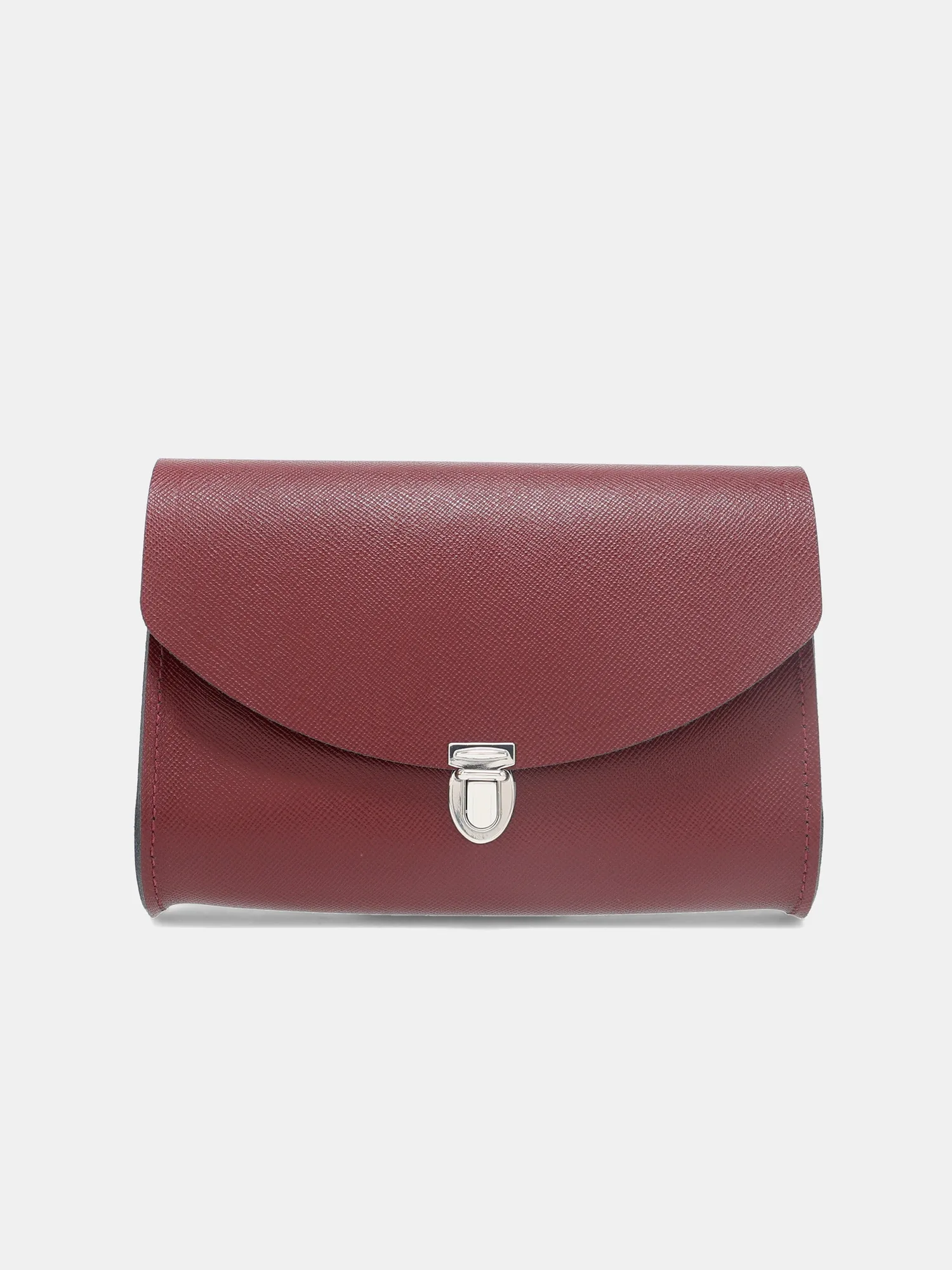
- The Large Pushlock - Oxblood Saffiano: Signature push-lock closure and organised interior compartments. A push-lock closure is a metal mechanism that can produce a click or rub rather than a leather creak; if you hear noise there, check the fitting before conditioning the leather.
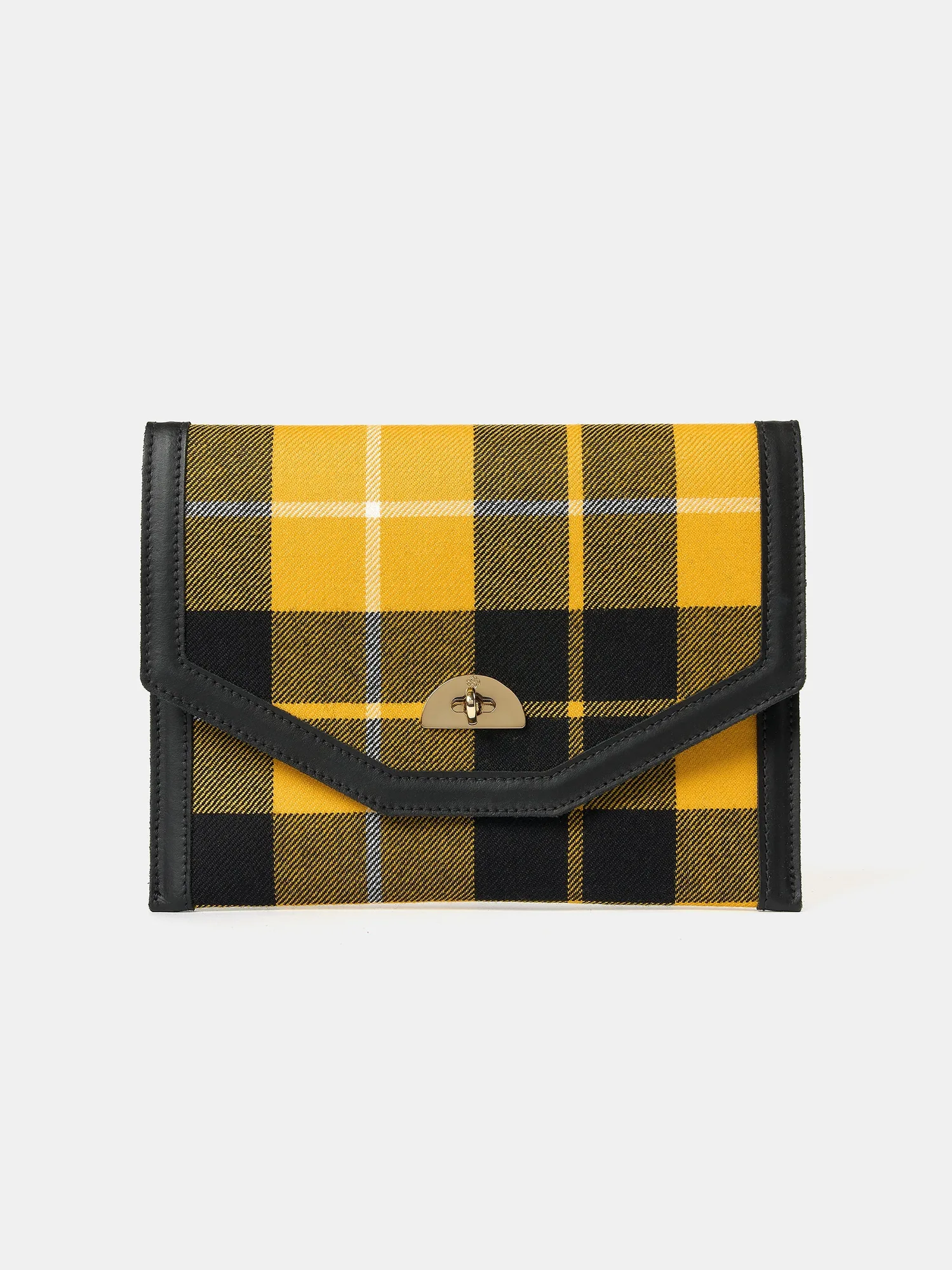
- The Twist Lock Pouch - Black with Yellow Tartan: Signature twist-lock closure. Twist-lock hardware moves when you open and close the pouch, so a small amount of mechanical noise is normal and usually settles with use.
Creaks, squeaks, and stiffness are usually part of a new leather bag settling in. Use it gently, condition only dry leather, and leave hardware noises to a professional. If the bag stays too firm for your taste, that is a sign to choose a softer leather next time rather than to force the one you have.