Quick answer
Stiff new leather usually needs gradual flexing and a thin coat of leather conditioner, not water or heat. Wear or handle the piece in short sessions, condition sparingly, and let it rest between sessions. If the leather still feels rigid after two or three weeks of gentle breaking in, the stiffness is likely structural and you should choose a softer-cut piece instead.
Symptom: where the stiffness actually shows up
Stiffness rarely affects a whole restraint evenly. On cuffs, it usually concentrates along the strap where it bends around the wrist and at the point where the hardware is riveted or stitched. On a collar, the rigid zone tends to be the front band and the edges that press against the throat. Check those spots first before you assume the entire piece is too firm.
- Cuffs: strap bends sharply, edges dig in, or the cuff holds a flat shape after you take it off.
- Collars: the front band stays upright instead of curving, or the lace overlay feels brittle.
- Hardware: metal stays cold and unyielding while the leather around it creases unevenly.
Likely cause: new leather, finish, and lining
Most new leather arrives with a factory finish that keeps it protected in storage and shipping. That finish makes the surface feel firm until the fibers underneath loosen with movement. Thicker cuts and double-layered straps take longer to soften than thin single-layer ones. A faux fur or fabric lining can also make a cuff feel stiffer at first because the lining adds bulk without adding flexibility.
Temperature matters too. Leather stored in a cold room feels harder than the same piece at room temperature. Before you condition anything, let the restraint sit at room temperature for an hour and flex it gently with your hands to see how much of the stiffness is simply cold.
Corrective action: condition and break in gradually
Start with clean, dry leather. Apply a small amount of leather conditioner to a cloth, not directly to the strap, and work it into the bend points with your fingers. Wipe off any excess so the surface does not stay greasy. Let the piece rest for several hours or overnight, then flex it gently by hand. Repeat once a week at most. Over-conditioning softens the leather past the point where it holds its shape, which matters for restraints that need to stay put.
Breaking in is mostly repetition, not force. Wear the cuffs or collar for short sessions of ten to fifteen minutes while you are otherwise occupied, then remove them and flex the stiff areas by hand. A few sessions a week is enough. Avoid bending the strap back on itself, pulling hard on the hardware, or leaving the piece buckled tightly around a fixed object, since those moves stress the stitching and rivets.
What not to do
Do not soak leather in water, run it under a tap, or leave it in a hot car to soften. Water swells and then shrinks the fibers, which can leave the leather harder and more brittle than before. Heat from a hairdryer or radiator dries the oils that keep leather supple. Oil-based products, saddle soap used too often, and household leather wipes can also strip the finish or leave residue that attracts dirt.
If a piece has a lace overlay or a vegan leather base, treat it more cautiously than full-grain leather. Lace can snag and vegan leather can react differently to conditioners, so test any product on a hidden edge first and stop if the surface darkens or feels tacky.
When to stop and choose a different piece
Stop breaking in and reassess if the leather cracks at the bend, if the surface feels slick or tacky after conditioning, or if the stiffness has not improved after three weeks of regular short sessions. At that point the cut or the leather itself is the issue, not the break-in process. A thinner strap, a different lining, or a softer finish will serve you better than continuing to work a piece that will not relax.
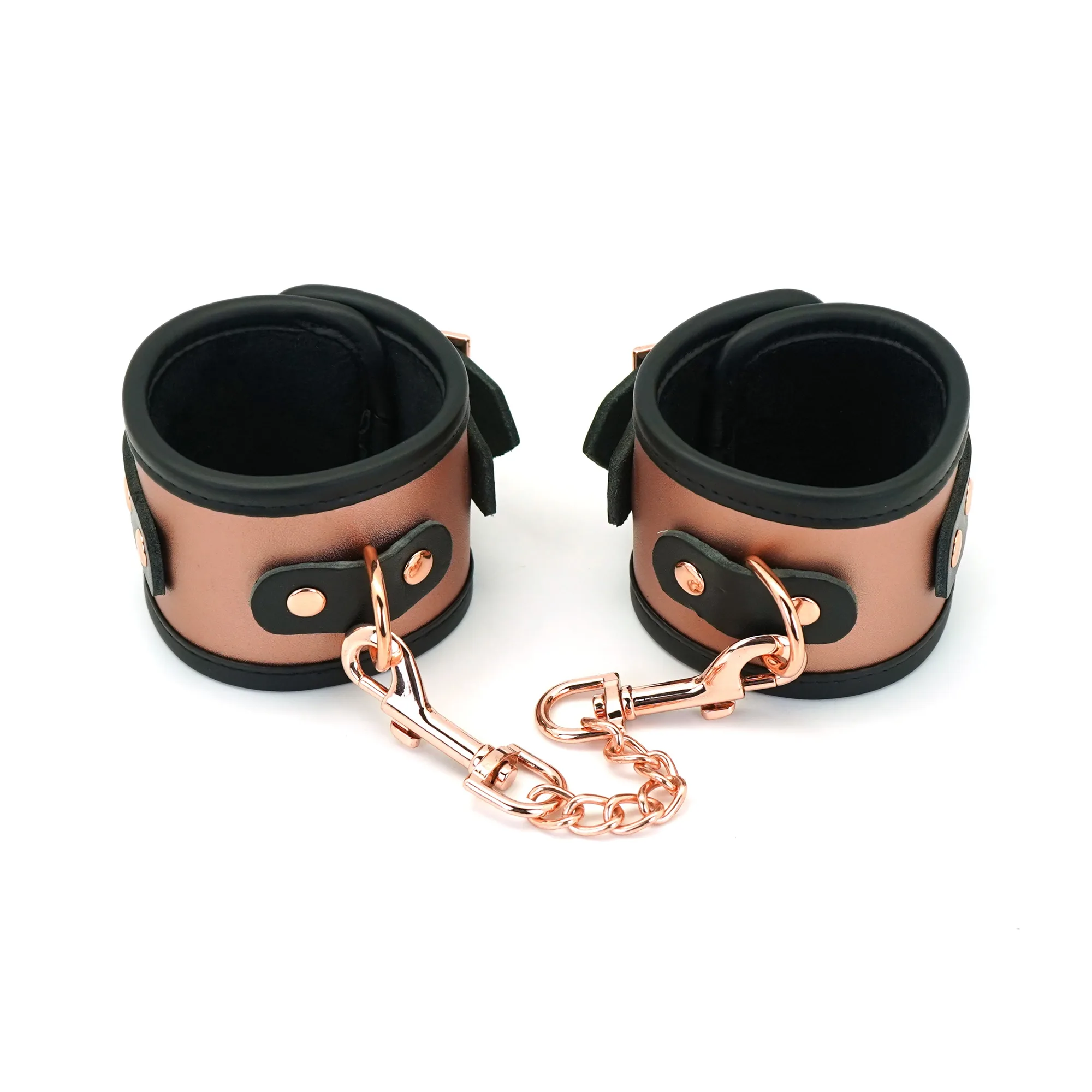
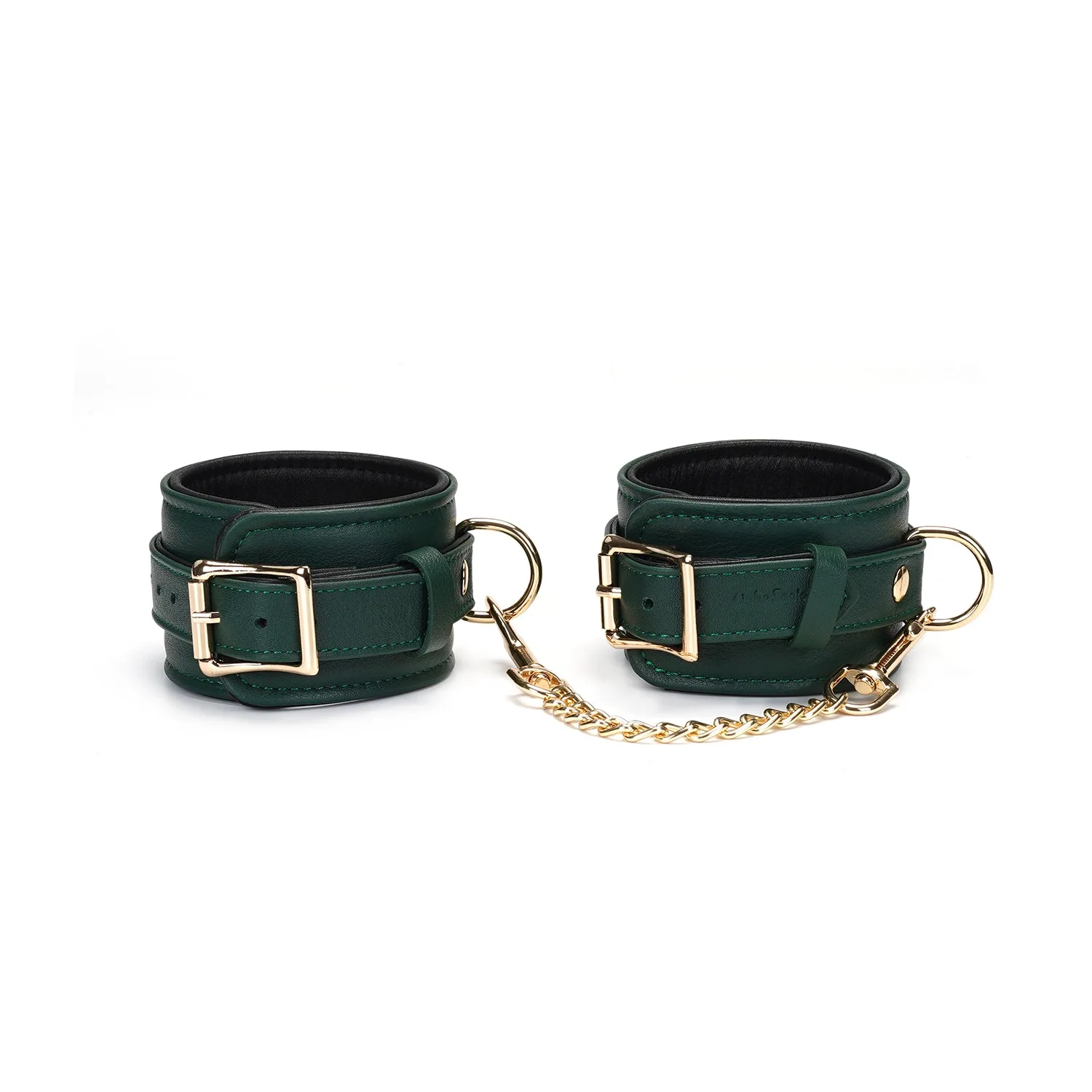
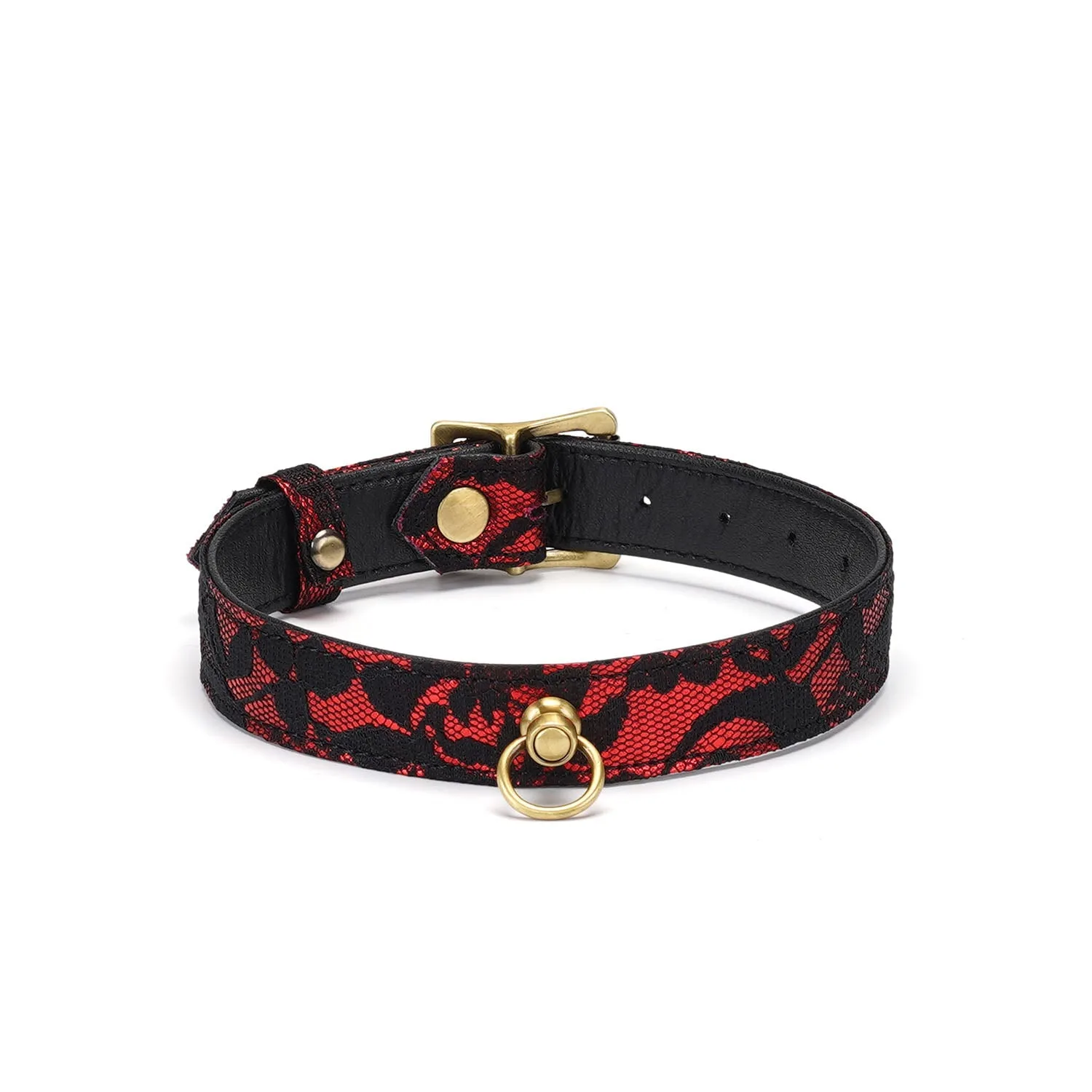
If you are shopping for a first pair and want something that feels comfortable sooner, look for restraints with a soft lining or a lighter strap. The Rose Gold Memory handcuffs use faux fur lining and a leather exterior, which gives you a softer contact point while the leather breaks in. The Mossy Chic wrist cuffs are a firmer option with quick-release clips, so they suit people who want a more structured feel and do not mind a longer break-in. For a collar, the Victorian Garden lace and vegan leather collar is lighter and more flexible than a thick leather band, though its lace overlay needs gentler handling.
Diagnosis: match the stiffness to the fix
- Cold and dry: The restraint feels hard when you first pick it up but flexes more after a few minutes in your hands. Let it reach room temperature, flex gently, and skip conditioning for now.
- New finish: The surface feels slick or waxy and the strap holds a flat shape after you release it. Condition lightly once, rest overnight, then break in with short wear sessions.
- Thick cut or double layer: The strap is wide and firm throughout, and the bend points stay rigid even after several sessions. Expect a longer break-in. If it still resists after three weeks, switch to a thinner or lined piece.
- Cracking or tacky surface: You see small cracks at the bend or the leather feels sticky after conditioning. Stop. The leather is stressed or over-conditioned, and more product will not help.
Products that address stiffness differently
- Rose Gold Memory: Leather Handcuffs with Faux Fur Lining: Leather handcuffs with an ultra-soft faux fur lining and glossy hardware in a gold and black colorway. The fur lining gives a softer feel against the skin from the first wear, so you are not waiting for the whole cuff to soften before it feels comfortable.
- Mossy Chic Leather Wrist Cuffs: Green leather wrist cuffs with gold hardware and two quick-release clips, described as ultra-safe and compatible with a wide range of bondage accessories. The quick-release clips let you remove the cuffs quickly during a break-in session, which makes short, frequent wear easier to manage.
- Victorian Garden: Lace and Vegan Leather Collar: A lace-covered bondage collar made from ruby-red vegan leather and black lace, designed to pair with matching lace wrist and ankle restraints. A vegan leather base with a lace overlay is lighter than a thick leather collar, but the lace needs gentler handling and a patch test before any conditioner.