Quick answer
If your Loop earplugs hurt after a few hours, the tip is almost certainly too large, seated too deep, or pressing against a part of your ear canal that can't tolerate constant contact. Step down one tip size, reseat the plug so it sits shallow and flush, and take a two-minute break every couple of hours. If pain persists after two or three days of that routine, the shape of your canal may not suit in-ear plugs at all, and earmuffs become the more sensible option.
Soreness, pressure, and itch are three different problems
Most people lump every uncomfortable sensation into one word: hurt. That makes troubleshooting harder, because each symptom points somewhere different. A dull ache that builds over hours is usually pressure from a tip that's slightly too wide. A sharp sting the moment you insert the plug is friction or an insertion angle problem. Itching and a hot feeling after 30 to 60 minutes is more often moisture and lack of airflow than size. Naming what you actually feel narrows the fix to one or two changes instead of a full reset.
- Dull ache that grows slowly: tip width or insertion depth
- Sharp sting on insertion: angle, lubrication, or a rough edge
- Itch, heat, or dampness: trapped moisture and airflow, not size
- Pain only in one ear: asymmetry between your two canals, which is common
Start with tip size, not insertion technique
The most common cause of sore ears from earplugs is a tip that's one size too big. A tip that's slightly oversized still seals well enough that you don't notice anything wrong at first, so you keep wearing it, and the canal wall gets compressed for hours. The test is simple: if you feel the plug pressing outward against your canal even when you're sitting still, it's too big. If it feels loose and you have to push it back in repeatedly, it's too small. The correct size disappears into the background.
Change one ear at a time. Your left and right canals are frequently different sizes, and swapping both at once makes it impossible to tell which change helped. Give each new size a full day of normal use before judging it, since a canal that's already irritated will feel sensitive to any tip for a few hours.
Reduce how deep and how long you wear them
Depth is the second lever. Pushing a plug in until it feels fully seated can put the tip past the bend of the canal, where the skin is thinner and less forgiving. Try seating it so the outer edge sits closer to the opening of your ear, then check whether you still get the noise reduction you need. Many people lose very little attenuation and gain hours of comfort.
Duration matters too. Continuous wear is what turns mild pressure into genuine soreness, so build in short breaks. If you wear plugs for focus sessions, take them out for two minutes every 90 minutes or so. That's enough to let the canal recover without breaking your concentration.
Cleanliness, moisture, and skin sensitivity
If your ears itch or feel hot rather than painful, the issue is likely moisture. Wiping the tips before and after each use, and letting your ears dry fully after a shower or workout, removes most of the problem. Avoid pushing anything into the canal to dry it.
If you have a known skin sensitivity, note that the catalog doesn't specify the exact tip material for every Loop model, so treat material as an open question rather than a guaranteed fix. If irritation appears as redness, flaking, or a rash rather than pressure, stop wearing them and speak to a clinician before trying another tip.
Fit troubleshooting: symptom, cause, fix, and when to stop
- Dull ache that builds over one to three hours: Tip is too wide for your canal and is compressing the wall. Step down one tip size and reseat the plug so it sits shallower, with the outer edge nearer the opening of your ear. If the ache is gone within a day, you've found the cause. If it returns at the smallest available size, move on to the next row.
- Sharp sting or scraping on insertion: Insertion angle or friction. Pull the ear gently up and back to straighten the canal, insert with a slight twist rather than a straight push, and avoid forcing the plug past the point where it stops moving easily. Stinging that continues after three or four careful insertions means the tip shape isn't matching your canal, not that you're doing it wrong.
- Itching, heat, or dampness within an hour: Moisture and airflow rather than size. Dry your ears fully before use, wipe the tips after every session, and shorten continuous wear to 60 to 90 minutes at a time. If itching comes with redness, flaking, or a rash, stop wearing them and get a clinician's opinion before trying another tip.
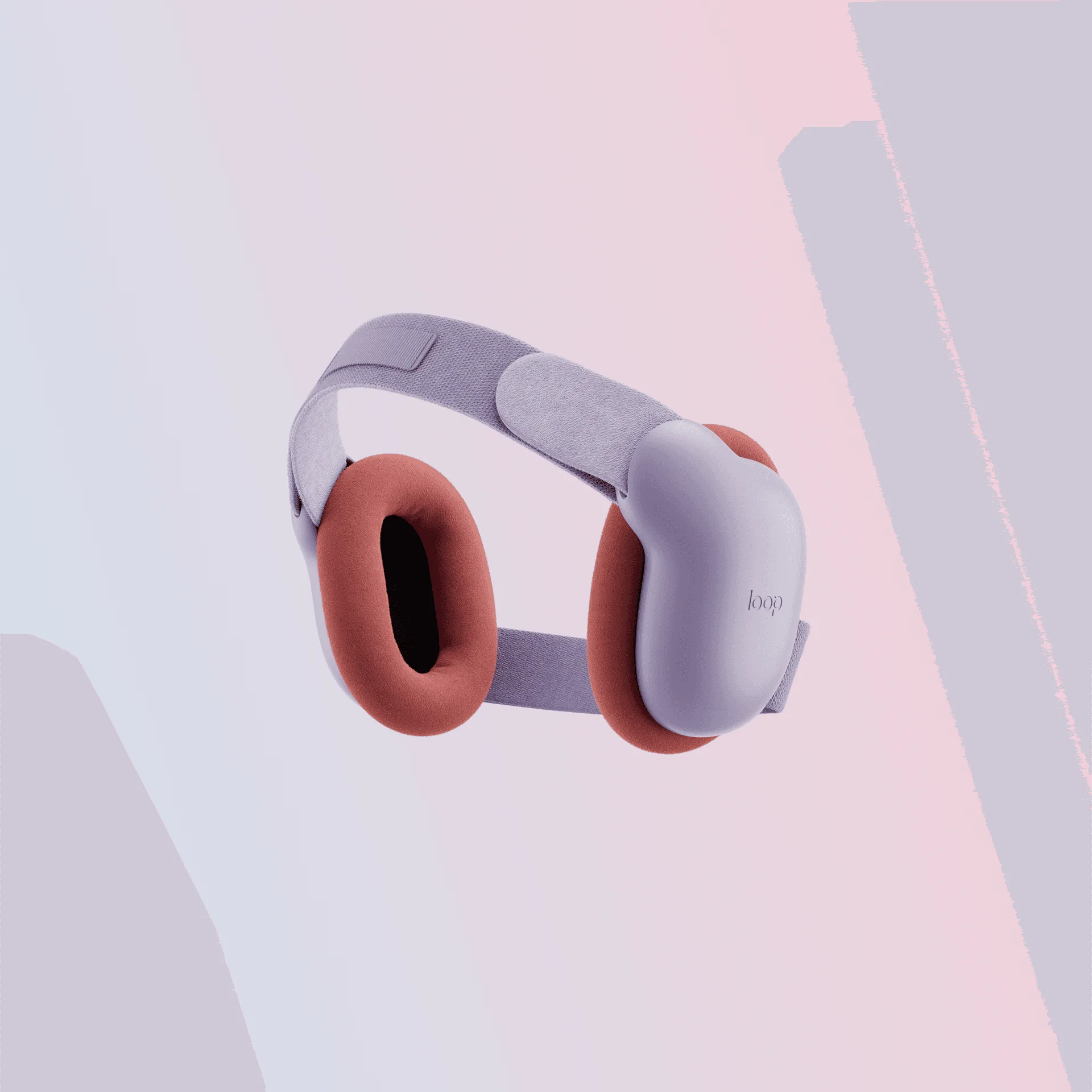
- Pain that persists after two or three days of adjusted wear: You've changed size, depth, and duration and the discomfort is unchanged or worsening. That points to canal geometry that in-ear plugs can't accommodate comfortably. Stop here. Switch to over-ear protection such as earmuffs, which avoid canal contact altogether, rather than continuing to experiment with tips.
Products that help with specific fit problems
- Loop Switch™ 2: Loop SwitchTM 2 offers adjustable noise control so you can switch between different sound levels to suit your environment, in a compact design built for extended wear. If your soreness comes from wearing one fixed level of protection all day, being able to dial the reduction down when you don't need maximum blocking means less pressure and less time at full seal.
- Loop Cocoon™ Baby Earmuffs: Loop CocoonTM Baby Earmuffs are designed specifically for babies and young children and offer a comfortable, secure fit that's easy to put on and take off. When a child's ear canals are too small or too sensitive for any in-ear tip, over-ear protection sidesteps the pressure problem entirely.
- Loop Engage™ Kids 2: Loop EngageTM Kids 2 earplugs are designed for children with a comfortable fit for smaller ears, and they reduce overwhelming noise while still allowing clear conversation and awareness of surroundings. Kids often report soreness as general fussiness, so a child-specific fit and easier insertion make it simpler to tell whether the problem is size, technique, or something else.