Quick answer
Wet rock slip usually comes from the rubber compound's hardness, shallow or worn lugs, or smooth tread patterns. Start by checking your outsole material and lug depth, then adjust your foot placement or consider a shoe with a stickier, more aggressive tread.
Rubber compound matters more than you think
Not all outsoles are made the same. Softer rubber compounds (around 60 Shore A) grip wet rock better than harder compounds (70+ Shore A) because they deform around micro-texture. However, soft rubber wears faster on abrasive trails. Many mountain running shoes balance durability and wet grip, but if you prioritize wet rock traction, look for a shoe with a proven sticky rubber formulation.
Tread pattern and lug depth
Deep, multi-directional lugs provide grip in mud and loose dirt, but on smooth wet rock, the contact area between the rubber and the surface is smaller. A tread with closely spaced, low-profile lugs or a continuous rubber patch in the forefoot actually improves wet rock purchase. If your shoe has widely spaced, tall lugs, you may slip on slick slabs. Worn lugs (less than 2 mm depth) significantly reduce traction on any surface.
Surface film and contamination
A thin layer of water, algae, mud, or dust on rock acts as a lubricant. Your shoe's outsole rubber can't cut through that film if the lugs are too smooth or too hard. Cleaning the rock with your foot or using a deliberate planting motion can sometimes break the film. For persistent issues, the surface condition is a factor you cannot change with footwear alone.
Diagnose and fix wet rock slip in 4 steps
- Symptom: you slip immediately when stepping on wet smooth rock: Check the outsole rubber hardness. If the shoe has been worn on abrasive trails, the rubber may have hardened or glazed over. Rub your thumb across the lugs: if they feel hard and smooth, the rubber compound is likely too hard for wet rock. If rubber is hard, consider a shoe with a softer, stickier rubber compound for wet rock use.
- Likely cause: shallow or worn lugs: Measure the lug depth in the forefoot and heel. Anything under 2 mm means the tread cannot bite into micro-texture. Worn lugs also reduce the shoe's ability to shed mud, leaving a slippery film between rock and rubber. If lugs are worn, replace the shoes. Do not rely on worn tread for traction on wet rock.
- Corrective action: adjust foot placement and braking technique: Instead of landing flat-footed, place the entire outsole surface on the rock at once. Avoid dragging your foot. On steep wet rock, keep your weight over your feet and use smaller, quicker steps. Braking by digging your heel in increases slip risk. Practice deliberate, full-foot placement on wet rock during dry conditions to build muscle memory.
- Stop point: when to choose a different shoe: If you have tried softer placement and your shoe lugs are fresh, yet you still slip, the shoe's outsole compound is simply not designed for wet rock. Look for a mountain running shoe with a sticky rubber outsole and a less aggressive, more continuous tread pattern. If your current shoes cannot hold wet rock after all adjustments, it is time to buy a shoe optimized for that surface.
Shoe spotlight
-
Wildcat 2.0 GTX Women's: The Wildcat 2.0 GTX has an aggressive outsole and supple midsole for stability on rough trails, and a waterproof ePE Gore-Tex lining for wet conditions. Its aggressive outsole helps dig into loose and uneven terrain, although the Gore-Tex lining and full rubber coverage mean wet rock slip still depends on the specific rubber compound. The stable platform gives you confidence to focus on foot placement.
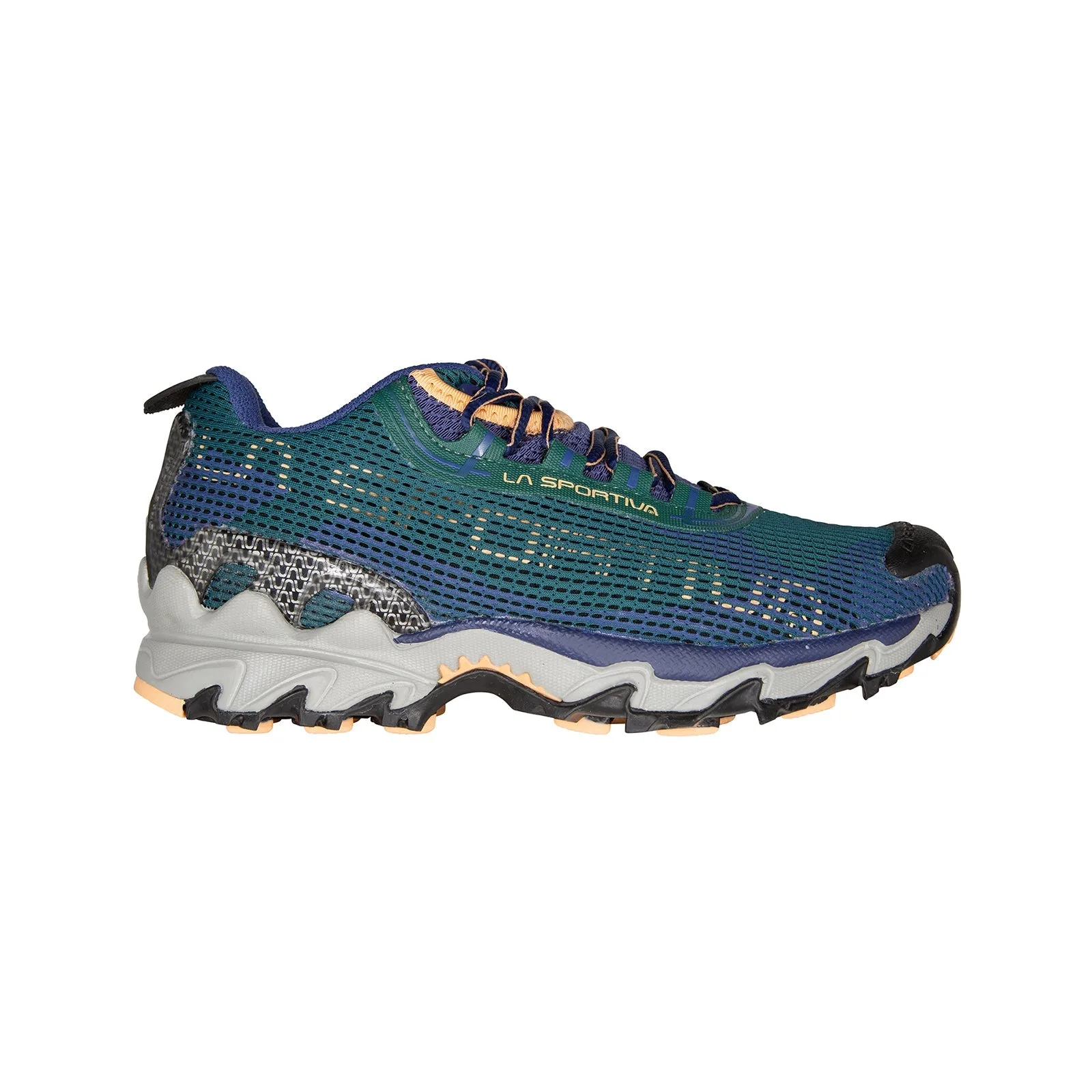
Wildcat 2.0 GTX Women's