Quick answer
Polish that lifts as a single sheet almost always means the bond between polish and nail never formed. Fix it by dehydrating the nail plate, skipping oily cuticle products before painting, and using a base coat made for your polish type. If your nails bend easily or you soak them in water daily, no base coat will fully stop lifting, and a flexible formula plus shorter wear time is the realistic option.
A manicure that comes off in one clean sheet looks like a polish problem. It is usually a prep problem. When the whole film releases together, the layers bonded to each other but not to your nail, so the first bit of lifting travels across the entire plate.
That is different from chipping, where wear starts at the tip and works backward. Peeling in one piece points to moisture, oil, or a base coat that is doing the wrong job for the formula on top of it. Work through the causes below in order, and stop when the fix actually holds.
Symptom check: peeling versus chipping
Before changing anything, look at where the failure started. If the polish lifted from the cuticle side or came off as one flexible sheet, the bond to the nail failed. If it wore thin at the free edge and flaked, you have a durability or top coat issue instead.
Press the lifted piece. A sheet that bends without cracking is still bonded to itself, which confirms the base layer never gripped. A piece that snaps or crumbles suggests the polish dried too hard or too thin. This distinction decides whether you change prep or change formula.
- Lifts from the cuticle side: prep or base coat problem
- Wears at the tip first: top coat or edge sealing problem
- Comes off in one flexible sheet: bond failure at the nail plate
- Cracks and flakes: too many thin coats or an overly brittle formula
Cause 1: oil and moisture on the nail plate
Natural nail oil and leftover cuticle cream are the most common reason polish releases in one piece. Polish cannot bond to a slick surface, so it bonds to itself and lifts as a unit. Even a hand cream applied an hour earlier can leave enough residue to matter.
Wipe each nail with a lint-free pad and a quick-drying cleanser or acetone right before you paint, then let it flash off completely. Do not touch the nail surface with your fingers afterward. Paint one hand at a time so the prep stays fresh while you work.
- Cleanse immediately before painting, not before shaping
- Avoid cuticle oil and hand cream until the manicure is fully dry
- Do not blow on nails to dry them; breath adds moisture
Cause 2: the wrong base coat for the formula
A base coat is not a universal product. Grippy bases for cream and shimmer polish behave differently from bases used under magnetic, multichrome, or reflective glitter formulas, which are often thicker and need a base that will not stay slippery underneath them.
If your polish peels but your prep is clean, test one variable at a time. Paint the same polish over two different base coats on different hands and compare after four days. Changing prep, base, and top coat at once tells you nothing about which one fixed it.
- Match base coat type to polish type rather than using one for everything
- Give a new base coat at least two full manicures before judging it
- Skip base coat entirely only for peel-off or temporary looks
Cause 3: application that traps solvents
Thick coats dry on the surface while solvent stays underneath. That trapped solvent softens the base layer, and the whole film slides off later. Two to three thin coats beat one heavy coat every time, especially with glitter-heavy formulas that build quickly.
Wrap the tip by running the brush along the free edge, and keep polish off the skin. Polish that touches cuticle or sidewall skin creates a lip that catches on everything and starts the lift. Clean the edges with a small brush and remover before the polish sets.
- Thin coats, more of them, with a minute between layers
- Cap the free edge to seal the film
- Remove polish from the skin before it fully hardens
Cause 4: water and daily wear
Nails absorb water and swell, then shrink as they dry. Repeated soaking makes the nail plate move under a film that cannot, and the polish releases. Long baths, dishes without gloves, and cleaning products all speed this up.
If your routine involves daily water exposure, wear gloves for wet tasks and accept a shorter wear window. A flexible formula, a fresh base coat, and a top coat reapplied at day three will outperform any single long-wear claim under those conditions.
- Gloves for dishes, cleaning, and long soaks
- Reapply top coat at day three to refresh the seal
- Expect shorter wear if your hands are in water daily
When to stop troubleshooting and change approach
If prep is clean, the base coat matches the formula, coats are thin, and polish still lifts in one piece within a day, the problem is likely your nail type or the formula itself. Flexible, thin nails move more than rigid films can tolerate, and some thick glitter formulas simply will not flex with them.
At that point, stop buying more base coats. Switch to a formula that stays slightly flexible, keep manicures shorter, or use a peel-off base deliberately so removal is controlled rather than accidental. A predictable two-day manicure beats a surprise peel on day four.
- Two clean attempts with different base coats is enough data
- Prioritize flexible formulas over maximum wear claims
- Use peel-off base on purpose if lifting is unavoidable
Peeling diagnosis chart
- Lifts within 24 hours, comes off as one sheet: Oil or moisture on the nail plate, or a base coat that never bonded. Cleanse with acetone immediately before painting and test a different base coat. If it still lifts in a day, the issue is nail flexibility or the formula, not your prep.
- Holds for two to three days, then releases from the cuticle side: Polish touching the skin or a heavy first coat trapping solvent. Keep a hairline gap at the cuticle and use thinner layers. This is fixable with application changes alone.
- Lifts only after dishes, showers, or swimming: Water swelling under a rigid film. Wear gloves for wet tasks, reapply top coat at day three, and expect a shorter wear window. Stop chasing long wear if your hands are in water daily.
- Peels in one piece no matter what you change: Thin or flexible nails moving under a stiff, thick formula. Switch to a more flexible polish or use a peel-off base deliberately. Two clean attempts with different bases is your stopping point.
Formula notes that affect peeling
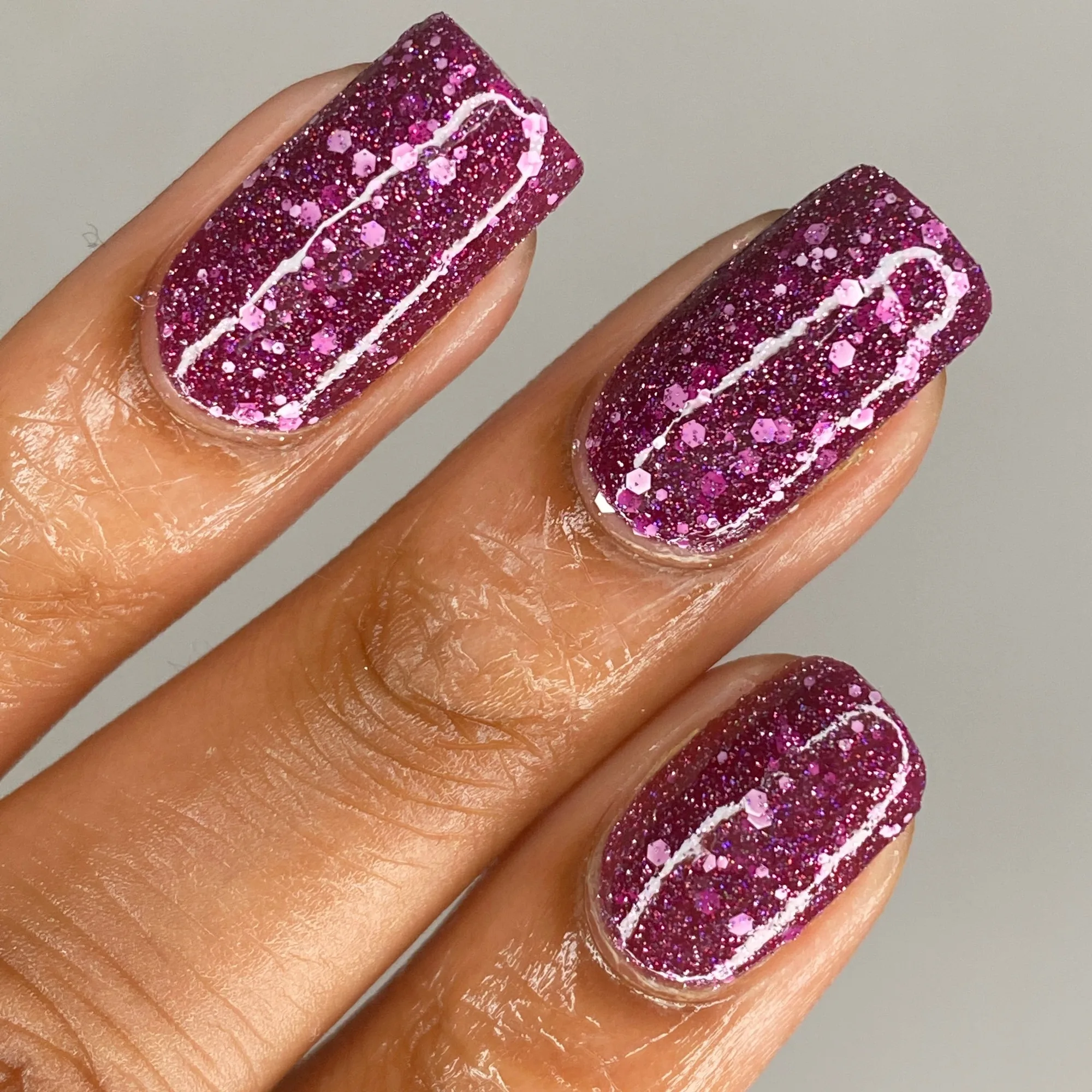
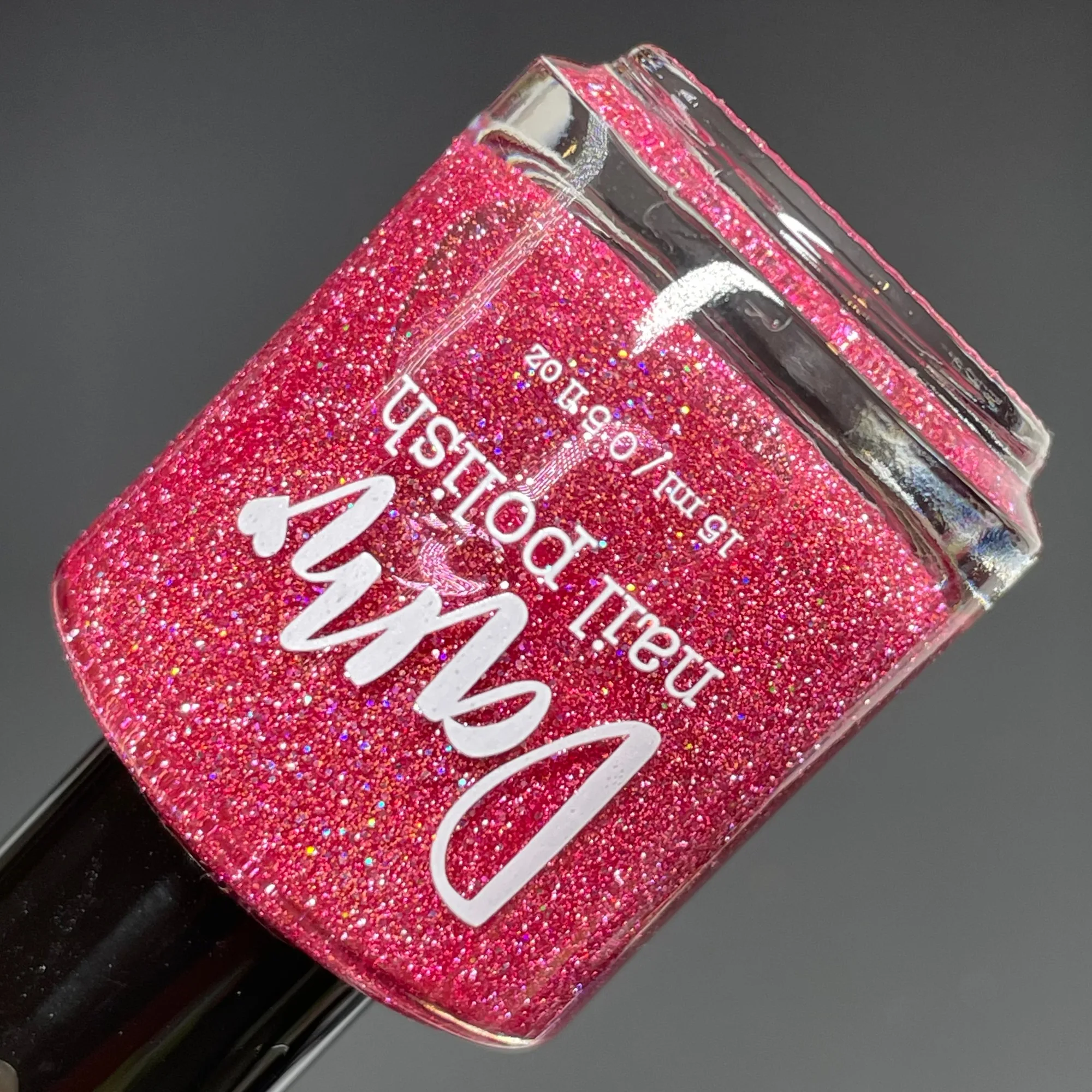
- Gone Dormant - Plum Reflective Glitter Nail Polish - Hibernation Collection: Deep plum jelly polish with holographic reflective glitters and assorted white glitters, recommended at 2-3 coats in 15ml. Jelly formulas are built from translucent layers, so thin coats are the intended application. Loading them on thick traps solvent and is a common trigger for one-piece lifting.
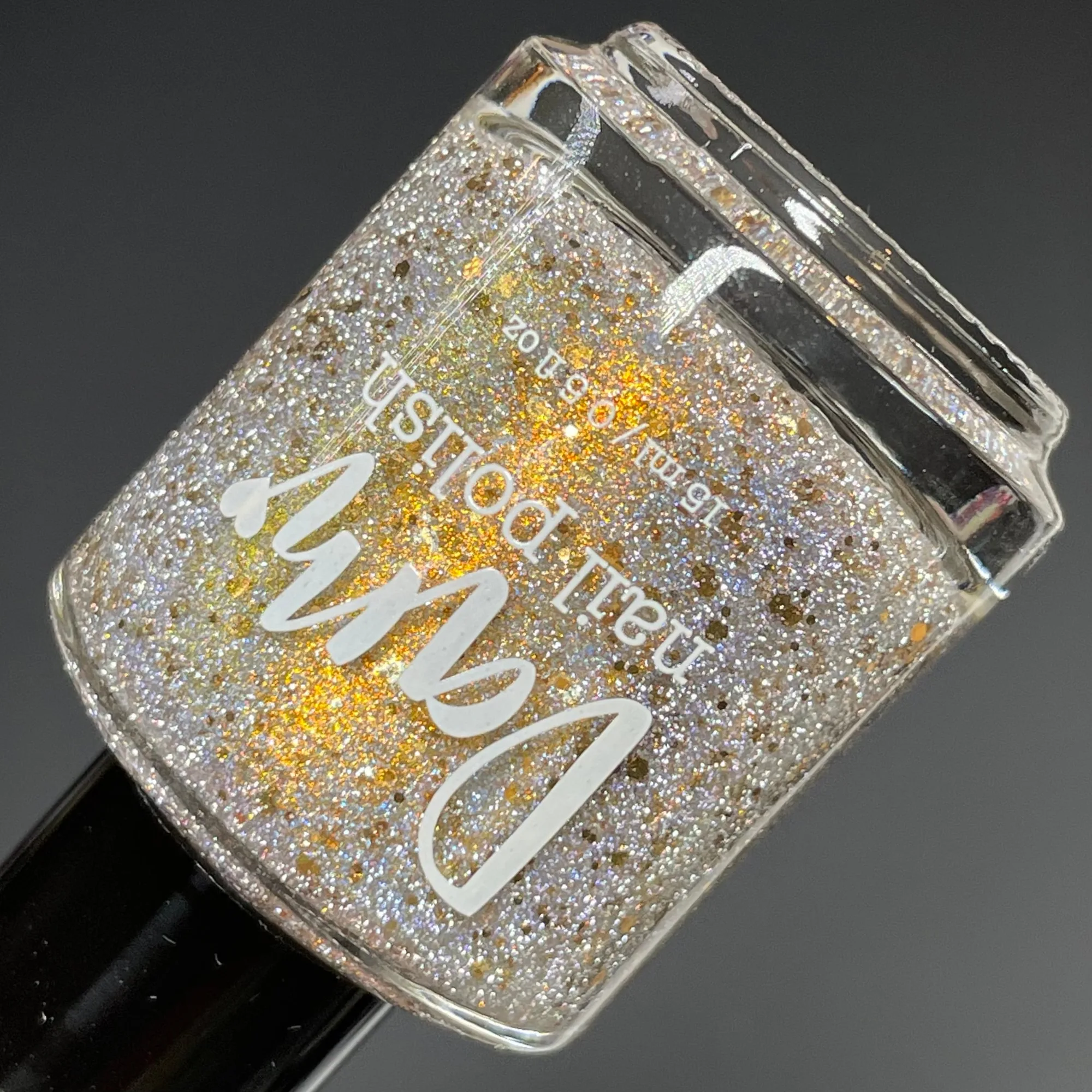
- Caramel Apple Bottom Jeans - Silver Reflective Glitter Nail Polish with Gold Shimmer - Sugar Rush Collection: Silver reflective glitter base with strong gold shimmer and assorted gold glitters, recommended at 2 coats in 15ml. A two-coat formula builds coverage fast. If you habitually add a third heavy coat for opacity, you are adding solvent without adding grip, which softens the base layer underneath.
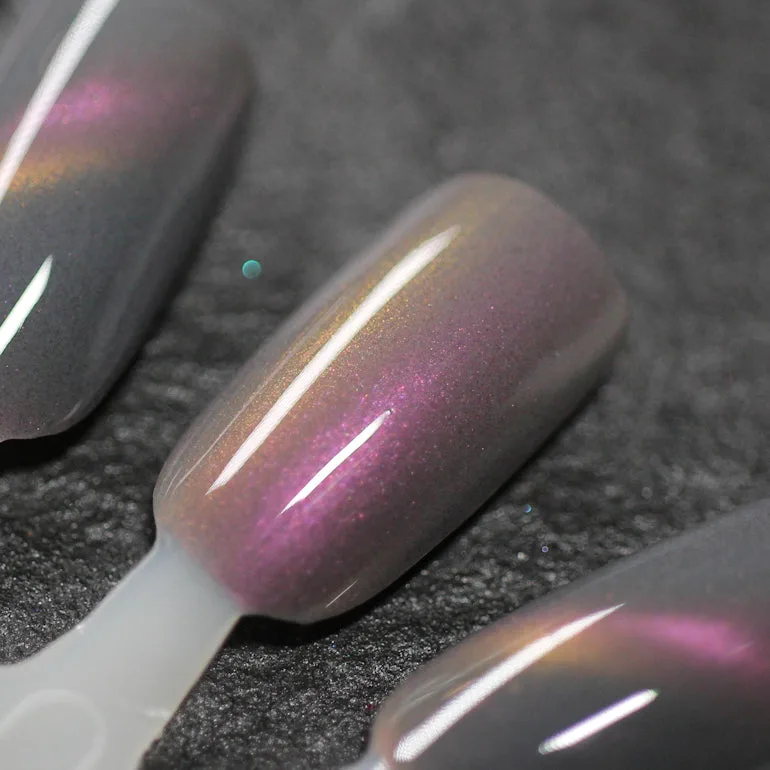
- Flesh of the Undead - Gray Magnetic Nail Polish - Halloween Quad 2024: Deep gray cream with a red/gold shifting magnetic effect, recommended at 2 coats in 15ml. Magnetic polish needs a base that will not stay slick while you hold the magnet, so pairing it with a grippy base coat matters more than with a standard cream.
Peeling in one piece is a bond problem, and bond problems are solved before the first coat of color goes on. Clean the nail, match the base coat to the formula, keep layers thin, and protect your hands from long soaks. If it still lifts after two honest attempts, change the formula instead of buying another base coat.