Quick answer
If your perfume fades by lunchtime, the most common causes are dry skin, spraying too little or in the wrong spots, and expecting a light citrus or fruity formula to behave like a heavy oriental. Fix it by moisturizing first, spraying on pulse points and clothing, and choosing a fragrance concentration that matches your skin. If you have tried these steps and still get two hours or less, the formula itself may be the limiting factor, and it is worth switching to a richer composition.
Symptom: The scent is gone by 11 a.m.
This is the classic complaint behind why perfume fades quickly. You spray in the morning, enjoy it for an hour, and by mid-morning you cannot detect it unless you press your nose to your wrist. Before you blame the fragrance, check whether the problem is on your skin or in your nose. If you can still smell it faintly on your wrist but not in the air around you, the issue is projection and sillage, not longevity. If it is completely gone from skin, the cause is usually skin chemistry or application.
Likely cause: Dry skin holds scent poorly
Fragrance molecules evaporate faster from dry, unmoisturized skin. If your skin is flaky, tight after showering, or you live in a dry climate, this is probably your main problem. The fix is simple: apply an unscented moisturizer or a matching body lotion immediately after showering, then spray perfume on top. Hydrated skin acts as a slower-release base. This one change often adds two to three hours of wear. For very dry skin, reapply moisturizer to pulse points before your midday touch-up.
Likely cause: You are spraying too little or in the wrong places
Two sprays on the wrists is not enough for most eau de parfums if you want all-day presence. Pulse points—wrists, inner elbows, base of the throat, behind the ears—generate warmth that diffuses scent. But rubbing your wrists together after spraying crushes the top notes and speeds evaporation. Instead, spray and let it dry. Also spray one or two passes on your clothing, especially on natural fibers like cotton or wool, which hold scent longer than skin. Just be aware that some fragrances can stain delicate fabrics, so test on a hidden area first.
Likely cause: The formula is light by design
Citrus, aquatic, and many fruity perfumes are built around top notes that naturally last two to four hours. That is not a defect; it is the style. If you love a fresh, solar scent like Tamarindo, you cannot expect it to perform like a resinous oriental. The corrective action is either to reapply midday or to layer it with a richer base. If you want a fragrance that stays close to the skin for six to eight hours without reapplication, look for compositions with base notes such as benzoin, sandalwood, labdanum, vanilla absolute, or iris concrete. Those materials evaporate slowly and extend the dry-down.
When to stop fixing and choose another option
If you have moisturized, adjusted your spray technique, and still get less than three hours from a fragrance you love, stop fighting it. Some skin chemistry simply amplifies certain notes and swallows others. In that case, your options are: keep the light scent for warm weather and quick errands, or switch to a perfume with a heavier base for days when you need longevity. Do not overspray to compensate—six or more sprays of a light eau de parfum will not last longer and may annoy everyone around you. The right move is to accept the fragrance's natural wear time and choose a different formula for long days.
Diagnosis: Find your fade pattern
- Fades within 1 hour: Almost always dry skin or a fragrance applied to dry skin. Start by moisturizing immediately before spraying. If that fails, the formula is likely too light for your skin chemistry. Try moisturizer first. If no improvement, switch to a base-heavy perfume.
- Fades by 3–4 hours: Normal for citrus, aquatic, and many fruity eau de parfums. You can extend it with a midday reapplication or by spraying on clothing. Do not expect more than four hours from a fresh summer scent. Carry a travel spray or accept the natural wear time.
- Fades by 6–8 hours: This is actually good longevity for an eau de parfum. If you want more, look for extrait concentrations or fragrances with heavy base notes like benzoin, labdanum, or sandalwood. Check the product description for these materials. You are already in the long-wear category. Only switch if you want a richer trail.
- You cannot smell it but others can: This is olfactory fatigue, not fading. Your nose adapts to the scent. Ask someone else before you reapply. Over-spraying is the most common mistake here. Stop. Do not add more sprays. Your perfume is still working.
Fragrances that demonstrate different longevity profiles
- Ilha Do Mel: Ilha Do Mel is described as crests of broom absolute rolling into noble iris concrete, a honeyed composition inspired by a Brazilian island. Iris concrete and honeyed accords are heavier base materials that tend to extend wear compared to a simple citrus splash, making this a better candidate for all-day longevity if your skin eats light scents.
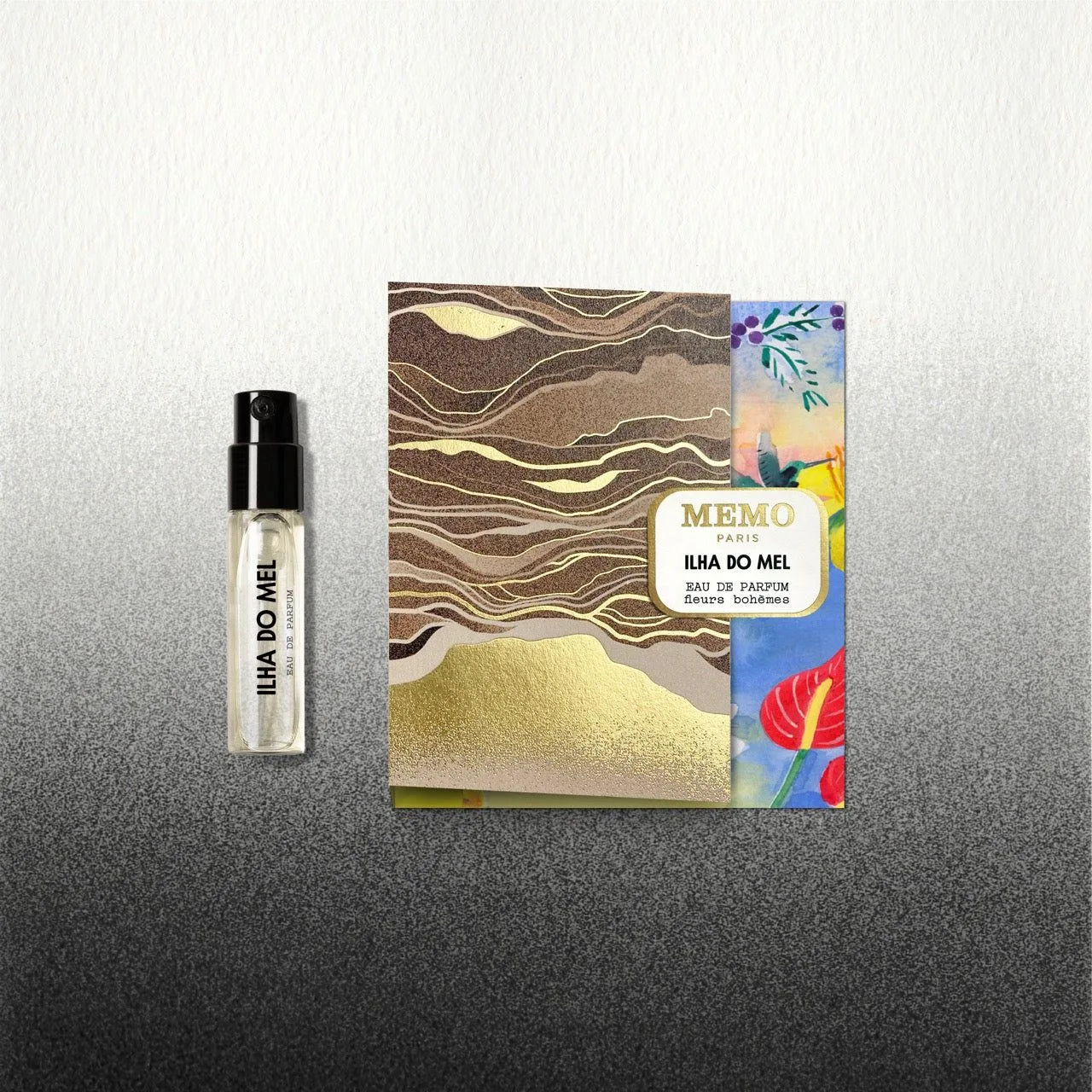
Ilha Do Mel
- Tamarindo: Tamarindo is a solar scent nestled in lush wilderness, with a round of captivating notes and a joyful, fruity character. This is an example of a bright, fresh composition that may naturally last two to four hours. If you love it but need longer wear, plan to reapply or layer it over a moisturizer.
- Cap Camarat X Olimpia Zagnoli: https://memoparishg.com/products/cap-camarat-349718https://memoparishg.com/products/cap-camarat-349762https://memoparishg.com/products/cap-camarat-349771Cap Camarat X Olimpia Zagnoli unites ylang-ylang, vanilla absolute and amyris essence, with benzoin, sandalwood and labdanum. The presence of vanilla absolute, benzoin, sandalwood and labdanum signals a base-heavy structure that typically clings to skin and fabric for many hours, ideal if your priority is longevity over a fleeting top-note burst.