Quick answer
Paper strips show a perfume's basic structure, but they can't predict how it will smell on your skin. Skin chemistry — your natural oils, moisture, pH, and temperature — interacts with fragrance molecules and changes the drydown. Always test on skin before judging a scent.
Why paper and skin give different results
A paper strip is a neutral, dry surface. It lets the fragrance evaporate at a steady rate, so you mostly smell the top notes and a simplified version of the heart. Skin is warm, slightly acidic, and covered in oils and moisture. These conditions speed up some evaporation and slow down others, which is why a perfume that smells crisp on paper can turn sweet, sour, or flat on skin.
Your skin's pH and oil balance are unique. The same fragrance can smell radically different on two people because the molecules bind to skin at different rates. This is fragrance skin chemistry, and it's the main reason a scent you loved on a friend may not work on you.
What paper strips are actually good for
Paper strips are still useful for a first impression. They let you compare several scents quickly without overwhelming your nose, and they reveal the general family — fresh, woody, oriental, gourmand. They also help you detect whether a fragrance opens sharp or smooth. But a paper test tells you almost nothing about the drydown, which is where skin chemistry matters most.
Use paper to narrow down your options, then move to skin for the final decision. Never buy a full bottle based only on a paper strip.
The role of application and timing
Where and how you apply a fragrance changes its evolution. Pulse points — wrists, neck, behind the ears — are warmer and produce more projection. Moisturised skin holds scent longer than dry skin. If you apply to clothing, the fabric acts more like paper: it preserves the top notes but may never develop the full drydown.
Wait at least 30 minutes before judging a scent on skin. The first five minutes are mostly top notes; the true character emerges after the heart notes settle. For a full picture, wear it for a few hours and check how it wears by the end of the day.
Diagnose your skin vs paper results
- Symptom: The scent smells sharp or sour on skin but pleasant on paper: Likely cause: Your skin's pH is interacting with the fragrance's top notes, amplifying acidity. Corrective action: Wait 20 minutes — the sharpness may fade as the heart notes develop. If it persists, try applying to a moisturised area or a different pulse point. Stop if the sourness lasts more than an hour; that fragrance may not suit your skin chemistry. A sour opening that never resolves is a sign to try a different fragrance family.
- Symptom: The perfume disappears on skin within an hour but lasts for hours on paper: Likely cause: Dry skin or a high body temperature is causing the fragrance to evaporate too quickly. Corrective action: Apply a fragrance-free moisturiser before spraying, and target pulse points. If longevity is still poor, consider a higher concentration like an extrait de parfum. Stop if you have to reapply more than twice a day — that scent isn't a match for your skin. Extrait de parfum formulas generally last longer on skin than eau de toilette.
- Symptom: The scent smells completely different on you than on a friend: Likely cause: Normal variation in skin chemistry — oils, pH, and diet all play a role. Corrective action: Don't assume a fragrance will smell the same on you as on someone else. Always test on your own skin. If you love it on a friend but not on you, try layering with a complementary body lotion or look for a similar scent profile in a different formulation. Stop if you've tested it twice on skin and still dislike it — your nose is telling you something. Skin chemistry is personal; a fragrance that works for a friend may not work for you.
Product facts
-
Why: Why is an extrait de parfum with a fresh-aromatic-woody profile, opening with crisp apple, aldehydes, ginger, and grapefruit. Extrait concentration means it develops slowly on skin, so the difference between paper and skin will be especially noticeable — test it on skin to see how the warm base emerges.
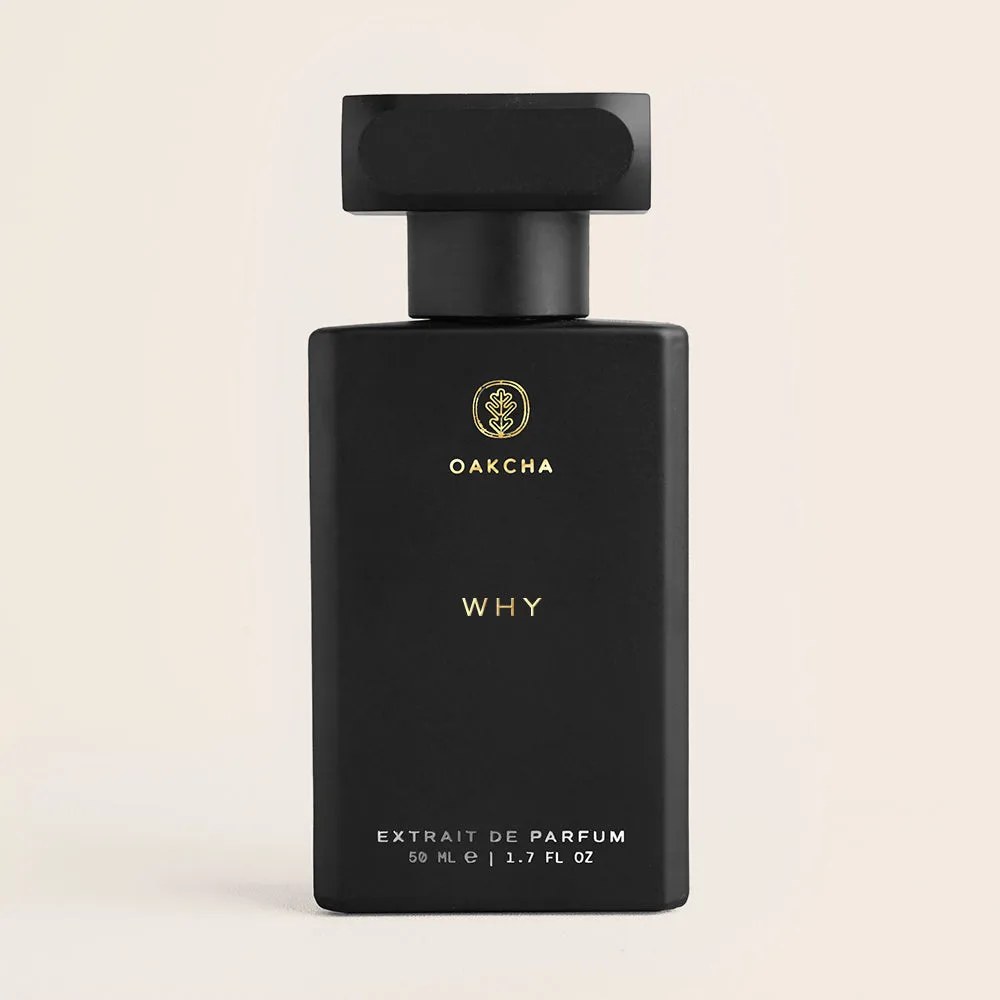
Why