Quick answer
A wavy poster is almost always caused by moisture imbalance, tight rolling, or uneven temperature during shipping, not by a printing error. Give the print 24 to 48 hours to relax flat under light weight in a dry room before you try anything more aggressive. If the paper still ripples after that, the curl is likely set into the fiber and you should frame it rather than keep pressing it.
poster
Symptom: What waviness actually looks like
Waviness shows up in three distinct patterns, and each points to a different cause. Edge curl means the outer edges lift while the center stays flat, which usually signals the poster was rolled too tightly for too long. Broad ripples across the whole sheet, often called cockling, point to moisture. A single sharp crease or bent corner is physical shipping damage, not a humidity problem, and it will not flatten out with weight.
- Edge curl: edges lift, center flat — rolling tension
- Cockling: wavy ripples across the sheet — moisture imbalance
- Crease or bent corner: sharp fold line — impact damage
Cause: Why paper curls after shipping
Paper is hygroscopic, meaning it absorbs and releases moisture from the air. When a poster travels in a tube through cold or dry conditions and then lands in a warm, humid room, the paper expands unevenly and ripples. Tight rolling adds memory to the fibers, so the sheet wants to stay curved. Heat during transit can also soften the coating on glossy or fine-art papers, making the curl set faster.
Fix: How to flatten a poster without damage
Start with the gentlest method and only escalate if needed. Unroll the poster face-up on a clean, dry surface in a room at normal indoor humidity. Place a clean sheet of acid-free paper or a cotton towel over the print, then add flat, evenly distributed weight such as books or a board. Wait 24 to 48 hours. If the poster is still wavy, flip it face-down on a clean surface and lightly mist the back with distilled water, then weight it again for another 24 hours. Never iron a poster directly, and never apply heat to a glossy or coated print, because the coating can cloud or stick.
- Unroll face-up and let it relax at room temperature
- Cover with acid-free paper or a clean towel, then add even weight
- Wait 24–48 hours before judging the result
- For stubborn curl, mist the back lightly with distilled water and re-weight
- Skip heat and irons entirely on coated or glossy prints
When to stop and choose another option
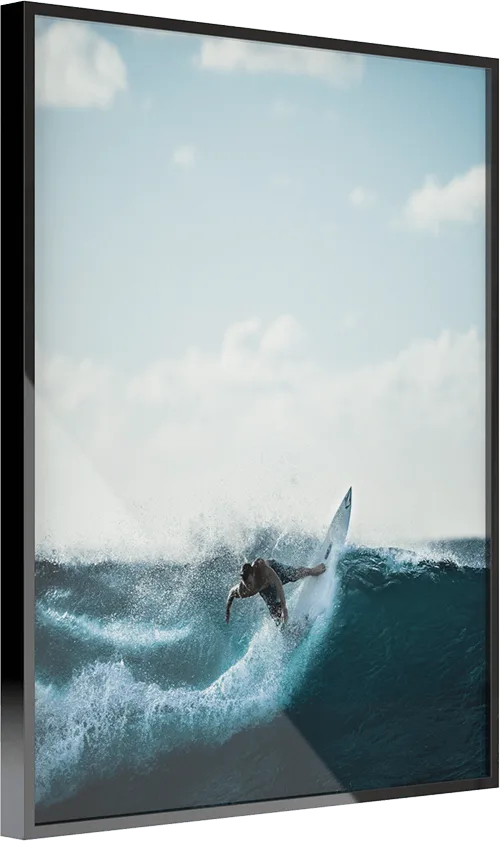
Stop pressing if the paper shows a visible crease line, if the coating looks cloudy or tacky, or if the poster has been weighted for more than three days with no improvement. At that point the curl is set and further pressure risks surface damage. The practical move is to frame the print, because a frame with a mat holds the paper flat against the backing and hides minor edge waves. If you want a print that arrives flat and stays flat, a rigid format removes the problem entirely.
Diagnosis checklist: match the symptom to the right action
- Edges lift, center flat: This is rolling memory. Unroll face-up, cover with acid-free paper, and weight evenly for 24 to 48 hours. If edges still lift after 48 hours, frame it with a mat.
- Ripples across the whole sheet: This is moisture imbalance. Let the poster acclimate in a dry room, then weight it flat. Light misting on the back with distilled water can help if the first attempt fails. Never use heat or an iron on a coated print.
- Sharp crease or bent corner: This is physical shipping damage. Weighting will not remove a crease line, and pressing harder can burnish the surface. Stop and contact the seller, or frame the print so the mat hides the damaged edge.
- Still wavy after three days of weight: The curl is set into the paper fiber. Further pressure risks surface damage with little chance of success. Choose a rigid format such as a metal print or a framed fine-art print instead.
Flat-arriving alternatives worth considering
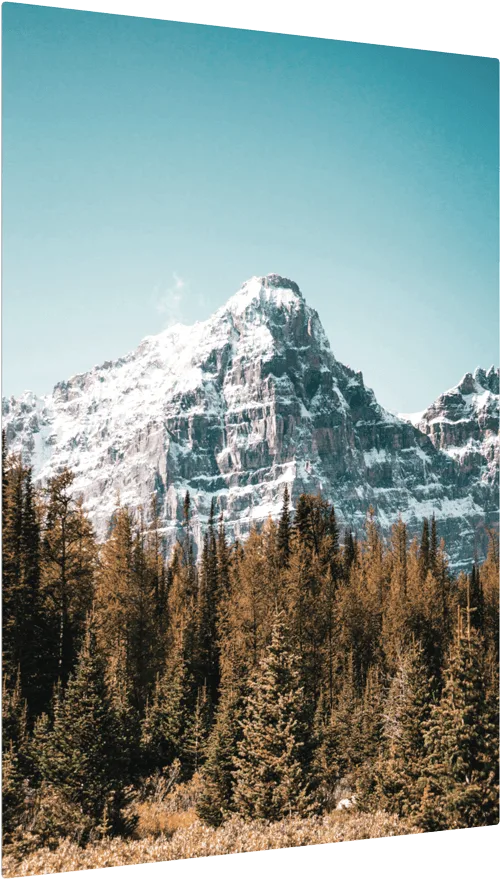
- HD Metal Print: HD Metal Print uses dye sublimation to infuse the image into aluminum with a glossy finish, and it is lightweight enough for large formats up to 24x36. Because the image is fused into a rigid aluminum sheet, there is no paper fiber to absorb moisture or hold a roll memory, so it cannot arrive wavy the way a rolled poster can.
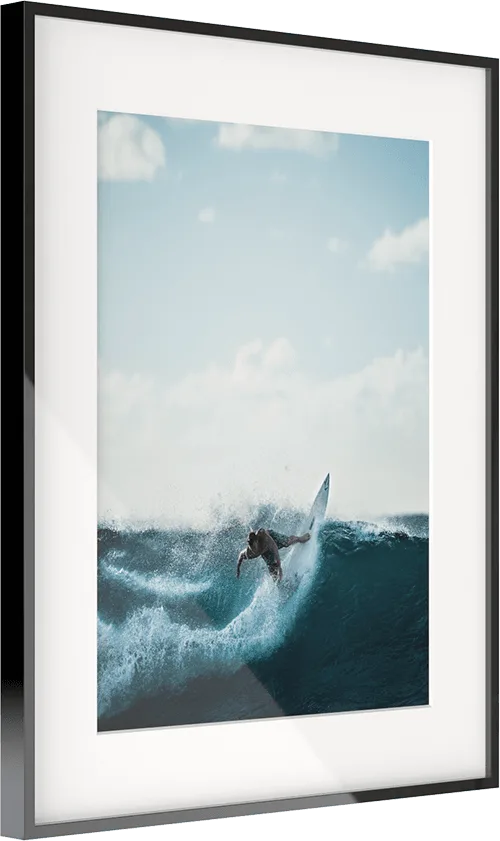
- Luxe Wall Thin - Black (With Regular Mat): Luxe Wall Thin - Black (With Regular Mat) is custom made-to-order in the USA and prints on Entrada Archival, a 100% cotton fine-art paper, with a finished paper back and wire hanger. Framing a curled print behind a mat presses the paper flat against the backing, which is the most reliable fix when a poster will not relax on its own.
- Canvas Grid II: https://frameologyer.com/products/black-framed-photo-gallery-wall-canvas-grid-02-8b5c05083996557871ffe7d9-1875943https://frameologyer.com/products/black-framed-photo-gallery-wall-canvas-grid-ab020074a6b10166617bbbfb-1875954Canvas Grid II is a 3x3 arrangement of nine 11x14 premium canvas prints forming a 45x51 inch focal point, handcrafted with pine hardwood mouldings and museum-grade materials. Canvas is stretched over a frame rather than shipped rolled as loose paper, so it holds a flat plane and sidesteps the waviness issue entirely if you are planning a gallery wall.