Quick Answer
Most press on lashes lift because of oil, moisture, or leftover makeup on the natural lashes, or because the cluster was pressed onto the skin instead of tucked under the lash line. Clean and dry the lashes first, then press each pre-glued cluster under the natural lashes and pinch gently at the base. If the band still lifts within minutes, the adhesive has been compromised and that cluster needs replacing rather than re-pressing.
Start With the Lash Line, Not the Lash
Pre-glued press-on clusters bond to the natural lashes, not to the eyelid. If you place a cluster on top of the lash line or on bare skin, it has nothing to grip and will lift at the inner or outer corner first. Tilt your chin down slightly, look into a mirror, and slide the cluster up under the natural lashes so the band sits just above the waterline and disappears into the lash line. Press once at the center, then pinch the inner and outer ends between two fingers for a few seconds. This one placement change fixes the majority of early lifting complaints.
Oil and Moisture Are the Quiet Killers
Adhesive does not bond to a slippery surface. Eye cream, facial oil, moisturizer, and even a recent shower can leave a film on the lashes that shortens wear to a few hours. Before applying, wash your hands, then wipe the natural lashes with a lint-free cloth or a clean spoolie to remove residue. Avoid oil-based eye products on lash days, and let lashes dry completely after cleansing. If you use a lash serum or conditioning product, apply it at night and give it time to absorb before your next press-on application.
Fix Lifting Mid-Day Without Starting Over
If one cluster lifts while you are out, resist the urge to press it back down with your fingers. Skin oils and any makeup on your fingertips will weaken the adhesive further. Instead, carry a clean cotton swab, gently blot the lifted band, and press the cluster back under the lash line with the swab or the back of a clean tweezers. If it lifts again within a few minutes, remove that cluster and replace it with a fresh one from the pack rather than fighting it. Keeping a few spare clusters in your bag is the simplest fix for a long day.
Choose the Right Format for Your Routine
The pack size and tooling you choose affects how forgiving the application is. A smaller pack with an applicator is easier to learn with and lets you replace a single lifted cluster without opening a large tray. A larger pack suits anyone who already has the placement motion down and wants spares on hand. If you prefer a bonded, glue-based hold instead of pre-glued clusters, a dual-purpose liner and lash glue gives you a different application method entirely, but it also requires a steadier hand and a few extra seconds per eye.
Diagnose Your Lifting
- Lifts within minutes of applying: The band was likely placed on skin or on top of the lashes instead of tucked underneath. Remove the cluster, check for oil or makeup residue, and reapply under the natural lashes with a firm pinch at the base. If it lifts again immediately, replace the cluster with a fresh one.
- Holds at first, then lifts by midday: Oil or moisture is breaking down the adhesive over time. Skip oil-based eye products on lash days, cleanse and dry the lashes fully before applying, and avoid touching the clusters with bare fingers. If midday lifting continues, switch to a glue-based under-lash method for a stronger bond.
- Only the inner or outer corner lifts: The corner was not pinched down. Use the applicator or clean tweezers to press the inner and outer ends against the natural lashes for a few seconds after the center is set. If corners still lift, trim or reposition the cluster so it does not extend past your natural lash line.
- Lifting returns no matter what you change: Pre-glued adhesive can be compromised by heat, humidity, or an expired pack. If every cluster in the pack behaves the same way, the pack itself may be the problem rather than your technique. Open a fresh pack before assuming press-on lashes are not for you.
Products That Help With Lifting
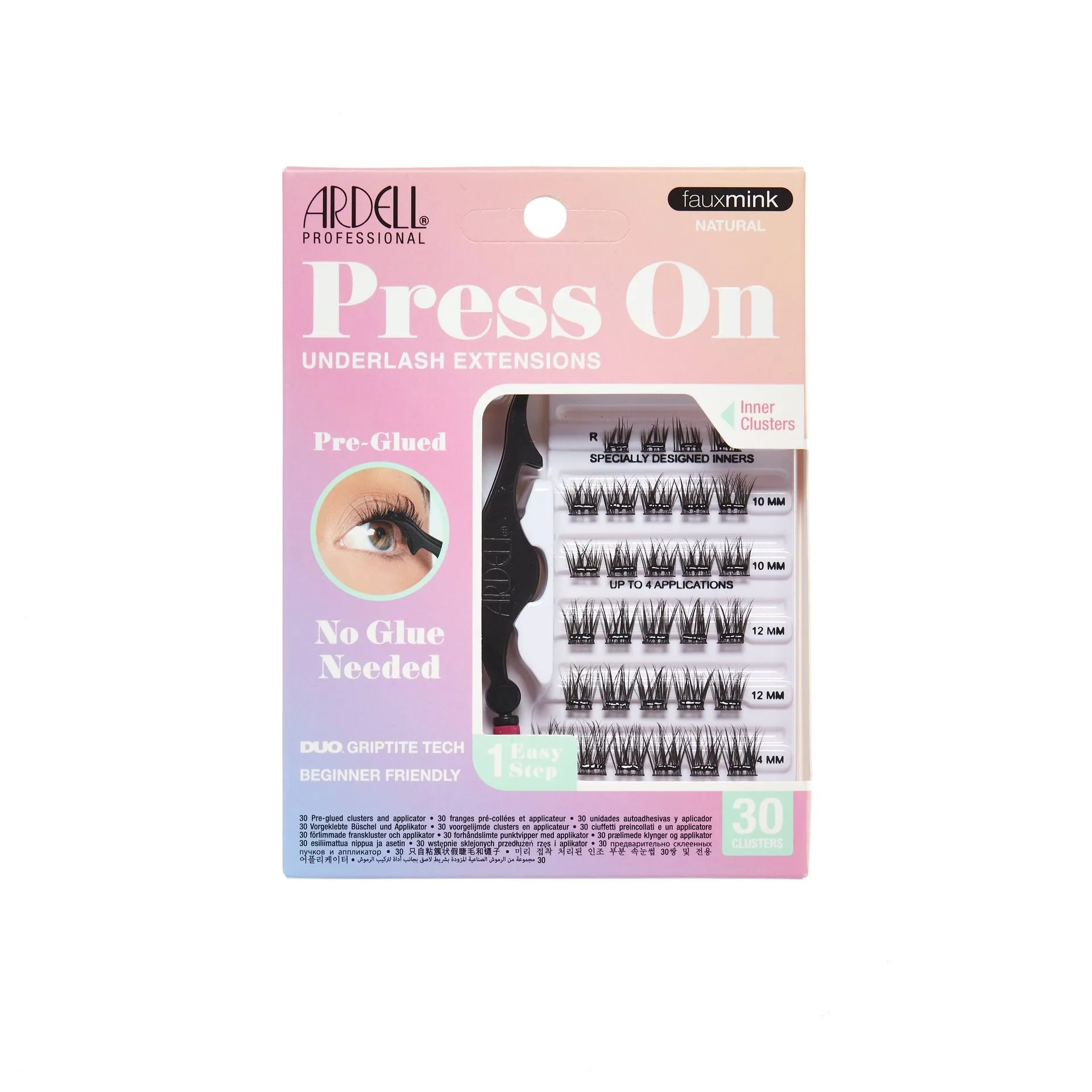
- Press On Fauxmink Natural 30 ct + Applicator: Press On Fauxmink Natural 30 ct + Applicator includes 30 pre-glued clusters in 4 lengths plus an applicator, and the extensions are placed under natural lashes so the bands can't be seen. The included applicator makes under-lash placement easier to control, which is the step most people get wrong when press on lashes start lifting.
- Press On Fauxmink Natural, 100-Count: Press On Fauxmink Natural, 100-Count is a 100-cluster pack of pre-glued underlash extensions with no glue, no fuss, and no mess. A larger pack means you can swap out a single lifted cluster instead of reworking the whole eye, which is useful if lifting happens often.
- DUO Over & Under Glue Liner, Black: DUO Over & Under Glue Liner, Black is a 2-in-1 liner and lash glue pen that can be swept along the lash line like classic liner or applied underneath for an undetectable bond. If pre-glued clusters keep lifting for you, switching to an under-lash glue method gives a different bond and lets you control how much adhesive you use.