Quick answer
Edge lifting is almost always one of four things: oil or moisture left on the nail plate, a tip that is slightly too wide or too narrow for the nail bed, too little glue, or a gap where the press-on does not sit flush against the cuticle and sidewalls. Fix the fit and prep first, then switch to a gel glue and UV lamp only if the same edges lift again.
You press the nail down, it looks perfect, and two days later the corner is catching on your hair. Press-on nails lifting at edges is the most common adhesion problem, and it is rarely caused by the nails themselves. It is usually a prep, sizing, or glue issue that shows up in the same spot every time.
The good news is that edge lifting is diagnosable. Below you will find the symptom, the likely cause, the corrective action, and the point where you should stop trying to fix a set and change your approach instead.
Symptom: one corner lifts while the rest stays tight
If a single edge pops up while the rest of the nail holds, the tip is not sitting flush against your natural nail in that spot. This is a fit problem, not a glue problem. A press-on that is even slightly too curved or too wide will rock on the high point of your nail and leave a gap at the edge.
Check the fit before you apply anything. Press the tip down dry and look at the sidewall and cuticle area. If you can see a sliver of light or feel the tip move when you press the corner, that is where it will lift.
- Press each tip on dry first and check for gaps at the sidewalls and cuticle.
- If one corner rocks, try the next size down or gently file the sidewall of the tip.
- Never force a too-wide tip flat with pressure; it will spring back and lift.
Symptom: lifting starts at the cuticle within a day or two
Cuticle-edge lifting usually means oil, moisturizer, or natural nail moisture was still on the plate when you applied the nail. Press-ons bond to a dry, oil-free surface. If you moisturized your hands an hour before applying, or you skipped the alcohol wipe, the glue is bonding to product rather than to your nail.
Buff the shine off the nail plate, wipe every nail with alcohol, and let it dry completely before you start gluing. Do not touch the nail plate with your fingers after wiping, because your skin's natural oils will undo the prep.
- Wipe with alcohol and let it air-dry for a few seconds before applying glue.
- Apply glue to both the natural nail and the inside of the press-on for a full bond.
- Hold the tip down for 20 to 30 seconds, pressing from cuticle to tip.
Symptom: nails lift after washing dishes, showering, or swimming
Water is the enemy of standard glue bonds. If your edges lift after your hands have been wet for a while, the glue is softening and the edge is peeling up. This is a nail glue gel lifting pattern, and it is the clearest signal that you need a stronger adhesive system rather than more glue.
A gel glue cured with a UV lamp creates a harder, more water-resistant bond than standard brush-on glue. If you already use gel glue and still get water-related lifting, check that you are curing long enough and that no glue squeezed out past the edge, because cured squeeze-out creates a lip that catches and peels.
- Wear gloves for dishes and cleaning to extend any press-on bond.
- If water is your main trigger, move to a gel glue plus UV lamp system.
- Wipe away any uncured glue at the edges before curing.
Symptom: every set lifts in the same place, no matter the style
If the same edge lifts across different sets and different glues, the problem is your nail shape or your application routine, not the product. Flat nails and very curved nails both need different handling. A flat nail bed needs a tip with a flatter curve, and a strongly curved nail needs a tip that wraps without tension.
This is also the point to check your sizing. A size that is close but not exact will always lift in the same corner. Take the time to size each nail individually rather than choosing one size for all ten.
- Size each finger separately; your two hands are often not identical.
- If you are between sizes, size up and file the sides to fit.
- If lifting continues across three or more sets, switch to a gel glue and lamp system.
How to fix a set that is already lifting
You can rescue a set if the lift is small and the glue underneath is still tacky. Clean the lifted edge with alcohol, dry it, and use a thin layer of glue on a toothpick to re-bond the edge. Press and hold for 30 seconds. This works for a corner that has just started to catch.
If the lift is more than a third of the nail, or if water has gotten under the tip, remove that nail and reapply it. Trying to glue down a large lifted area traps moisture and debris underneath, which is how you end up with a green discoloration or a nail that pops off at the worst moment.
- Small corner lift: clean, dry, re-glue with a toothpick, and hold.
- Large lift or water underneath: remove and reapply that nail.
- Never glue over a lifted edge that has debris or moisture under it.
Edge-lifting diagnosis: match the symptom to the fix
- One corner lifts, rest is tight: The tip is not sitting flush. Press it on dry and look for a gap at the sidewall or cuticle before applying glue. Fix the fit first. If the gap remains after trying the next size, file the sidewall of the tip.
- Lifting starts at the cuticle within a day: Oil or moisture was on the nail plate. Buff, wipe with alcohol, let it dry, and do not touch the plate afterward. If cuticle lifting continues after a clean prep, your glue may be too thin for your nail type.
- Lifting appears after water exposure: Standard glue is softening. This is the classic nail glue gel lifting pattern and points to the adhesive system, not the press-on. Switch to a gel glue cured with a UV lamp, and wear gloves for dishes and cleaning.
- Same edge lifts across every set: Your sizing or nail curve is the constant. Size each finger separately and size up if you are between sizes. If three or more sets lift in the same place, stop changing styles and change your adhesive and sizing routine.
- Lift is larger than a third of the nail, or water is underneath: Do not glue over it. Remove that nail, clean the natural nail, and reapply from scratch. Stop here and reapply rather than patching. This is the point where a fix becomes a risk.
What the catalog tells you about fit and hold
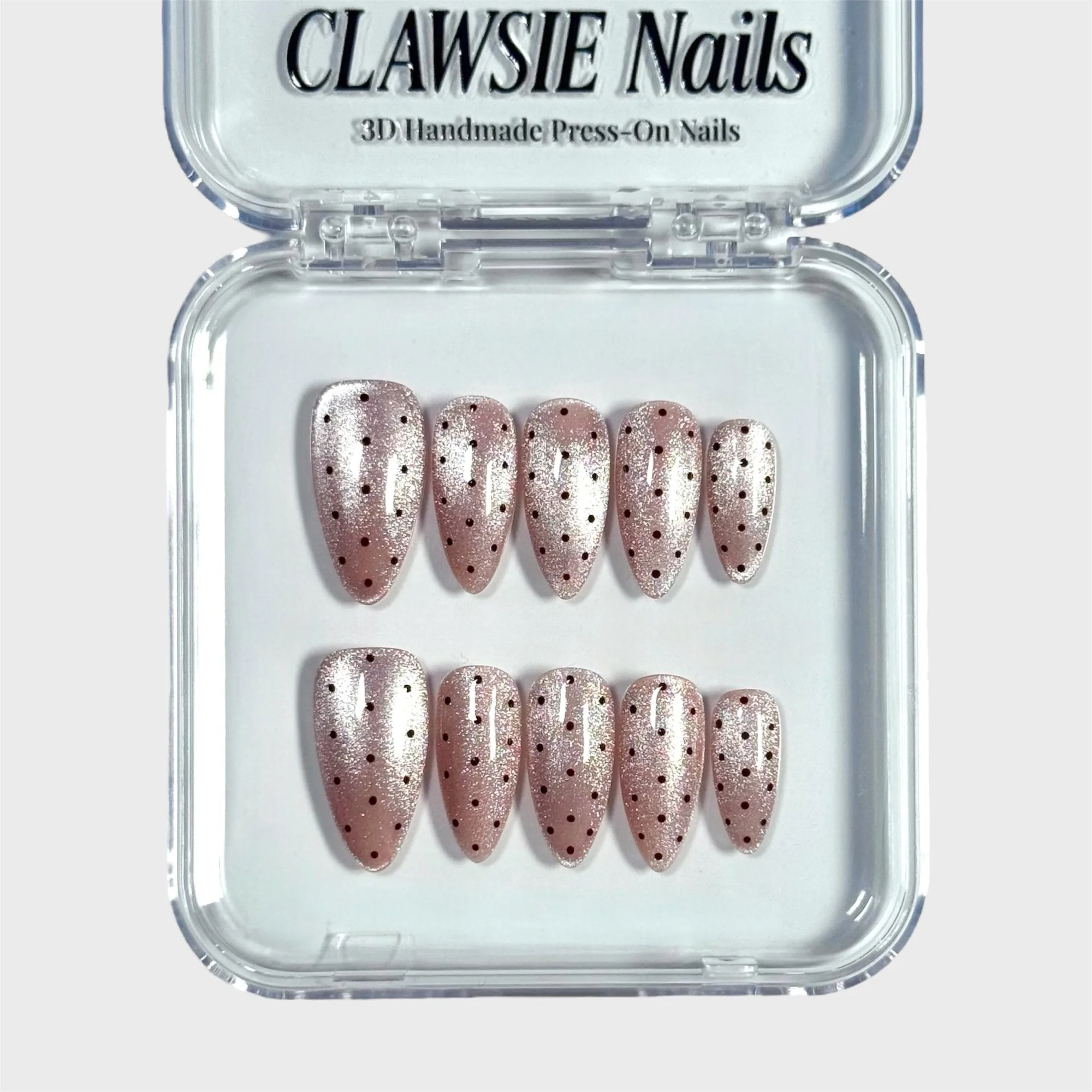
- Hayley Dots: Hayley Dots is a press-on nail set offered in sizes XS, M, and L, with size selectable as a product option. Multiple sizes let you match each nail bed more closely, which is the single biggest fix for edge lifting caused by a tip that is slightly too wide or too narrow.
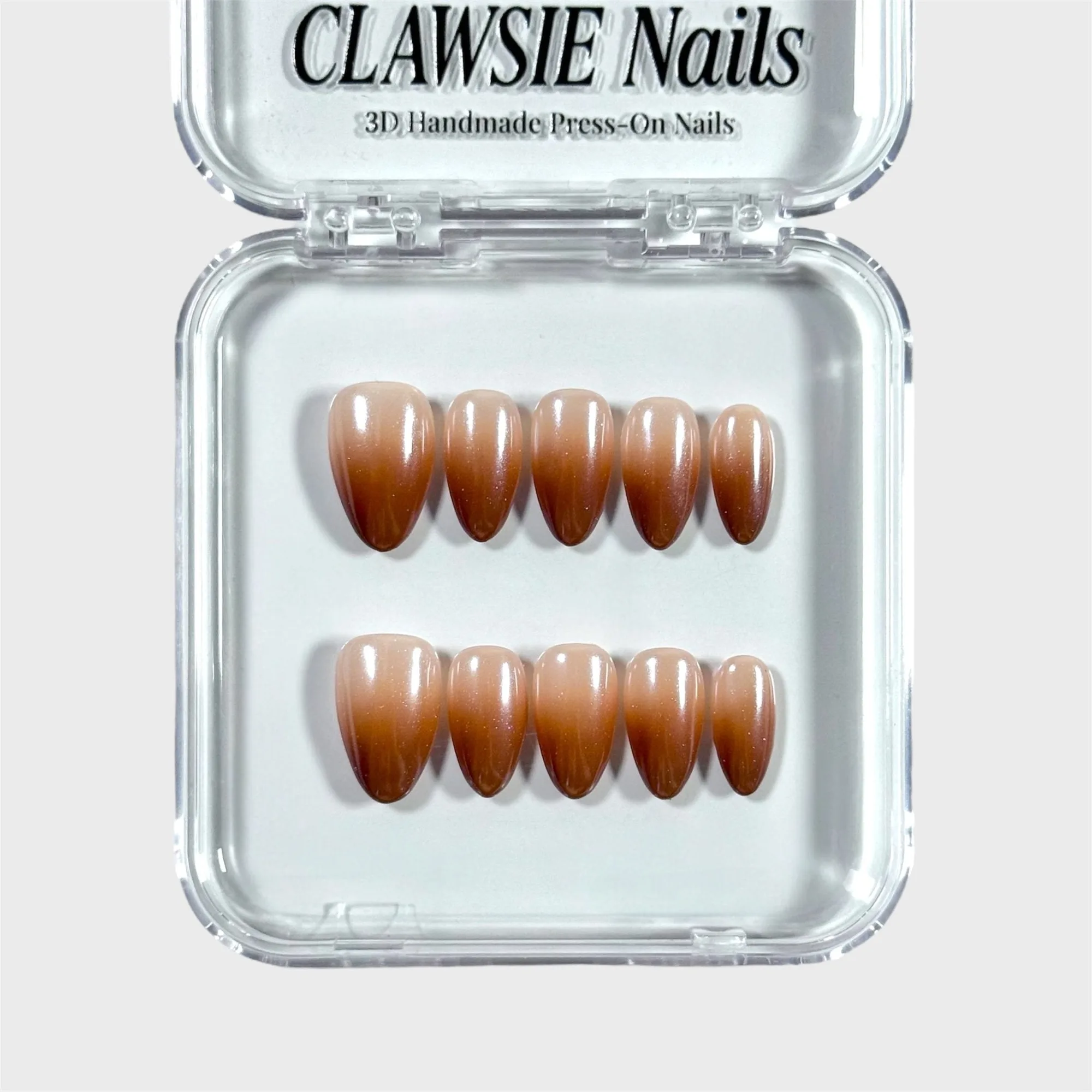
- Caramel: Caramel is a press-on nail style offered in four sizes: XS, S, M, and L, selected as an option before purchase. Four size options give you more room to size each finger individually, so you are less likely to force a near-fit that lifts at the corner.
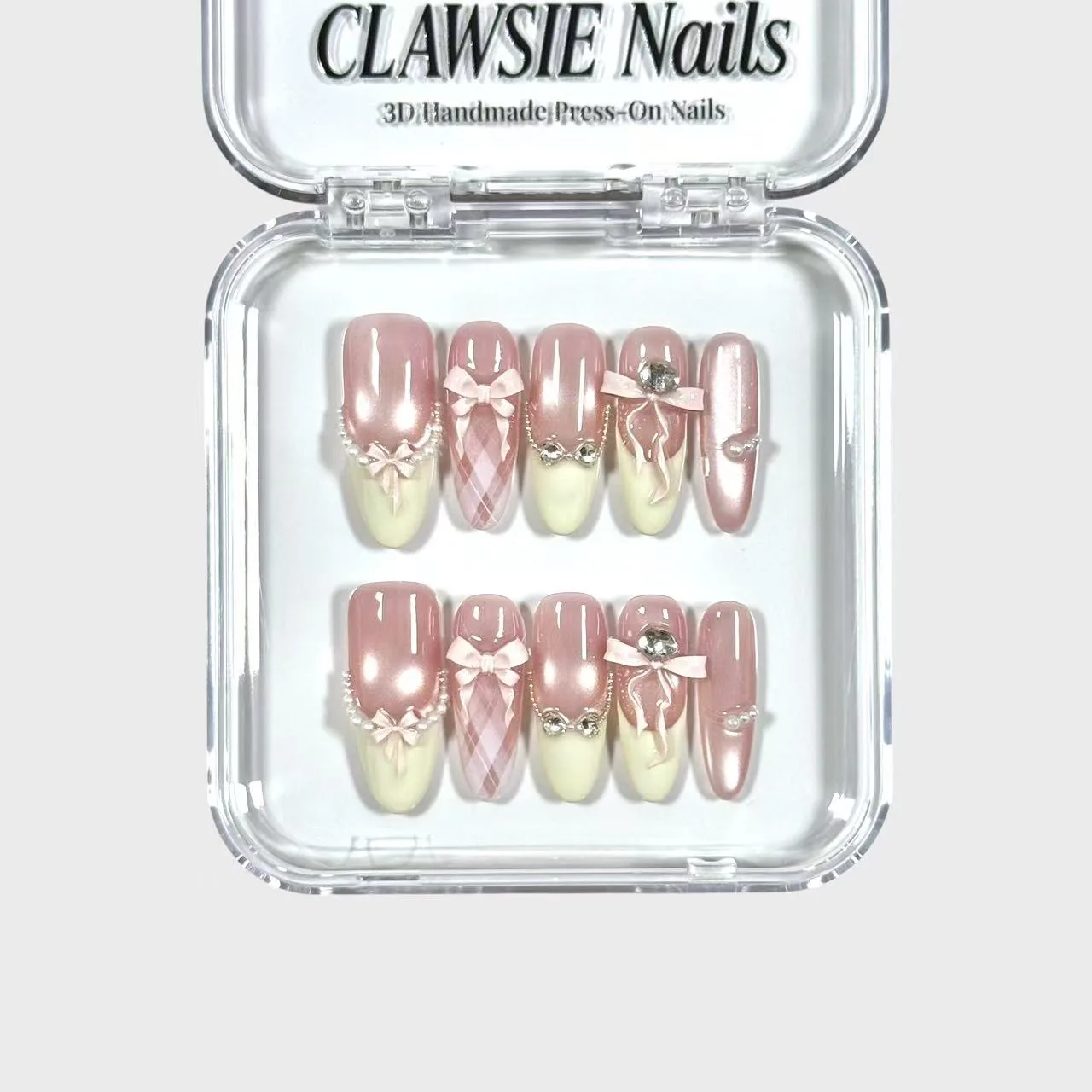
- AMOUR: AMOUR is a set of long oval press-on nails with a soft pearlescent pink base, creamy French tips, and 3D bows with pearl and crystal embellishments, and it is reusable. Longer nails have more leverage at the tip, so edge lifting is more noticeable. A reusable set is worth re-applying carefully rather than discarding when one edge lifts.
Edge lifting is a solvable problem once you know which of the four causes you are dealing with. Fix the fit and prep first, move to a gel glue and UV lamp system if water is your trigger, and reapply rather than patch once a lift gets large. Your next set should hold noticeably longer.