Quick answer
Quilt shifting almost always comes down to one of four causes: a size mismatch between insert and cover, missing or unused corner ties, a slick fabric pairing, or a cover opening that lets the insert slide out. Check the size label first, then the ties, then the fabric. If the cover has no corner ties and the insert has no loops, no folding trick will hold it for long, and a set with built-in fastening points is the better fix.
Start With the Size Label, Not the Folding Trick
A duvet cover is cut to match a specific insert size, and a few inches of difference is enough for the insert to migrate toward one corner overnight. Pull both labels and compare them directly. A full/queen cover with a queen insert is usually fine; a queen cover with a king insert is not, no matter how carefully you shake it into place.
If the labels match but the insert still bunches, measure the insert flat. Fill power and batting loft affect how an insert behaves inside a cover, so a puffier insert in a tightly cut cover will bind and fold rather than lie flat. In that case, sizing up the cover or sizing down the insert solves more than any clip or tie.
Corner Ties Only Work When Both Sides Have a Partner
Corner ties are half of a two-part system. The cover needs ties or internal loops, and the insert needs matching loops or a sewn tab at each corner. If only one side has them, the tie has nothing to anchor to and will pull loose within a night or two.
When both sides are present, tie diagonally rather than straight across. A diagonal tie keeps tension on the insert and stops it from rotating inside the cover, which is the movement that creates that twisted, lumpy look by morning.
- Tie all four corners before you button or zip the cover closed.
- If the insert has no loops, safety pins through the cover seam and insert corner work as a temporary fix.
- Recheck the ties after the first wash, since heat and tumbling can loosen knots.
Fabric Friction Explains Why Some Pairings Slide
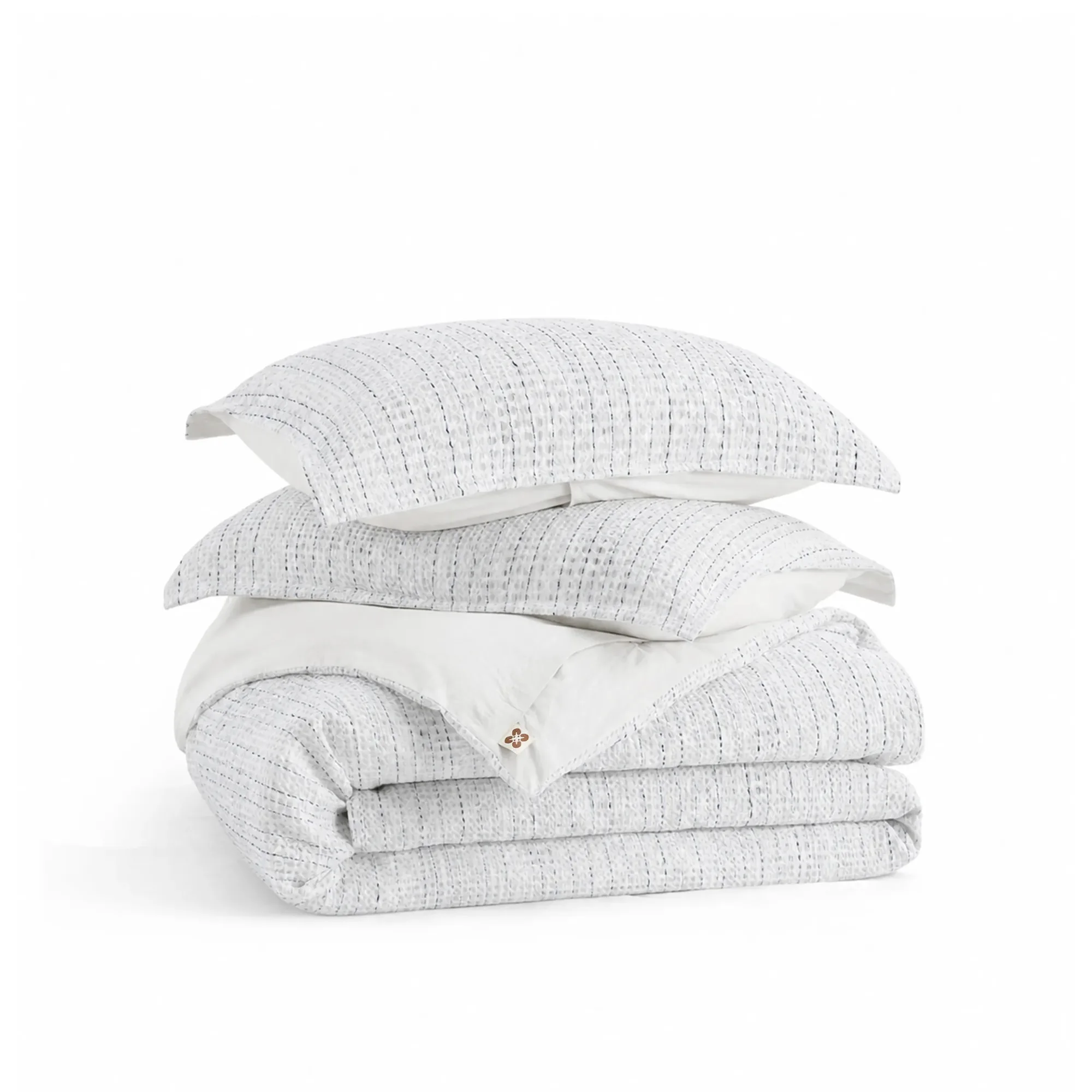
Slick, tightly woven covers let a smooth microfiber insert slide freely, while textured weaves grip and hold. That is why a waffle or seersucker cover tends to behave better with a plain insert than a polished sateen cover does. If you are pairing a smooth cover with a smooth insert, expect more shifting and plan to use the ties every time.
A textured cover also hides the small wrinkles that form when an insert settles, so the bed looks tidier between washes. If you are choosing a new cover, a waffle weave is a practical pick for anyone tired of constantly re-stuffing a duvet.
The Opening Matters More Than Most People Think
Button, zip, and envelope closures hold an insert differently. A short button placket at the foot of the bed gives the insert room to creep toward the open end, especially if you sleep with the cover pulled up. A full-length zipper or a deep envelope flap keeps the insert contained across the whole width.
If your cover has a short opening, fold the insert into thirds before inserting it, then unfold it inside the cover and close the fastening immediately. This reduces the chance of trapping air and creating the pockets where bunching starts.
When to Stop Adjusting and Change the Setup
If you have matched sizes, tied every corner, and still wake up to a bunched insert, the cover and insert are simply not compatible. Stop adding clips, pins, and extra ties, because those workarounds add bulk and can damage the fabric over time.
At that point, the cleaner solution is a set designed to stay together. A bed-in-a-bag or a coordinated comforter set removes the insert-and-cover problem entirely, and a duvet cover set with a secure closure reduces it. Pick based on how much you value the layered look versus how much you value a bed that stays made.
Diagnose Your Shifting Quilt
- Insert slides to one corner overnight: This is a size or tie problem. Confirm the insert and cover labels match, then tie all four corners diagonally. If the cover has no ties, this is the point to consider a different cover. Fixable with correct sizing and tied corners.
- Insert twists and bunches in the middle: Usually a slick fabric pairing or a cover that is too tight for the insert's loft. A textured cover or a lower-loft insert reduces the twisting. Change the fabric pairing or the insert, not the folding method.
- Insert works its way out of the opening: The closure is too short or too loose. Switch to a full-length zipper or a deep envelope closure, or fold the insert into thirds before inserting it and close the fastening right away. If the cover has a short button placket, expect recurring slipping.
- Everything matches and it still shifts: The cover and insert are incompatible. Stop adding pins and clips and switch to a coordinated set or a cover with a secure closure. Choose a different setup rather than more workarounds.
Products That Reduce or Remove the Shifting Problem
- Pintuck Bed-in-a-Bag: Pintuck Bed-in-a-Bag comes as a coordinated multi-piece set with pinch pleat details and a brushed microfiber build. Because the comforter and shams are designed as one set, there is no separate insert to slide out of place, which removes the root cause of bunching.

Pintuck Bed-in-a-Bag
- Cotton Waffle Space-Dyed Duvet Cover Set: Cotton Waffle Space-Dyed Duvet Cover Set is made from 100% cotton with a waffle weave and OEKO-TEX Standard 100 certification. The waffle texture adds friction against an insert, which helps hold it in place, and the cotton weave is a practical choice if you want a breathable cover that grips rather than slides.
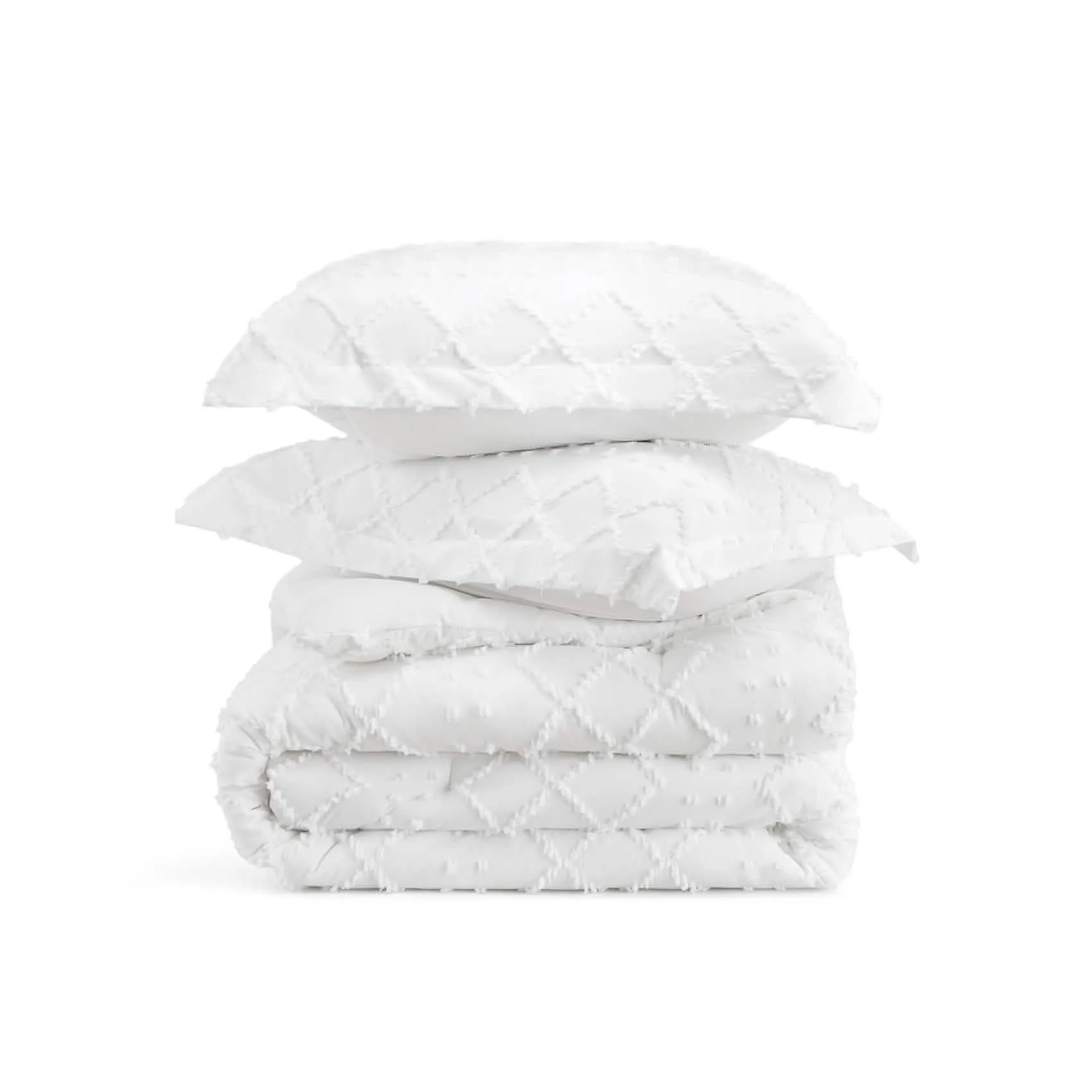
- Tufted Embroidery Comforter Set: Tufted Embroidery Comforter Set is a brushed polyester microfiber set with embroidered tufting and moisture-wicking construction. It is a single comforter rather than a cover-and-insert pairing, so there is nothing to shift, and the brushed surface is soft against sensitive sleepers.