Quick answer
A small pet that stops eating hay often has dental discomfort, stale hay, or a sudden change in routine. Check their teeth, offer fresh hay, and rule out illness before trying enrichment tricks.
Dental pain is the most common hidden cause
Rabbits and guinea pigs have open-rooted teeth that grow continuously. When teeth become overgrown, develop sharp spurs, or cause mouth sores, chewing hay becomes painful. Your pet may approach the hay rack but then back away or drop pieces. This is often mistaken for pickiness when it's actually discomfort.
A quick check: gently feel the jawline for lumps or listen for teeth grinding (bruxism) while they eat. If you see drooling, wet chin, or favouring one side, suspect dental issues. These require a vet visit, not a diet change.
Hay quality and freshness matter more than you think
Hay that smells musty, feels dusty, or has been sitting in a damp bin can turn off even the hungriest herbivore. Small pets have sensitive noses and will refuse hay that's past its prime. Also, if you've recently switched from a mixed hay to a single grass hay, the texture and taste difference can cause a temporary strike.
Store hay in a cool, dry place and offer a small handful from a new bag to test acceptance. Many pets prefer the softer, greener second-cutting timothy hay over coarse first-cutting.
Diagnosis guide: Why your pet stopped eating hay
- Symptom: Pet sniffs hay then walks away: Likely cause: Dental pain or mouth sore. Check for drooling, weight loss, or reluctance to eat pellets. If present, schedule a vet exam. Do not try to trim teeth yourself. If you see drool or weight loss, stop home remedies and see a vet within 24 hours.
- Symptom: Hay is left untouched while pellets disappear: Likely cause: Hay is stale, dusty, or the pet is overfed pellets. Replace with fresh, fragrant hay from a new bag. Reduce pellet portion by 25% for two days to encourage hay consumption.
- Symptom: Pet eats hay only when hand-fed or rolled into a ball: Likely cause: Boredom with plain hay. Offer hay in a different form, such as a compressed roll or tucked into a cardboard tube. This adds foraging enrichment without changing the diet. If your pet still refuses hay after 12 hours, switch to a vet check to rule out illness.
Products that can help
-
Timothy Hay Roll - 3 Pack: Premium Timothy Hay Rolls are crafted from hand-selected timothy hay compressed into an interactive shape. The compressed roll encourages nibbling and exploration, which can re-engage a bored or picky eater who ignores loose hay.
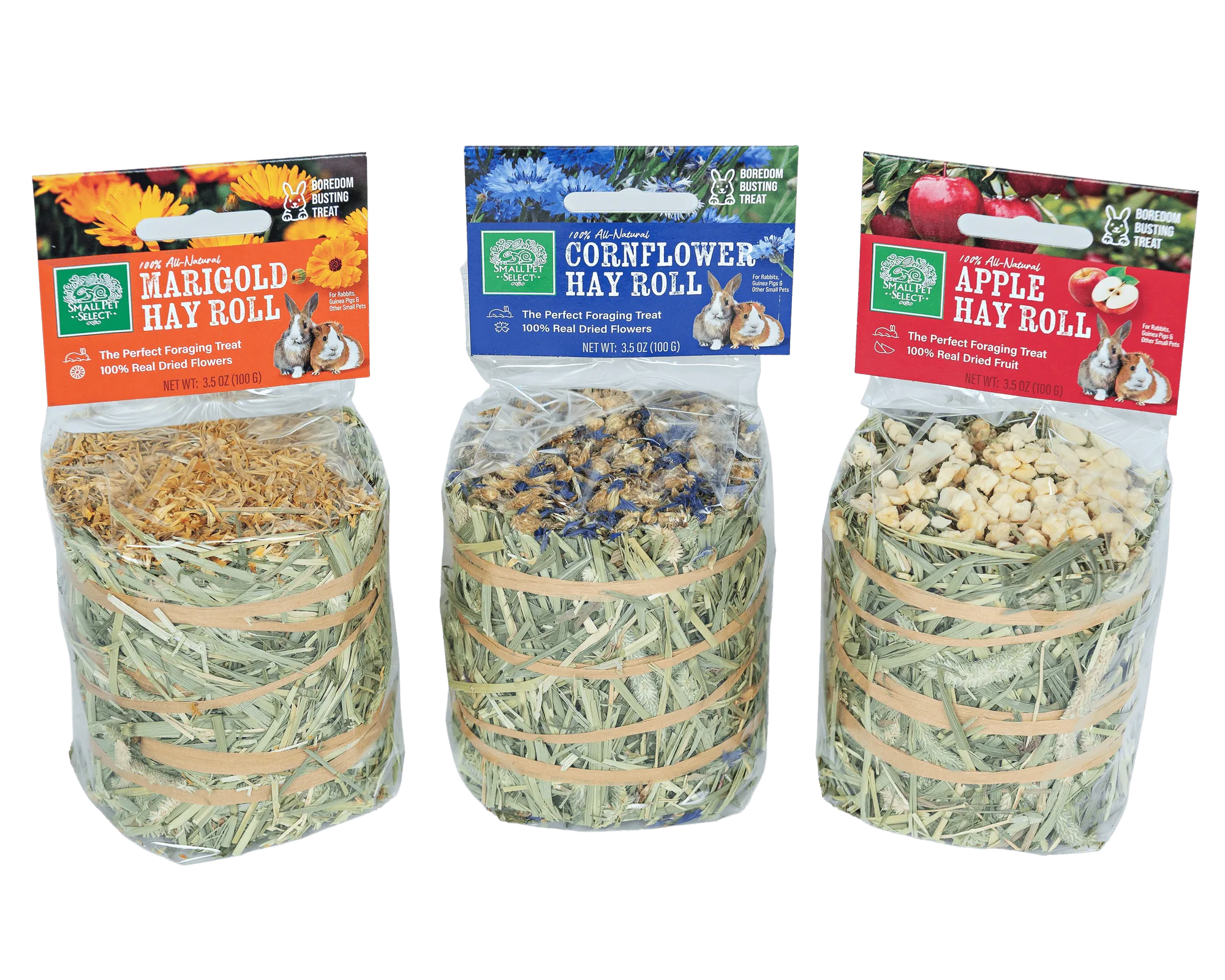
Timothy Hay Roll - 3 Pack