Quick answer
Sunglasses fog up when warm, moist air from your skin hits a cooler lens surface and condenses into tiny droplets. To stop it, reduce the trapped air and moisture instead of wiping the lens: create airflow around the frame, keep the lens closer to skin temperature, and avoid breathing directly onto the glass. If fog returns within seconds on every run or in every humid room, the frame fit or lens coverage is the real problem, and it is time to try a different shape or fit.
Symptom: fog that appears in a pattern
Fog rarely covers a lens evenly. Where it shows up tells you what is happening. A patch along the top edge usually means warm air is rising off your forehead and getting trapped behind the top bar. Fog around the nose piece points to breath escaping upward instead of out. A full-lens white-out that appears the moment you step outside suggests the lens is much colder than your face, which happens when glasses sit in air conditioning or a cold car before you put them on.
- Top edge fog: heat and sweat rising from the forehead.
- Nose-piece fog: exhaled breath redirected up behind the lens.
- Instant full fog: a large temperature gap between lens and skin.
- Fog that clears as you move: airflow is working, moisture is the issue.
Cause: the temperature gap, not the lens material
Condensation needs three things: moisture, a cooler surface, and still air. Your face supplies the moisture, the lens is the cooler surface, and a close-fitting frame traps the still air. Anti-fog coatings slow droplet formation, but they do not remove the moisture or the temperature gap, which is why a coated lens can still fog on a hard climb or a humid morning. The fix is to break one of the three conditions, and the easiest one to break is trapped air.
Corrective action: three changes that actually work
First, create airflow. Adjust the nose piece or temples so air can move behind the lens without letting the frame slide. A small gap at the bottom edge is more effective than a tight seal, because it lets warm air escape downward instead of pooling. Second, manage moisture before it reaches the lens. A thin sweatband or a quick wipe of your brow with a dry cloth removes the water source. Third, warm the lens gradually. If you come from air conditioning into humid outdoor air, hold the glasses against your chest for a minute or breathe on them once before putting them on, so the lens is closer to skin temperature.
- Loosen the fit slightly at the nose or temples to let air escape.
- Wipe your brow and the frame's inner edge with a dry cloth, not a wet one.
- Warm the lens against your body before stepping into humid air.
- Avoid touching the inner lens surface, which spreads oils and makes fog stick.
When to stop adjusting and switch instead
If you have tried airflow, moisture control, and gradual warming, and the lens still fogs within the first minute of every run, stop fighting the frame. The shape is likely wrong for your face: a frame that sits too close to your cheeks or brow will always trap air, no matter how you adjust it. At that point, look for a frame with more space around the eyes, a half-rim or rimless design that lets heat escape, or a shape that sits slightly farther from your face. For humid workouts, a frame that stays put without pressing against your skin is more useful than a tighter one.
Fog diagnosis: match the symptom to the fix
- Fog only at the top edge: Warm air from your forehead is trapped behind the top bar. Adjust the nose piece so the frame sits slightly farther from your brow, or choose a frame with more vertical clearance. If the top edge clears after adjusting, you have solved it. If it returns in minutes, the frame shape is too close to your face.
- Fog around the nose piece: Exhaled breath is going up behind the lens instead of out. Breathe downward through your nose or mouth for a few strides, and check that the nose piece is not sitting so low that it channels air onto the glass. If breathing downward clears the lens, the issue is breath direction, not the frame.
- Full-lens fog the moment you step outside: The lens is much colder than your face. Warm it against your chest for a minute before putting it on, and avoid leaving glasses in air conditioning right before a humid outdoor session. If the fog clears within a minute of wearing, the temperature gap was the cause.
- Fog that returns every run no matter what: You have addressed airflow, moisture, and temperature, and the lens still fogs. Stop adjusting. The frame sits too close to your eyes or cheeks for your face shape. Switch to a frame with more space around the eyes, a half-rim design, or a shape that sits farther from your skin.
Frames that help with airflow and fit
- Silverback Squat Mobility: Silverback Squat Mobility active sunglasses are designed not to slip or bounce no matter how sweaty you get, with polarized green lenses and UV400 protection. A stable frame that stays in place without needing a tight, air-trapping fit gives warm air a better chance to escape during sweaty runs.
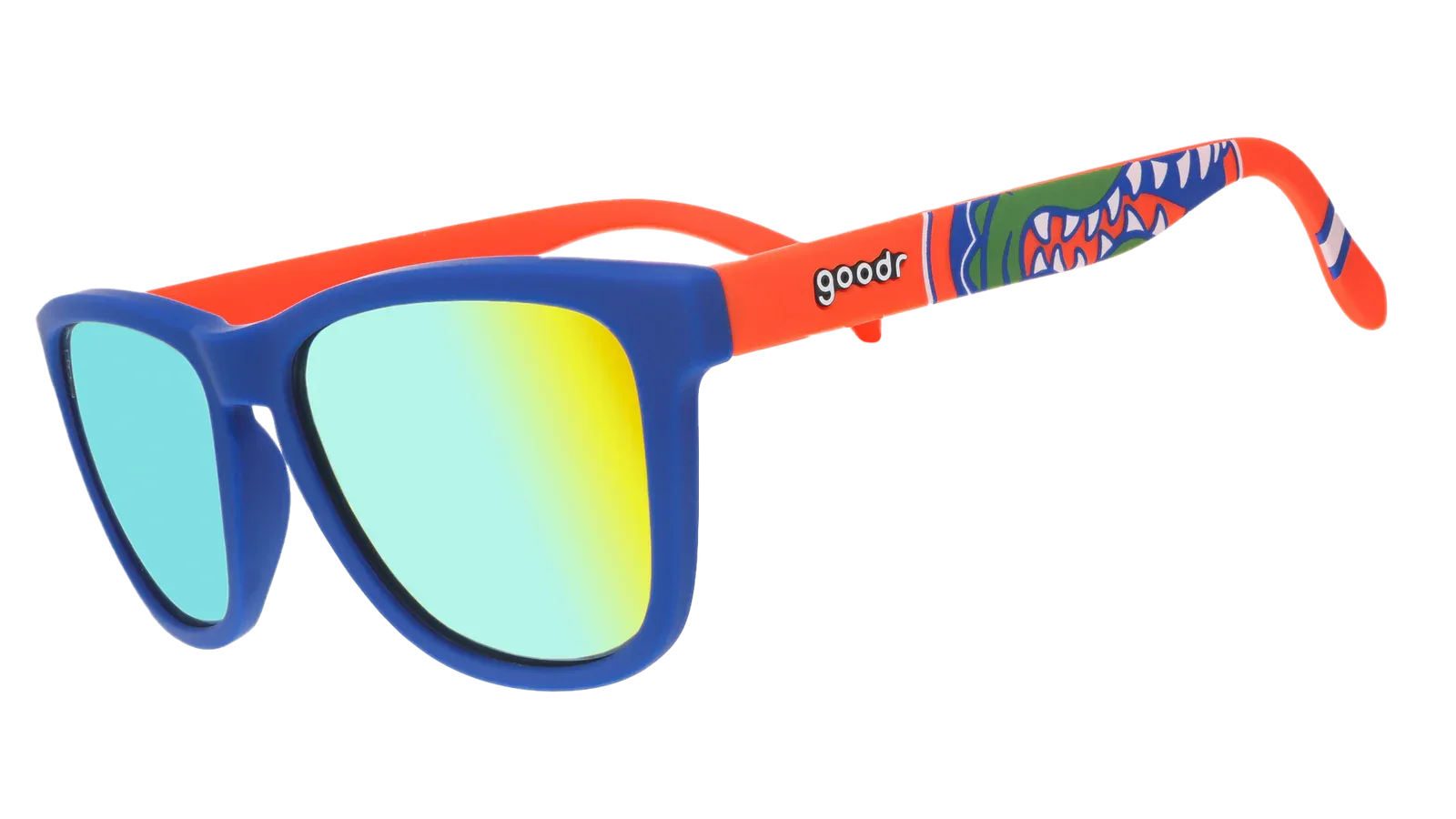
- Full Sail Frenzy: Full Sail Frenzy Avant Gs use stylish blue half-rim frames with chrome reflective lenses. A half-rim design leaves more open space around the lens edge, which can reduce the trapped air that causes fog on humid days.