Quick answer
A tinted lip balm usually feels dry because it's sitting on top of already-dry, flaky lips, because you're applying it in a thin layer over a matte base, or because the formula is wax-heavy rather than oil-rich. Start by exfoliating gently and applying balm to bare lips; if it still feels tight within an hour, switch to a more nourishing balm rather than layering more product.
Symptom check: is it the balm or your lips?
Before you blame the product, look at what's happening under it. If your lips feel tight, look chalky, or show vertical flakes within 30 minutes of applying, the balm is probably clinging to dead skin instead of softening live skin. That's a lip-condition problem, not a formula problem.
If your lips feel comfortable for the first hour and then dry out, the balm is likely too light or too waxy for your environment. Cold air, indoor heating, and air conditioning all pull moisture from the surface layer, so a thin balm that felt fine at 9 a.m. can feel tight by lunch.
Likely cause: application over the wrong base
Tinted balm is often applied over lip liner, matte lipstick, or a long-wear stain. Those products are designed to grip, and they leave a dry film that the balm can't penetrate. The result is a balm that looks glossy for ten minutes and then feels like sandpaper.
If you want both color and comfort, apply balm first, let it absorb for a minute, then add liner or lipstick on top. Or skip the matte base entirely and use the tinted balm as your only color layer.
Corrective action: exfoliate, then apply to bare lips
Once or twice a week, buff your lips gently with a soft damp cloth or a sugar-and-oil scrub. Don't overdo it — daily exfoliation makes lips rawer and more prone to drying out. Follow with a plain nourishing balm and give it five minutes to sink in before adding tint.
At night, apply a thicker layer of balm as an overnight mask. This is when your lips have the best chance to recover, and it makes the biggest difference to how a tinted balm feels the next morning.
When to stop fixing and switch formulas
If you've exfoliated, applied to bare lips, and still feel tightness within an hour, the formula is the problem. Wax-heavy balms sit on the surface; oil-rich balms with plant butters and oils penetrate better. Look for moringa oil, shea, or similar nourishing ingredients near the top of the list.
Also consider whether you're using a tinted balm in a climate it wasn't designed for. A light summer balm may not hold up in winter, and that's a reason to own two formulas rather than force one to do everything.
Diagnosis: what your dry balm is telling you
- Tightness within 30 minutes: The balm is sitting on dead skin or a matte base. Exfoliate gently, apply to bare lips, and wait a week before judging the formula. If it improves, the balm was fine — your prep was the issue.
- Comfortable at first, dry by midday: The formula is too light for your environment. Layer a richer balm underneath or switch to an oil-based tinted balm for cold or dry conditions. Keep the light balm for summer and add a heavier one for winter.
- Dry even on bare, exfoliated lips: The formula is likely wax-heavy and not nourishing enough for you. Look for moringa oil, shea, or plant butters in the ingredients. Stop layering more product — switch to a balm or satin lipstick built around oils and butters.
Product facts
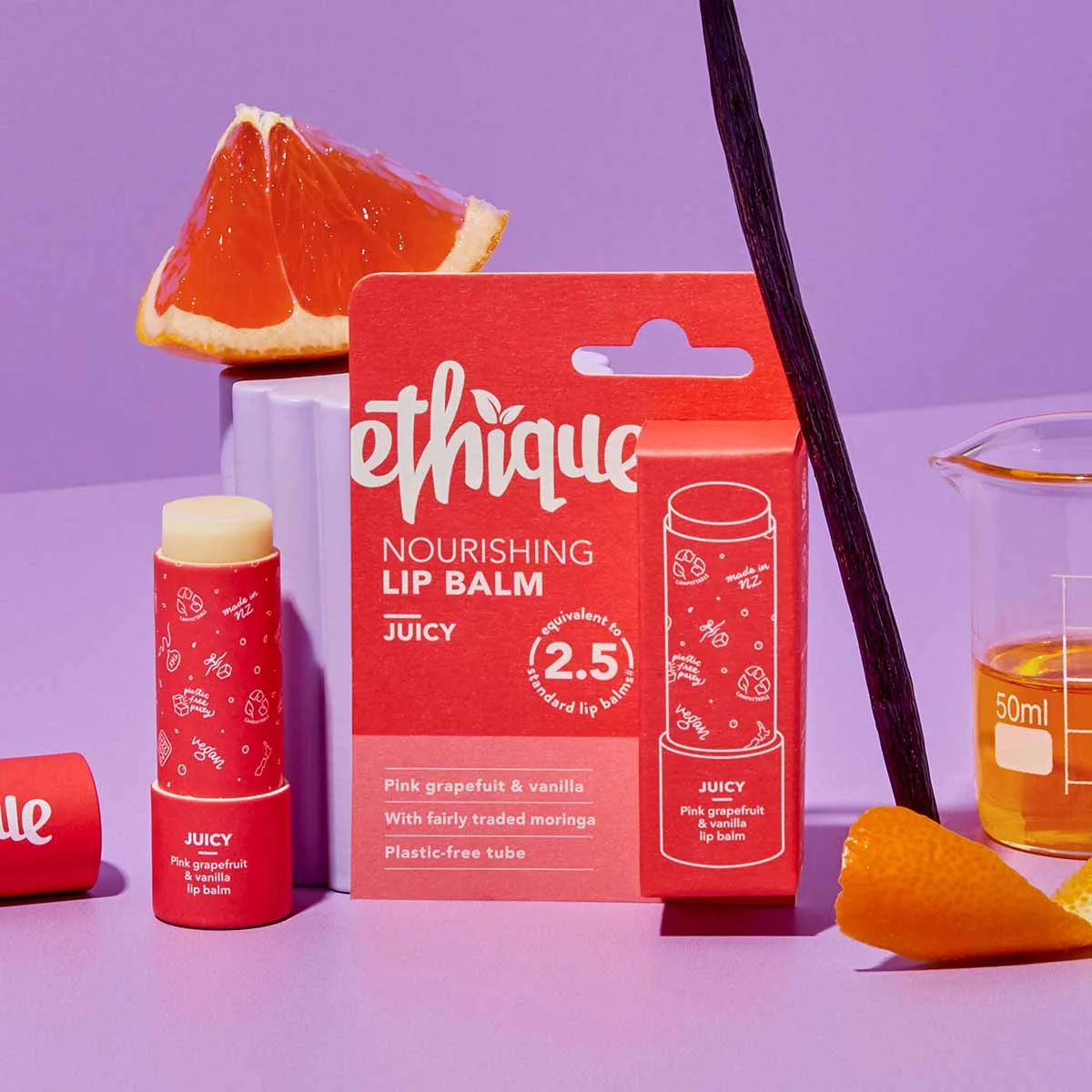
- Juicy™ Nourishing Lip Balm: This vegan, plastic-free lip balm hydrates and soothes dry lips in seconds, leaving them soft, smooth, and subtly scented. 100% of testers found Ethique lip balms soothe and soften dry lips. It has a creamy texture that glides on easily and a non-sticky formulation. If your tinted balm feels dry, a plain nourishing balm like this can rebuild the base layer first — apply it, let it absorb, then add tint on top. The non-sticky finish means it won't fight your color layer.
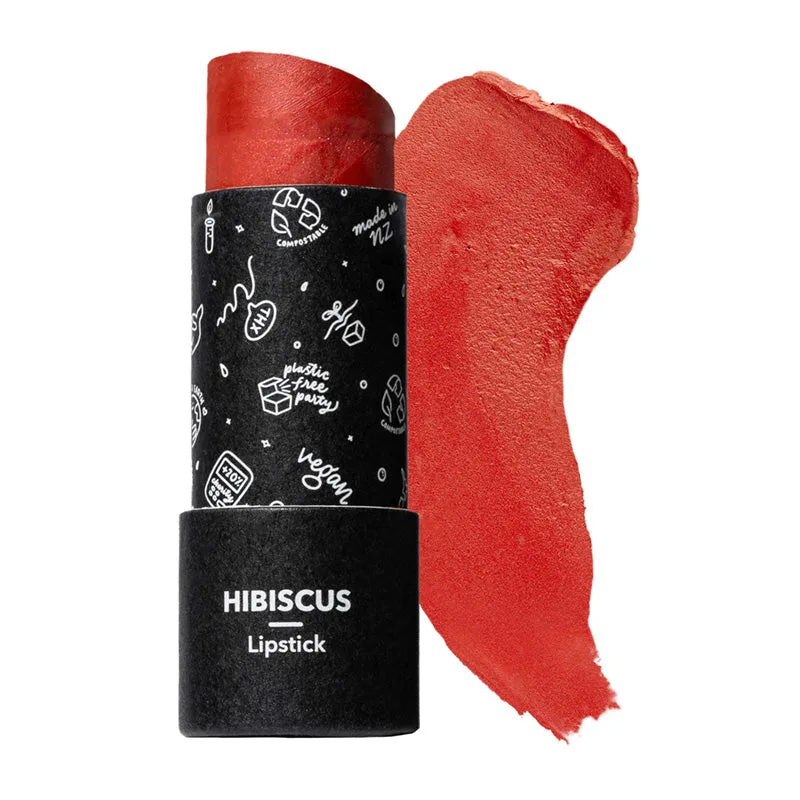
- Hibiscus™ Satin Matte Lipstick: A vibrant, warm-toned coral lipstick with a satin matte finish. Like Ethique's lip balms, it features organic and fairly traded moringa oil, which is packed with antioxidants and vitamins to nourish lips. A blend of plant-based waxes creates a protective, enriching barrier. If you want more color than a balm but still want nourishment, this satin matte formula includes moringa oil and plant waxes — a middle ground between a sheer balm and a drying matte lipstick.
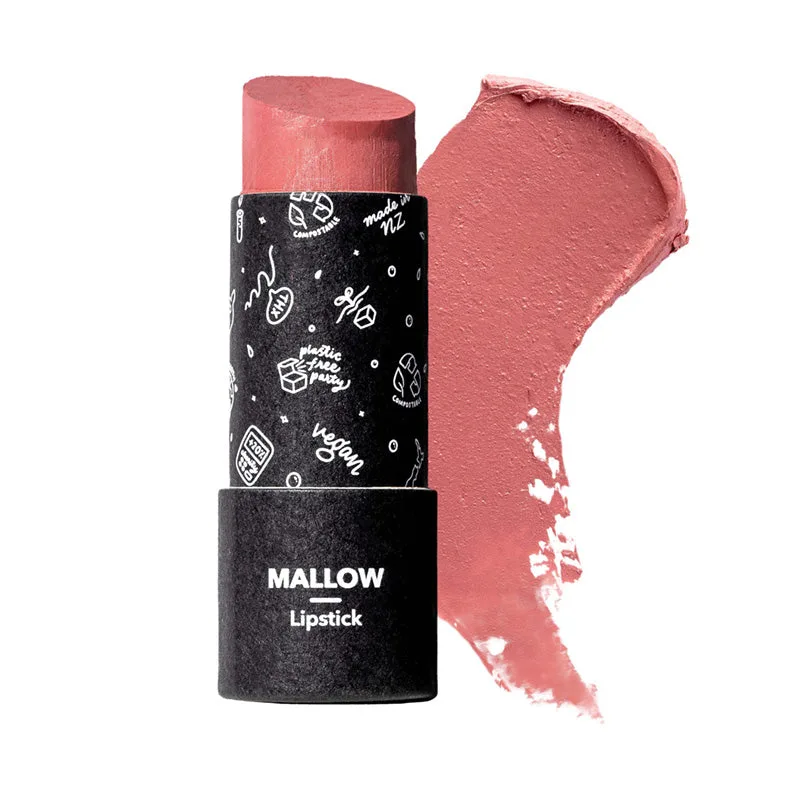
- Mallow™ Satin Matte Lipstick: A soft, cool-toned peony pink lipstick with a satin matte finish. It also features organic and fairly traded moringa oil and a blend of plant-based waxes for a protective, enriching barrier. For those who find warm corals too bright, this cooler pink offers the same nourishing base with a subtler look — useful when you want color without the dry feel of a traditional matte.