Quick answer
Vitamin D drops for toddlers help prevent deficiency that can affect bone development and immunity. Wellbaby Vitamin D Drops offer a carefully formulated, easy-to-use option for daily supplementation.
Why toddlers are at risk for vitamin D deficiency
Toddlers often have limited sun exposure due to sunscreen use, indoor play, or cloudy climates. Breast milk and many solid foods provide very little vitamin D, making supplementation the most reliable source.
Without enough vitamin D, the body cannot absorb calcium properly, which is critical for the normal growth and development of bones in children. Over time, low levels can lead to rickets or soft bones.
When to consider a supplement versus food sources
While some foods like fortified milk or oily fish contain vitamin D, most toddlers do not eat enough of them consistently. A daily drop is a straightforward way to close the gap without changing the whole diet.
If your toddler already eats a varied diet with fortified foods, you may still need drops if sun exposure is minimal. The key is consistency rather than relying on occasional food intake.
Diagnosing and addressing vitamin D deficiency in toddlers
- Symptom: Common signs include delayed walking, bowed legs, frequent infections, irritability, or visible softening of the skull (craniotabes). Many toddlers show no obvious symptoms until levels are very low. If you notice any of these signs, consult a pediatrician for a blood test before starting supplements.
- Likely cause: Insufficient sun exposure combined with low dietary intake. Toddlers who spend most of their time indoors, wear sunscreen daily, or live in northern latitudes are at higher risk. Breastfed toddlers who do not receive a vitamin D supplement are also vulnerable. Even with a balanced diet, most toddlers need a supplement to meet the recommended daily intake of 400 IU (10 mcg) of vitamin D.
- Corrective action: Give a daily vitamin D supplement such as Wellbaby Vitamin D Drops. One drop provides the recommended amount for toddlers. Administer directly into the mouth or mix with a small amount of cool food or drink. Consistency is key — make it part of the morning routine. Start supplementation immediately if deficiency is confirmed or if your pediatrician recommends it. Continue daily, not just on sunny days.
- When to stop or choose another option: If your toddler develops an allergic reaction (rash, swelling, difficulty breathing), stop the drops and seek medical help. If you prefer a non-drop format, consider chewable tablets or gummies designed for toddlers — but check that they provide the full 400 IU dose without excessive sugar or additives. Always check the label for age-appropriate dosing and consult your pediatrician before switching products.
Product facts
-
Wellbaby Vitamin D Drops: Carefully formulated by our team of nutrition experts, Wellbaby Vitamin D Drops help safeguard your child’s intake of this essential nutrient which is needed for normal growth and development of bones in children. This means you can give one daily dose knowing it directly supports bone health, without guessing whether your toddler gets enough from food or sun.
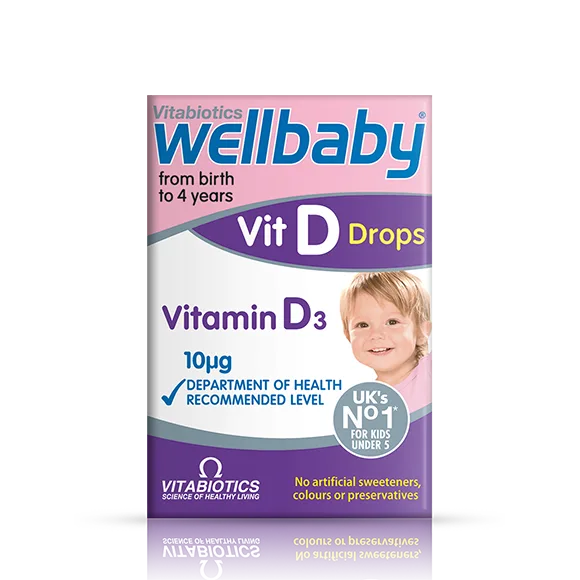
Wellbaby Vitamin D Drops