Quick answer
A breastfeeding light lets you see what you're doing during nighttime feeds without jolting your baby awake or ruining your own sleep drive. The right light is dim, warm, and hands-free.
Why the big light is a bad idea
Flipping on an overhead lamp or a bright phone screen triggers a strong blue-light response that suppresses melatonin in both you and your baby. That makes it harder to fall back asleep after a feed. A dedicated breastfeeding light avoids this by using a warm, low-lumen glow that supports the body's natural sleep cycle.
Bright light can also overstimulate a drowsy baby, turning a calm feed into a fussy wake-up session. Keeping the environment dim helps your baby stay in a sleepy state, making it easier to transition back to the crib or bassinet.
What to look for in a night feeding lamp
Not all dim lights are equal. A good breastfeeding light should have adjustable brightness so you can dial it down to the lowest useful level. Warm color temperature (around 2700K or lower) mimics candlelight and is less disruptive than cool white or blue-tinted LEDs.
Hands-free operation is a major plus. You're already holding your baby, so a light that clips onto your clothing, sits on a nearby surface, or hangs around your neck lets you adjust the baby's latch without fumbling for a switch or repositioning a lamp.
Trade-offs and honest limitations
A very dim light may not be enough for diaper changes or checking for spit-up in the dark. Some parents prefer a light with a separate brighter mode for those moments, though that can defeat the sleep-preservation purpose. Consider whether you need a two-in-one solution or if you're okay using a separate small flashlight for non-feeding tasks.
Battery life matters. If you travel frequently or feed in multiple rooms, a rechargeable light saves you from hunting for batteries at 2 AM. But a plug-in model never runs out of power mid-feed. Choose based on your routine.
Diagnosing your night-feeding setup
- Symptom: Your baby stirs or cries when you turn on a light to feed, and you both struggle to get back to sleep.
- Likely cause: The light source is too bright or too cool in color temperature, disrupting melatonin and overstimulating your baby.
- Corrective action: Switch to a warm, dim, hands-free breastfeeding light. Place it near your feeding spot or wear it so you don't need to reach for a switch. Use the lowest brightness that still lets you see the latch. If your baby still seems restless after a few nights with the new light, check for other factors like room temperature or hunger cues.
- When to choose another option: If you also need bright light for diaper changes or checking on your baby, consider a light with a separate brighter mode or keep a small flashlight handy. A single ultra-dim light won't serve both needs well.
Product spotlight
-
LatchLight Breastfeeding Light: LatchLight’s gentle, warm glow minimizes sleep disruptions for both you and your baby. Its warm color temperature helps preserve melatonin production, so you and your baby can fall back asleep more easily after a feed.
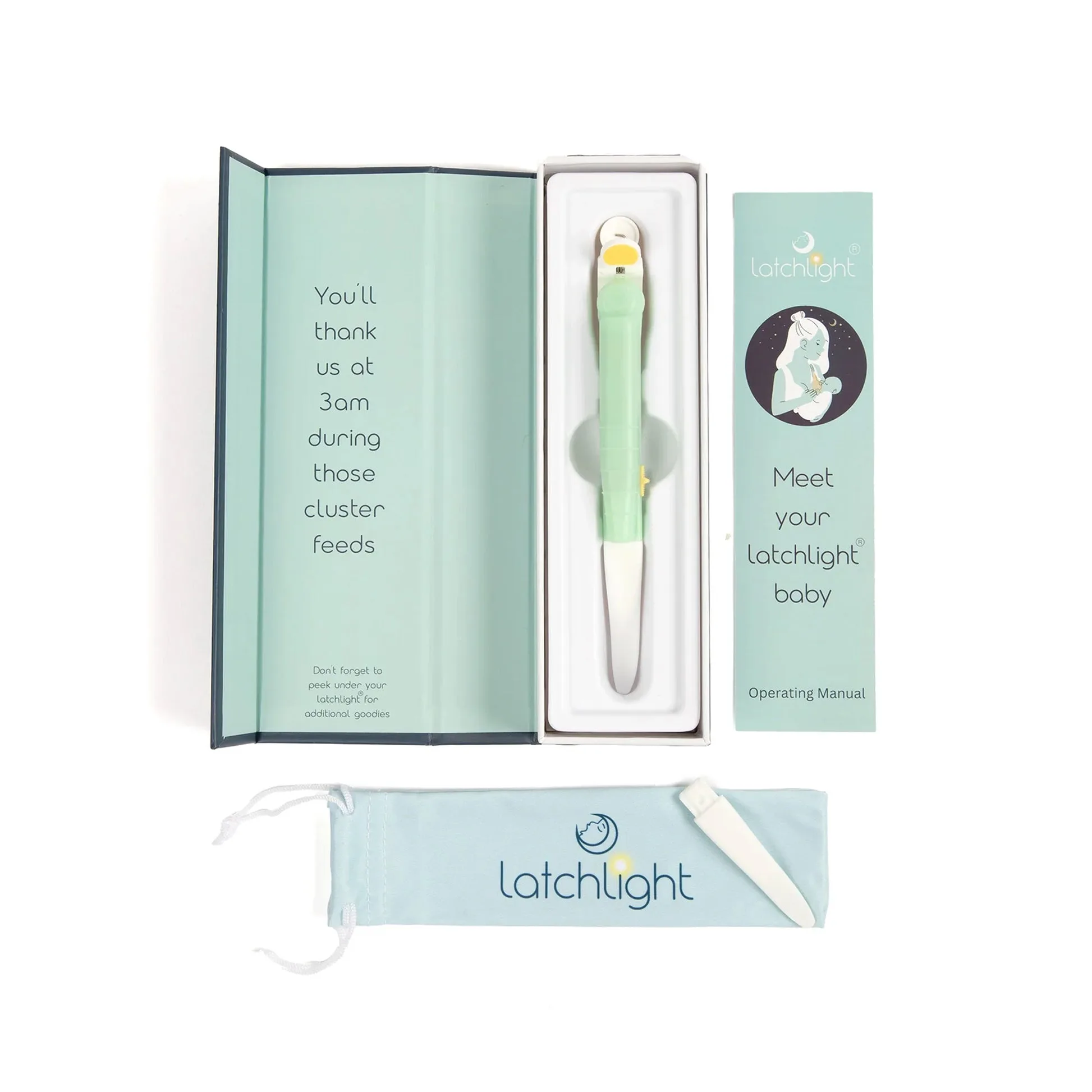
LatchLight Breastfeeding Light
-
LatchLight Breastfeeding Light: It's wearable so your hands are free to hold and position your baby for nighttime feeds. You don't have to hold a flashlight or reposition a lamp while latching, which makes middle-of-the-night feeds smoother and safer.