Quick answer
Most white leather belt yellowing is surface-level and reversible: it comes from oxidized body oils, trapped sweat, or leftover conditioner rather than the leather itself breaking down. Wipe the belt with a barely damp microfiber cloth and a drop of pH-neutral leather cleaner, dry it away from heat, then stop. If the yellow sits under a cracked or lifted finish, cleaning will not fix it and the belt needs a professional or a replacement.
Symptom: what yellowing actually looks like on white leather
Yellowing is rarely one uniform color. Hold the belt under daylight and compare three zones: the outer face, the inner lining that touches your waist, and the edges where the finish wraps around. A warm, even cream tone across the whole strap usually points to oxidation or age. A patchy yellow that follows your belt loops or buckle holes points to sweat, dye transfer, or friction. A yellow halo around the buckle is almost always metal contact and residue, not the leather itself.
- Even cream tone across the strap: likely oxidation or accumulated product
- Patchy yellow at holes and loops: likely sweat and friction
- Yellow ring near the buckle: likely metal contact or trapped grime
Likely cause: match the pattern to the source
White leather is finished leather, and the finish is what you are actually cleaning. Body oils and sweat sit on top of that finish and oxidize over time, which reads as yellow. Conditioners, sunscreen, and self-tanner leave a film that traps dust and darkens the same way. Storing a belt in a hot car or a damp closet speeds up the change. On a used belt, some yellowing may already be set into the finish before you bought it, so check the inner lining first: if the lining is cleaner than the face, the face has been exposed to something.
- Sweat and body oils oxidize into a yellow film on the finish
- Conditioner, sunscreen, and self-tanner leave residue that traps dirt
- Heat and humidity accelerate discoloration in storage
Corrective action: a safe cleaning sequence
Work in small sections and never soak the leather. Start with a dry microfiber cloth to lift loose dust. Then dampen a second cloth with distilled water and one drop of pH-neutral leather cleaner, wring it out until it is barely damp, and wipe the strap in one direction. Do not scrub the buckle area with the same cloth, because metal edges can scratch the finish. Follow with a clean damp cloth to remove residue, then let the belt air-dry flat, away from direct sun and heat. Do not use bleach, magic erasers, acetone, or alcohol wipes: they strip the finish and make the next yellowing worse.
- Dry-dust first, then clean with a barely damp cloth and pH-neutral cleaner
- Wipe in one direction and keep the buckle area separate
- Air-dry flat away from sun and heat; never use bleach or alcohol
Prevention: keep the white from coming back
Rotate the belt so it fully dries between wears, and wipe the inner lining after hot days. Store it flat or rolled loosely in a breathable dust bag rather than a sealed plastic bin, which traps moisture. If you condition, use a tiny amount made for finished leather and buff off the excess immediately. For a used belt you are considering, check the inner lining and edges before buying: a clean lining with a slightly warm face is normal age, while a sticky or cracked face is a sign the finish is already compromised.
- Let the belt dry fully between wears and wipe the lining after hot days
- Store in a breathable dust bag, not sealed plastic
- Use minimal conditioner and buff off any excess
When to stop and choose another option
Stop cleaning if the yellow does not lift after two gentle passes, if the cloth starts picking up white pigment, or if the surface feels tacky or looks cracked. Those signs mean the finish is damaged, not dirty, and further cleaning will make it worse. At that point your options are a leather professional who can refinish or repaint the strap, or replacing the belt. If the belt is a designer piece with sentimental or resale value, get a quote before attempting anything stronger at home.
- Stop after two gentle passes if the yellow does not lift
- Stop immediately if the cloth picks up white pigment or the surface is tacky
- Choose professional refinishing or replacement rather than stronger chemicals
Diagnosis: is your white belt cleanable or finished?
- Even cream tone, soft surface: Oxidation or product buildup on an intact finish. Clean with a barely damp cloth and pH-neutral cleaner, then air-dry flat. Usually reversible with one or two gentle passes.
- Patchy yellow at holes and loops: Sweat and friction have trapped oils in the finish. Clean the area, then rotate the belt and wipe the lining after each wear. Cleanable, but it will return without a drying and rotation habit.
- Yellow under cracked, tacky, or lifting finish: The finish itself is damaged, so cleaning cannot reach the discoloration. Stop and get a refinishing quote or replace the belt. Do not escalate to bleach, alcohol, or abrasive pads.
A real example to compare against
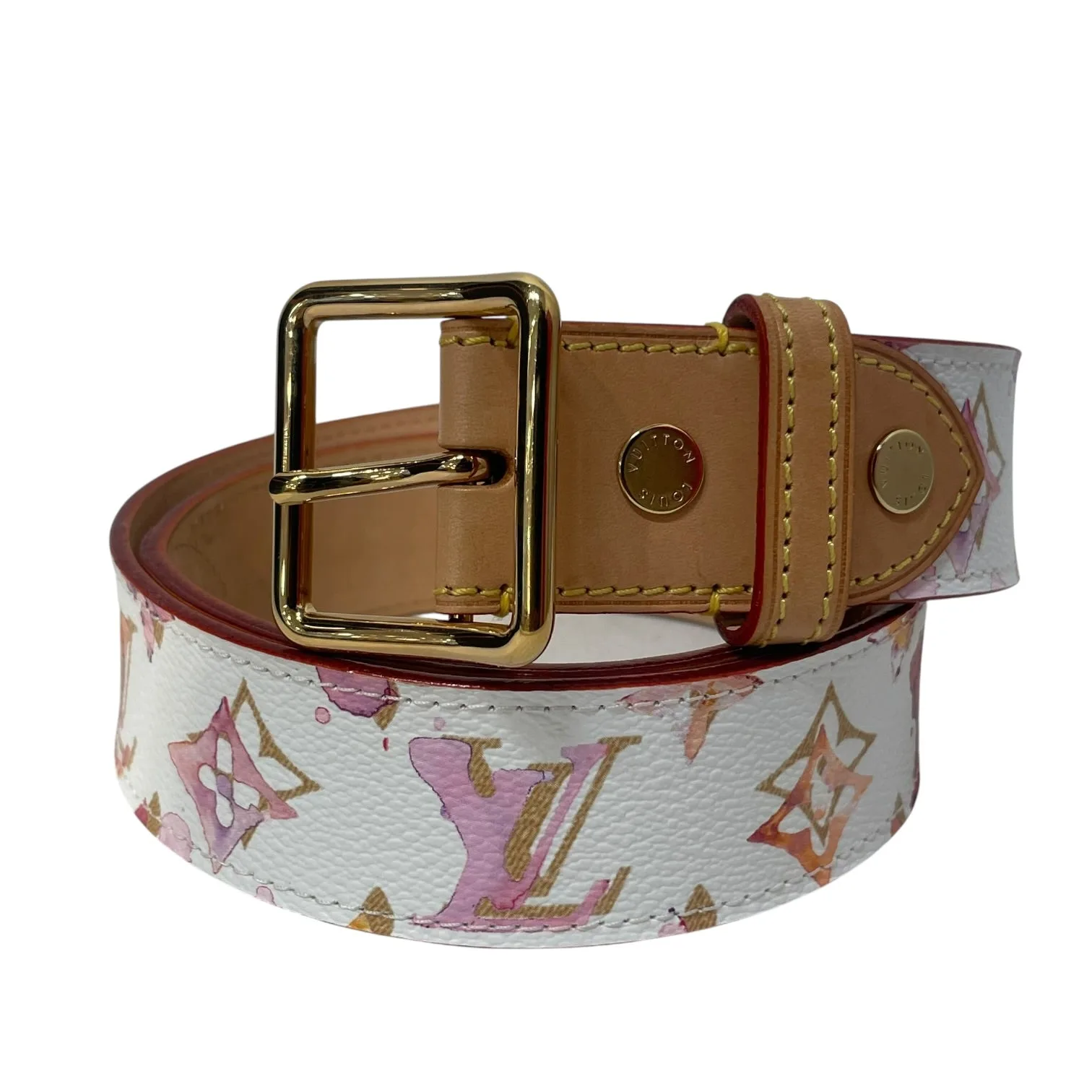
- LOUIS VUITTON/Belt/Floral Pattern/Leather/WHT/: LOUIS VUITTON belt in white leather, size 35, rated B_Used Good condition. A used white belt at this grade may already show some surface warmth on the face, so inspect the inner lining and edges before deciding whether the yellowing is cleanable or set in.