Quick answer
If your child won't swing without help, the most common fix is adjusting the swing seat to the right height and teaching them to pump their legs. A few simple changes can turn a frustrating experience into independent fun.
Why toddlers struggle to swing alone
Many parents assume swinging is instinctive, but it's a learned skill that requires coordination and leg strength. Toddlers often don't know how to shift their weight or pump their legs to gain momentum. The swing seat itself can also be the problem—if it's too high or too low, their feet can't reach the ground to push off or stop.
Another factor is fear. A child who feels unstable or has had a scary tipping experience may cling to your hands even when they're physically ready. Patience and small adjustments usually solve this.
When the swing seat is the issue
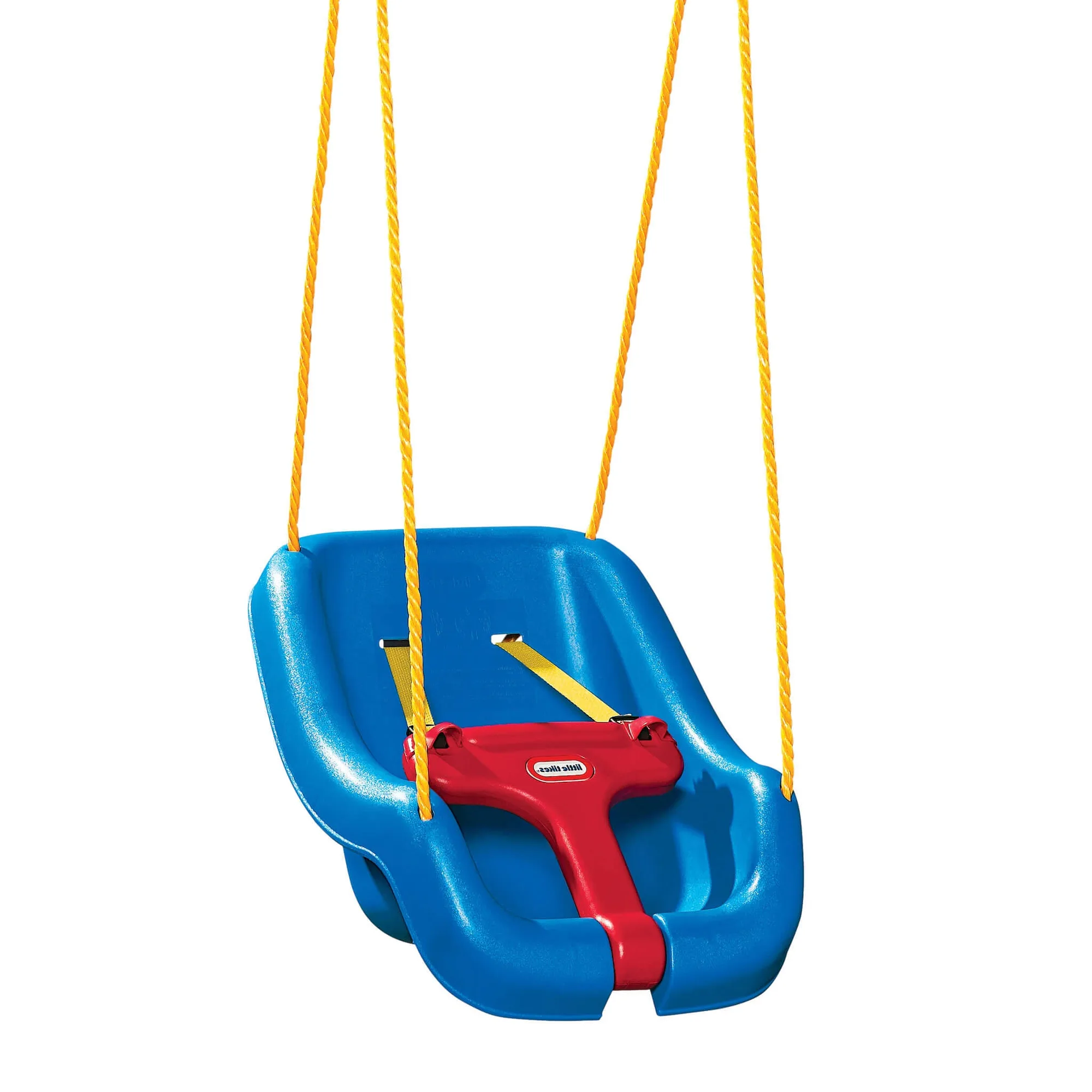
A swing that doesn't fit your child well can make independent swinging nearly impossible. The Little Tikes 2-in-1 Snug 'n Secure Swing (available in Blue, Magenta, or Red) addresses this with a removable T-bar and shoulder straps that adapt as your child grows. For babies, the full support keeps them snug; for toddlers, removing the T-bar gives them freedom to pump their legs.
If your swing lacks these adjustments, check whether the seat depth and strap positions match your child's size. A seat that's too deep or straps that are too loose can make them feel insecure.
Diagnosis: Why your child won't swing alone
- Symptom: Your child asks to be pushed every time or won't get on the swing at all.
- Likely cause: The swing seat is too high or too low, or your child hasn't learned the pumping motion yet. Fear from a past fall can also be a factor. Check if their feet can touch the ground when seated. If not, lower the swing.
- Corrective action: Lower the swing so their feet rest flat on the ground. Practice the 'legs out, legs in' motion while you give gentle pushes. For the Little Tikes 2-in-1 Snug 'n Secure Swing, remove the T-bar once your child is ready to pump—this gives them leg freedom while the shoulder straps still offer backup security. Try 5–10 minutes of guided practice daily for a week before expecting independent swinging.
- When to stop or choose another option: If your child remains fearful after two weeks of gentle practice, consider a different swing style like a bucket seat or a full-enclosure model. For children under 18 months or those who can't sit unsupported, keep the T-bar and straps in place—independent swinging isn't appropriate yet.
Products that help
-
2-in-1 Snug 'n Secure™ Swing - Blue: The Little Tikes 2-in-1 Snug 'n Secure Swing transitions from a full-support baby swing to an open toddler swing by removing the T-bar and shoulder straps. This means you don't need to buy a new swing as your child grows—one swing adapts to their changing needs, supporting both safety and independence.
2-in-1 Snug 'n Secure™ Swing - Blue