Quick answer
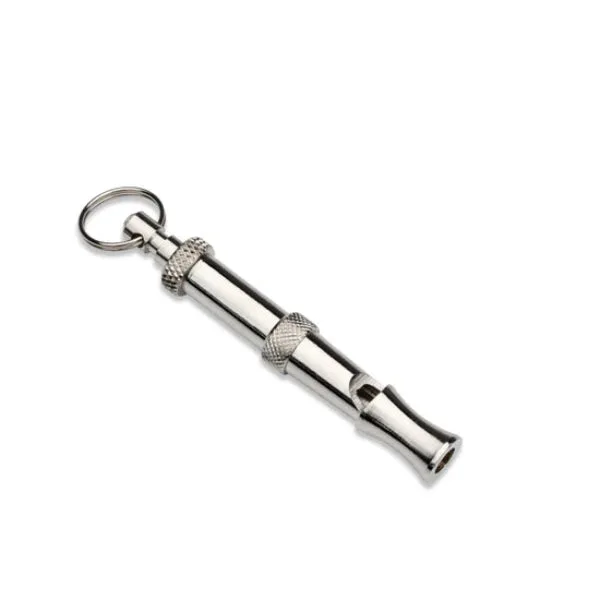
Your dog ignoring the whistle usually means the cue hasn't been properly paired with a reward, the pitch isn't consistent, or you're using it at the wrong time. Start by going back to basics: pair the whistle with a high-value treat in a low-distraction area, and use a consistent high pitched whistle like the K9 Pro High Pitch Whistle to avoid confusion.
Common reasons your dog ignores the whistle
The most frequent cause is inconsistent training. If you blow the whistle but don't follow through with a reward every time, the sound loses its meaning. Dogs learn through repetition and association—without a consistent payoff, the whistle becomes background noise.
Another issue is pitch confusion. Not all whistles produce the same tone, and if you switch between whistles or blow inconsistently, your dog may not recognize the cue. A dedicated high pitched whistle training tool, like the K9 Pro High Pitch Whistle, helps maintain a clear, repeatable signal.
Distractions also play a big role. If you start whistle training in a busy park, your dog may be too overwhelmed to focus. Always begin in a quiet, familiar space before adding distractions.
Step-by-step fixes to get your dog responding
First, reset the association. In a calm room, blow the whistle once and immediately give your dog a high-value treat. Repeat this 10-15 times per session, several times a day, until your dog looks at you expectantly when they hear the whistle.
Next, add distance and mild distractions gradually. Start in your backyard, then move to a quiet park, and finally to busier environments. Always reward generously at each new level.
If your dog still doesn't respond, check your whistle technique. Blow firmly and consistently—short, sharp bursts work best for recall. Avoid long or varying tones that can confuse the cue.
When to consider a different whistle or approach
If you've been consistent for two weeks and see no improvement, your whistle may not be producing a clear enough pitch for your dog's hearing range. Some dogs respond better to higher frequencies. The K9 Pro High Pitch Whistle is designed to carry far and produce a distinct tone that cuts through background noise, making it a reliable choice for field recall.
Also consider your dog's age and hearing health. Older dogs may have reduced hearing and might not hear a standard whistle. In that case, a louder or higher-pitched model could help, but always rule out medical issues with a vet first.
Diagnosis: Is your whistle training on track?
- Symptom: Your dog looks at you but doesn't come when you blow the whistle. Likely cause: The whistle hasn't been paired with a strong enough reward yet.
- Symptom: Your dog used to respond but now ignores the whistle. Likely cause: You stopped rewarding consistently, or distractions increased too fast.
- Symptom: Your dog seems startled or confused by the whistle sound. Likely cause: The pitch is too harsh or inconsistent. Try a high pitched whistle like the K9 Pro for a clearer, less startling tone.
- When to stop and choose another option: If you've trained consistently for 3-4 weeks with no improvement, or if your dog shows signs of fear or hearing loss, stop forcing the whistle. Switch to a verbal recall cue or consult a professional trainer. Not every dog responds to a whistle, and that's okay. The tool should serve your dog, not the other way around.
Product facts
- K9 Pro High Pitch Whistle: Our high pitched dog whistle is handy and practical training aid. The pitch when used in your training system allows to elicit specifically paired responses. No dog whistle produces a magic recall, the whistle can for a unique cue for the recall. These whistles often carry far beyond the human voice, and this are an excellent field recall tool. This means the K9 Pro High Pitch Whistle gives you a consistent, far-reaching signal that you can pair with a reward to build reliable recall—but it only works if you put in the training.