Quick answer
Dull wood serveware almost always means the wood fibers have dried out, not that the piece is ruined. Clean it, let it dry fully, then apply a thin coat of food-safe oil and buff off the excess. If the surface still looks chalky, gray, or rough after two oilings, stop oiling and address the real problem—usually moisture damage or a worn finish—before you add more product.
Why wood boards dry out in the first place
Wood is hygroscopic: it constantly exchanges moisture with the air around it. In a dry kitchen, near a radiator, or through winter heating season, that exchange pulls moisture out of the wood faster than it comes back in. When the surface fibers lose moisture, they no longer reflect light evenly, so the board looks flat, pale, or chalky instead of rich and slightly satin.
Washing is the other common culprit. Hot water, harsh dish soap, and long soaks strip the thin layer of oil that sits in the top fibers. A board that is washed and left to air-dry on a rack without ever being re-oiled will keep looking duller each week, even though it is still perfectly usable.
How to restore wood cutting board shine safely
Start with a clean, fully dry board. Wash it with mild soap and warm—not hot—water, rinse, and stand it on edge so air reaches both faces. Let it dry for at least several hours; oiling a damp board traps moisture underneath and can lead to a blotchy finish or worse.
Apply a food-safe oil for wood boards in thin coats rather than pouring it on. Work along the grain with a lint-free cloth, let the oil sit for 15 to 20 minutes, then wipe away anything that has not absorbed. Repeat once if the wood still looks thirsty. For a slightly more durable satin look, a food-safe wax can be buffed over the oiled surface, but only after the oil has fully cured.
If you are conditioning wooden kitchenware that includes a marble or stone component, keep the oil on the wood only. Marble is porous and oil can stain it, so mask or avoid the stone while you work.
When dullness is not just dryness
Not every dull board needs oil. If the surface feels fuzzy or raised, the wood has absorbed too much water and the fibers have swelled—more oil will not fix that. Let it dry completely for a few days, then lightly sand with fine grit along the grain and re-oil. If you see dark streaks, a sour smell, or soft spots, the board has trapped moisture or bacteria and should be retired from food use.
A board that was finished with a lacquer or varnish rather than oil will also look dull once that coating wears. Oil will not penetrate a sealed surface evenly, so it can look patchy. In that case, the honest choice is to have the finish professionally restored or to replace the piece rather than keep adding oil.
Diagnose your dull board in 3 checks
- Symptom: pale, chalky, dry to the touch: The surface looks flat and absorbs a drop of water almost instantly. This is the classic sign that the wood has simply dried out. Corrective action: clean, dry fully, then apply one or two thin coats of food-safe oil. Stop when the wood stops absorbing and the surface looks even.
- Symptom: fuzzy, raised, or rough grain: The board feels slightly hairy or bumpy rather than smooth. This means the fibers have swelled from too much water, not too little oil. Corrective action: let it dry for several days, sand lightly along the grain, then oil once. Do not oil a damp board—you will seal the moisture in.
- Symptom: dark patches, sour smell, or soft spots: These are signs of trapped moisture or bacterial growth inside the wood, not a surface finish problem. Stop here. No amount of oil or wax will make this board safe again. Retire it from food use or replace it.
Wood care in practice
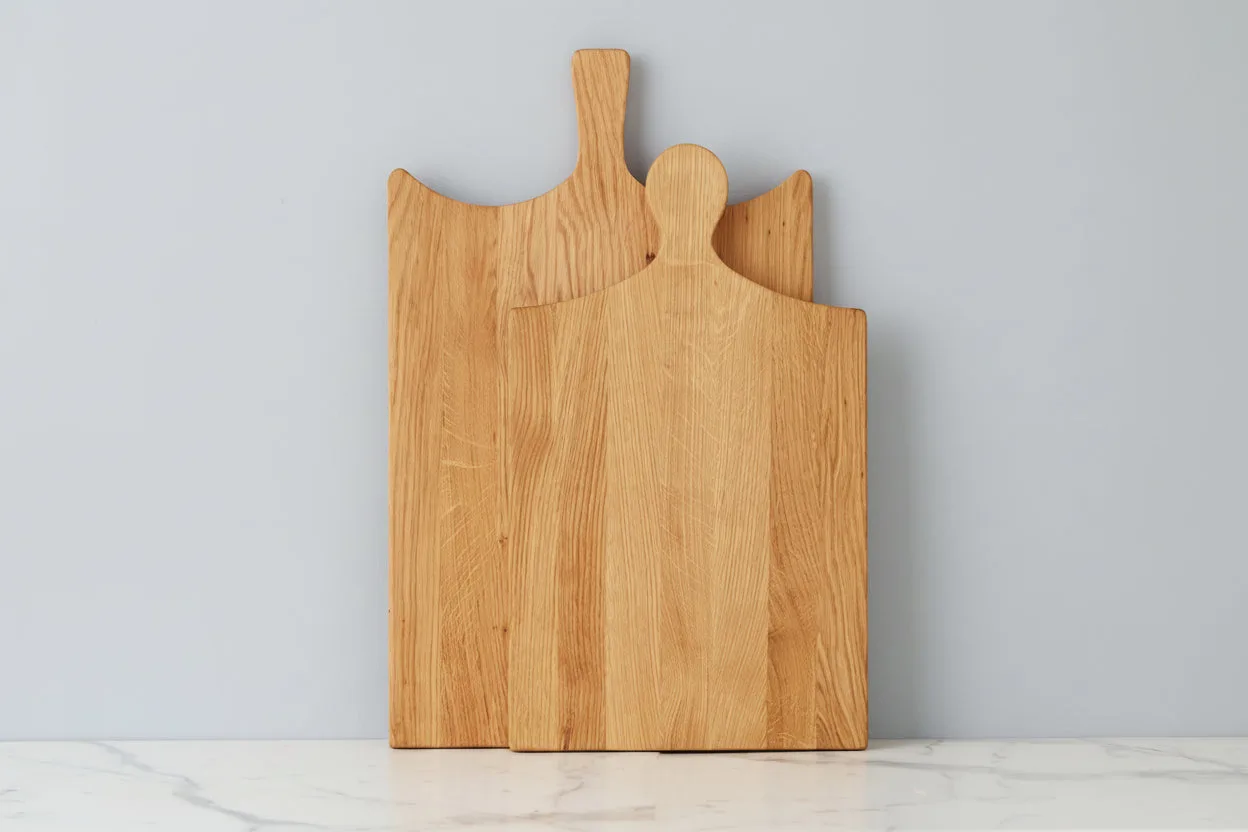
- European Cutting Boards, Set of 2: Inspired by a classic set of German boards, this wooden chopping board set is designed to be perfectly stackable for elegant counter storage. Hand-crafted from oak wood, both boards differ in shape and graduate in size. Because the two boards are different sizes and shapes, they dry at different rates and may need oiling on separate schedules. Stacking them while still damp is the fastest way to trap moisture and create the dull, uneven look you are trying to fix.
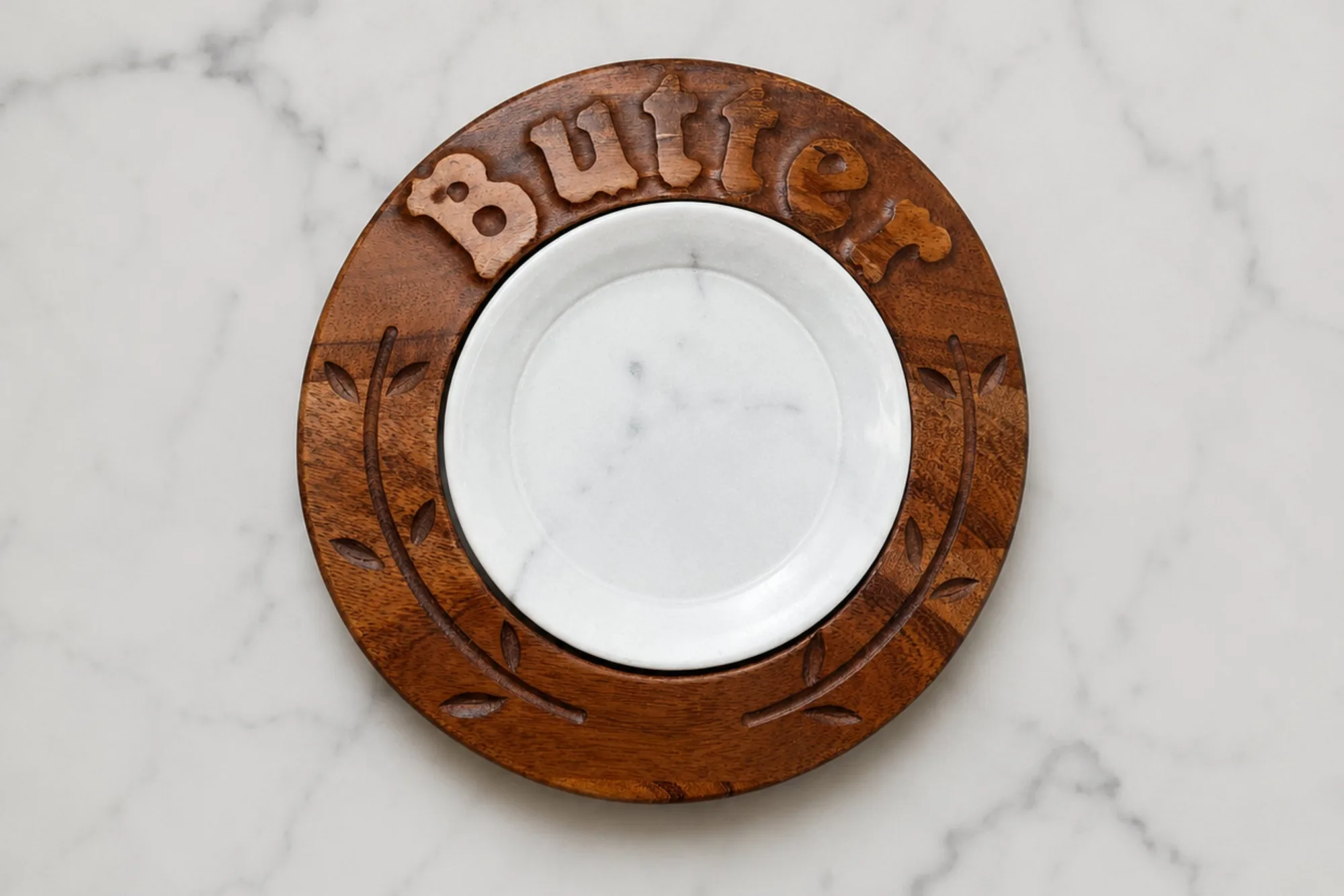
- Vintage English Butter Board: Inspired by the carved wooden butter boards once found in 19th-century English kitchens, this board is handcrafted from wood and paired with a removable marble dish. The removable marble dish means you can lift it off and oil only the wood, which keeps the stone free of oil stains. It also lets the wood dry fully on both sides instead of sitting flat on a counter.
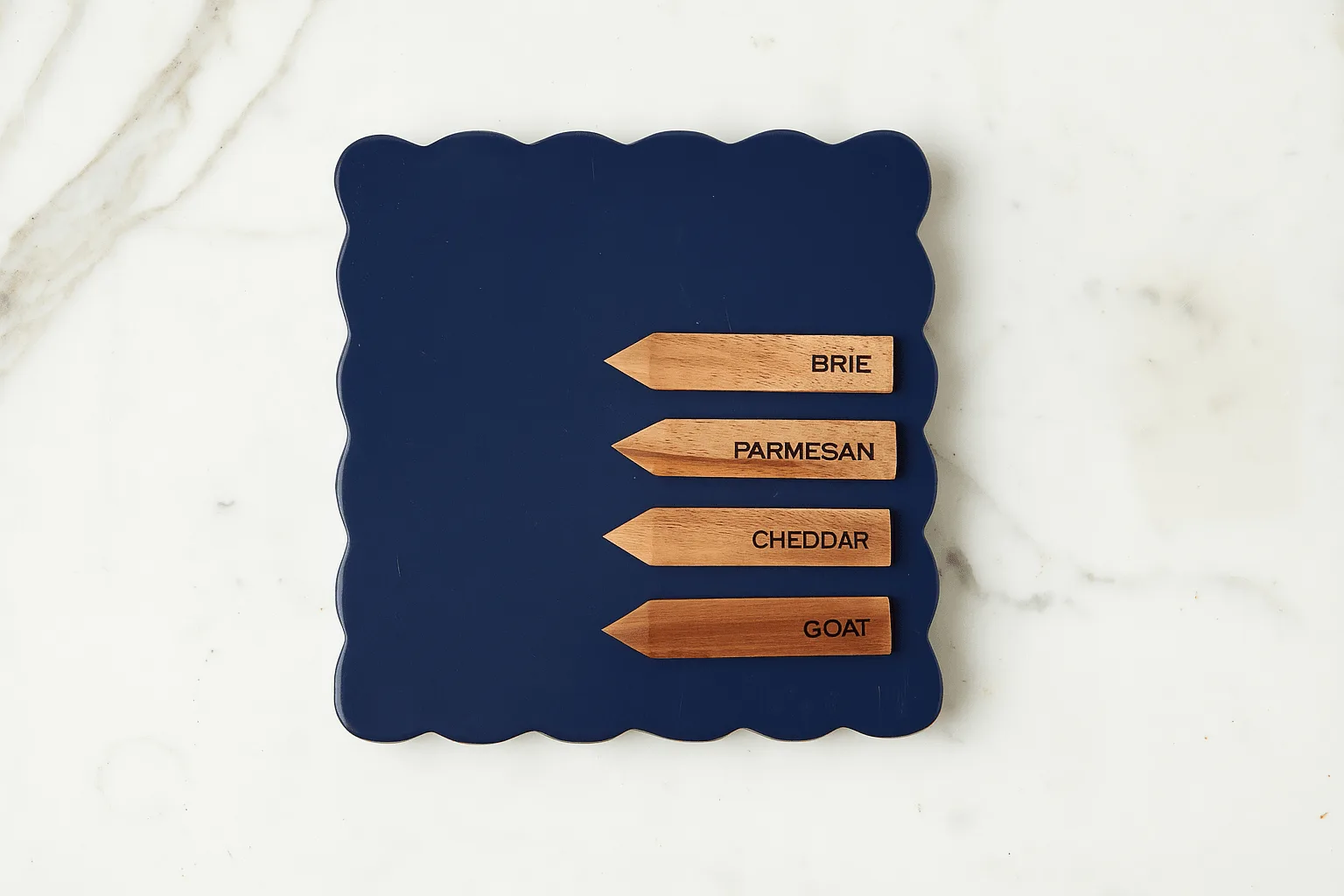
- Square Scalloped Cheese Board with Cheese Markers, Small, Navy Blue: Crafted from durable mango wood, this petite board features elegant scalloped edges and arrives ready to gift—tied with luxe etúHOME ribbon and paired with four cheese markers labeled Goat, Parmesan, Brie, and Cheddar. Scalloped edges and small size make this board easy to over-oil at the curves, where excess can pool. Wipe those edges carefully and store the board flat rather than leaning it, so the scallops do not warp.