Quick answer
To protect unprocessed film from airport X-ray fogging, pack it in a clear film pouch marked 'Do Not X-Ray' and request hand inspection at security.
Why X-rays can damage your film
Airport security scanners use X-rays to inspect carry-on luggage. While modern CT scanners are more powerful than older X-ray machines, both can expose unprocessed film to radiation that gradually fogs the emulsion. The effect is cumulative: multiple scans increase the risk of visible density shifts, loss of shadow detail, and a general loss of contrast.
The risk is highest for high-speed films (ISO 800 and above) and for films that have already been exposed but not yet developed. Once film is processed, X-rays no longer affect it. If you are traveling with unexposed or exposed-but-unprocessed rolls, you need a strategy to minimize radiation exposure.
The trade-off: lead-lined bags vs. clear pouches
Some photographers use lead-lined bags to block X-rays entirely. These are effective but heavy, expensive, and they can trigger extra scrutiny at security because they appear opaque on the scanner. In many airports, screeners will ask you to open the bag, which defeats the purpose and can cause delays.
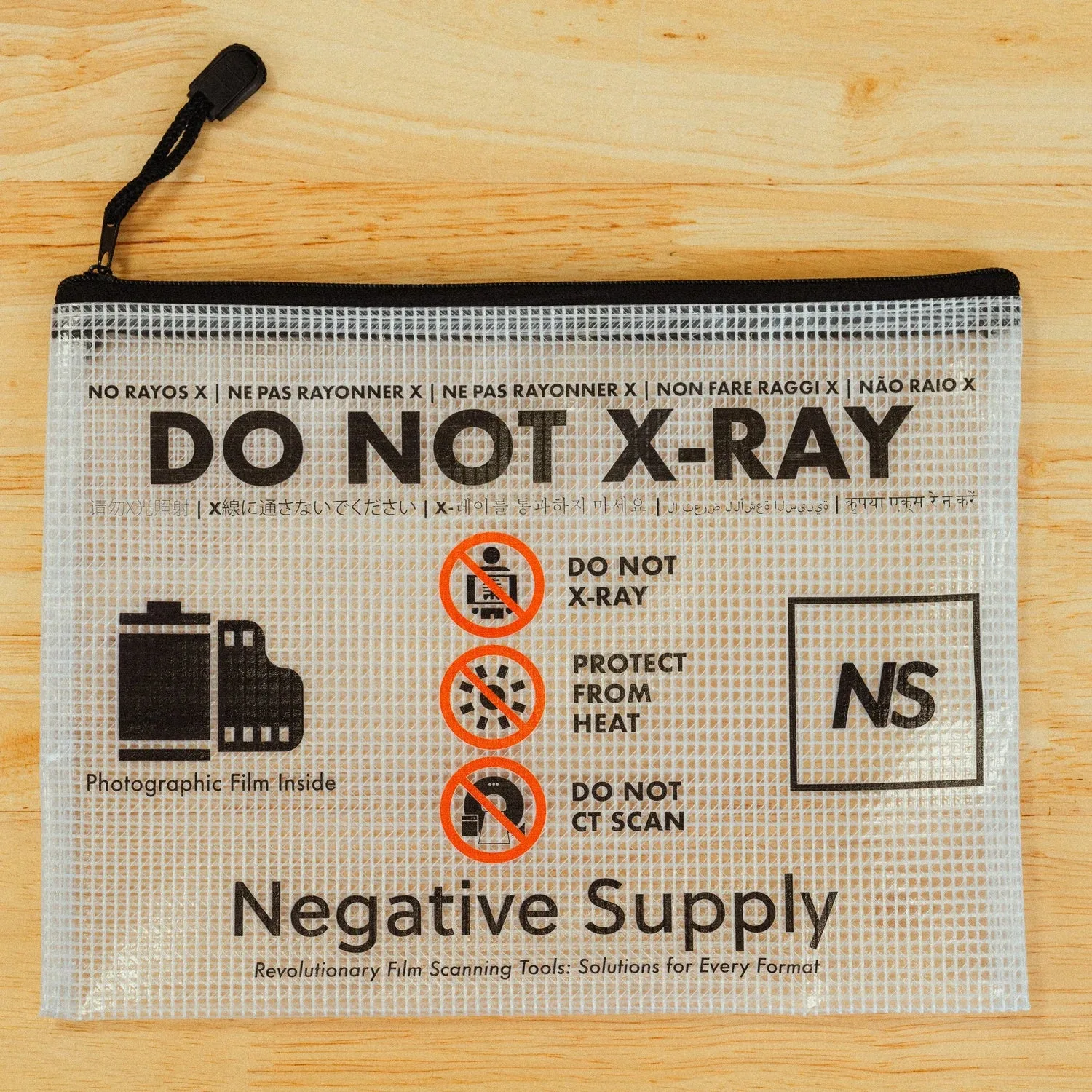
A clear pouch with a 'Do Not X-Ray' label is a lighter, simpler alternative. It signals to security personnel that the contents are film and that you are requesting hand inspection. The transparency lets the officer see the rolls without opening the pouch, which speeds up the process and reduces the chance of accidental scanning.
Diagnosing your film travel setup
- Symptom: You are flying with unprocessed film and worry about fogging from airport X-ray scanners.
- Likely cause: Carry-on X-ray machines expose film to radiation that can accumulate and degrade image quality, especially for high-speed film or film that has been exposed but not developed. If you use ISO 800 or faster film, treat every scan as a potential risk.
- Corrective action: Place your film rolls in a clear film pouch labeled 'Do Not X-Ray' and request hand inspection at the security checkpoint. Keep the pouch accessible in your carry-on so you can present it when asked. If the security officer insists on scanning the pouch, ask for a supervisor or explain that the film is unprocessed and could be damaged.
- When to stop or choose another option: If you are traveling with a large quantity of film or need absolute protection, consider a lead-lined bag instead. If you are shipping film, use a lead-lined bag or a dedicated film mailer, as checked baggage scanners are stronger and more damaging. For most travelers, a clear pouch is enough; reserve lead-lined bags for heavy film loads or checked luggage.
Product facts
-
Negative Supply Do Not X-Ray Film Pouch: The Negative Supply Do Not X-Ray Film Pouch is a clear storage pouch with prominent 'Do Not X-Ray' warnings printed in multiple languages. The multilingual warnings and clear design make it easy for security officers to recognize the contents and process a hand-inspection request quickly.
Negative Supply Do Not X-Ray Film Pouch