Quick answer
If your bra band rides up your back, it is almost always too loose, not too small. Tighten the band by moving the hook to a tighter setting, then check whether the band sits level all the way around. If it still climbs after that, the band size itself is wrong and you need to go down a band size while going up a cup size to keep the same volume.
What a riding band actually tells you
A bra band should do most of the support work, which means it needs to sit firmly and horizontally around your ribcage. When it slides up toward your shoulder blades, it is telling you the band is not gripping well enough to anchor the cups. The cups then tip forward, the wires press where they shouldn't, and the straps start doing a job they were never designed to do alone.
This is a bra fit problem with a specific cause, not a sign that your body is the wrong shape. Most people assume a riding band means the bra is too tight, so they size up. That makes it worse. The band gets looser, the back climbs higher, and the straps dig in more.
The 30-second band test
Before you change sizes, test the band you already own. Fasten the bra on the loosest hook, then try to pull the band away from your back between your shoulder blades. If you can fit more than two fingers underneath, the band is too loose. One finger of resistance is about right.
Next, check the level. Look at the band in a mirror from the side. It should run straight around your ribcage, parallel to the floor. If the back sits higher than the front, the band is riding up. If the front sits higher than the back, the band is too tight and you may be compensating by pulling it down.
How to fix a band that rides up
Start with the hooks. A new bra should fit snugly on the loosest hook so you can tighten it as the elastic relaxes over time. If you are already on the tightest hook and the band still climbs, the bra has reached the end of its useful life or the band size is wrong.
If the band is too loose on every hook, go down one band size and up one cup size. This keeps the cup volume roughly the same while giving you a firmer band. For example, a 34C becomes a 32D. The cups should still contain your breast tissue without spilling or gaping.
If the band feels tight but still rides up, the cups may be too small, pushing the band away from your body. In that case, go up a cup size and keep the band the same. The band can only stay put if the cups are not fighting it.
When the problem is the bra, not the size
Some bands ride up because the elastic has stretched out. If your bra is more than a year old, or if you wear it several times a week, the band may simply be worn out. Hand washing in cool water and air drying helps the elastic last longer, but eventually every band relaxes.
A band can also ride up if the bra style does not match your shape. A band with a leotard back or a wider underband distributes tension better than a narrow, stretchy band. If you have a short torso or a fuller bust, a bra with a firmer band and more structure will stay in place better than a lightweight, barely-there style.
When to stop adjusting and choose a different bra
If you have tried tightening the band, checked the cup size, and the band still climbs, stop. Continuing to tighten a band that will not stay put can cause rib pain, skin irritation, and shoulder strain. At that point, the bra is the wrong shape or construction for your body.
Look for a bra with a band that matches your underbust measurement and a cup that contains your tissue without compression. If you are between band sizes, choose the firmer band and adjust the cups. A bra that fits correctly should stay level all day without you thinking about it.
Diagnose your riding band
- Band climbs on the loosest hook: The band is too loose. Move to a tighter hook. If it still climbs, go down a band size and up a cup size. Checkpoint: the band should sit level and allow only one finger underneath.
- Band feels tight but still rides up: The cups are likely too small, pushing the band away from your body. Go up a cup size without changing the band. Checkpoint: the centre front should lie flat against your sternum.
- Band is snug but the back still rises: The bra style may be too stretchy or worn out. Try a style with a firmer band or more structure, like a demi or crossover bra. Verdict: if a new bra in the correct size still rides up, the construction is wrong for your shape.
Bras that stay put
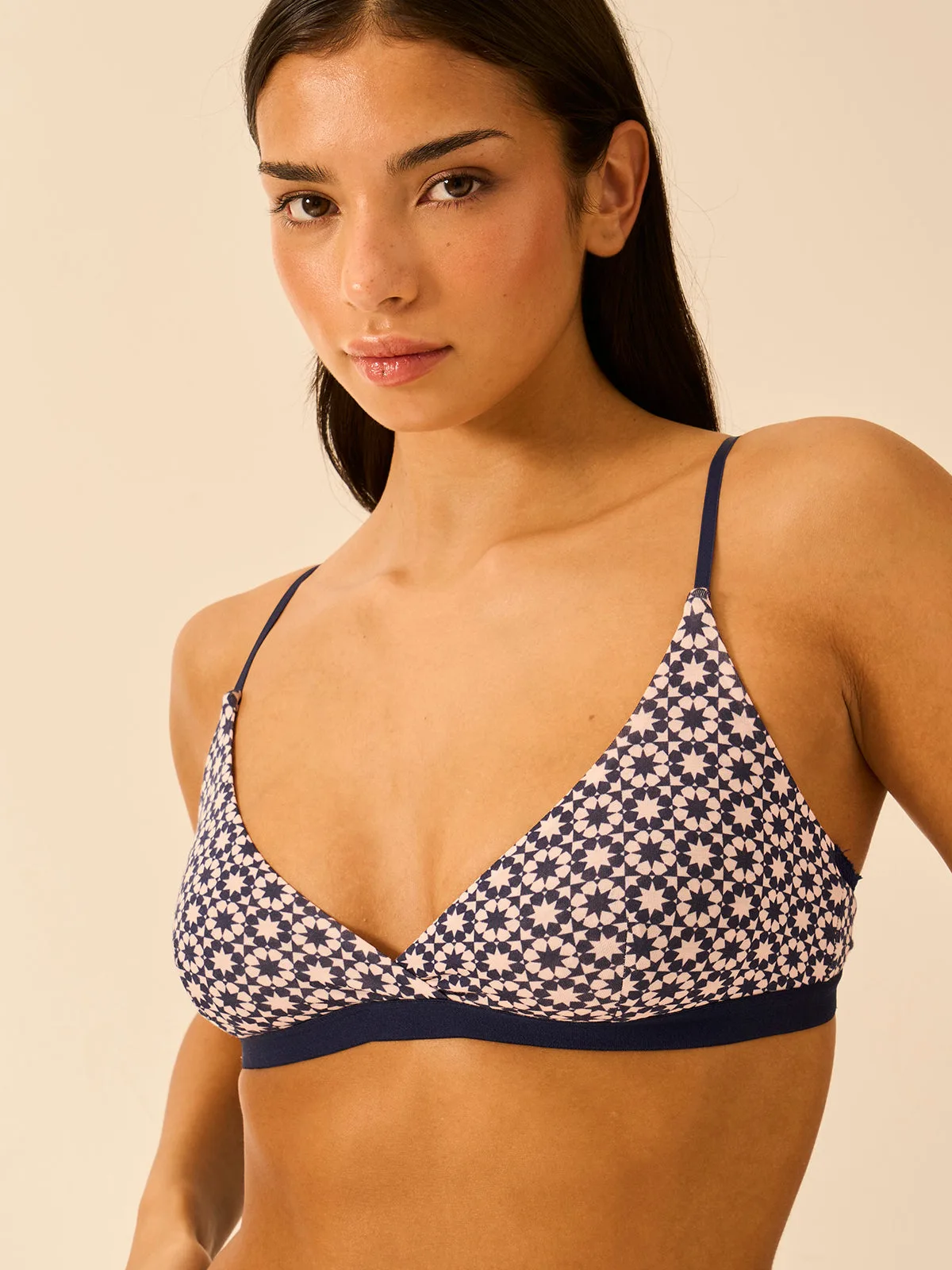
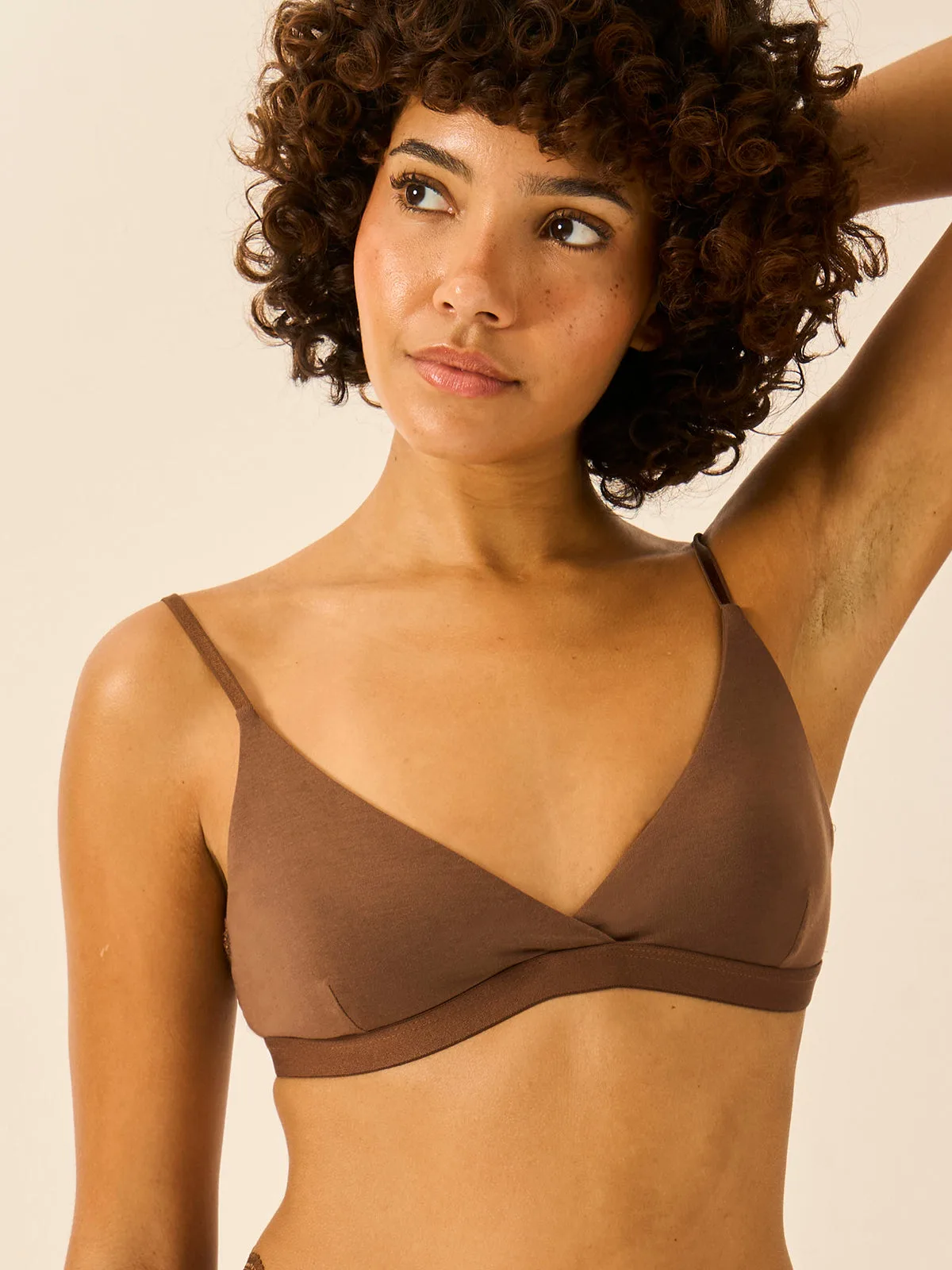
- Crossover Bra - Paradise Found: The Crossover Bra in Paradise Found has a non-wired design with adjustable straps and a hook and eye fastening, plus a waistband. The hook and eye fastening lets you tighten the band as it relaxes, and the waistband adds stability so the band is less likely to slide up.
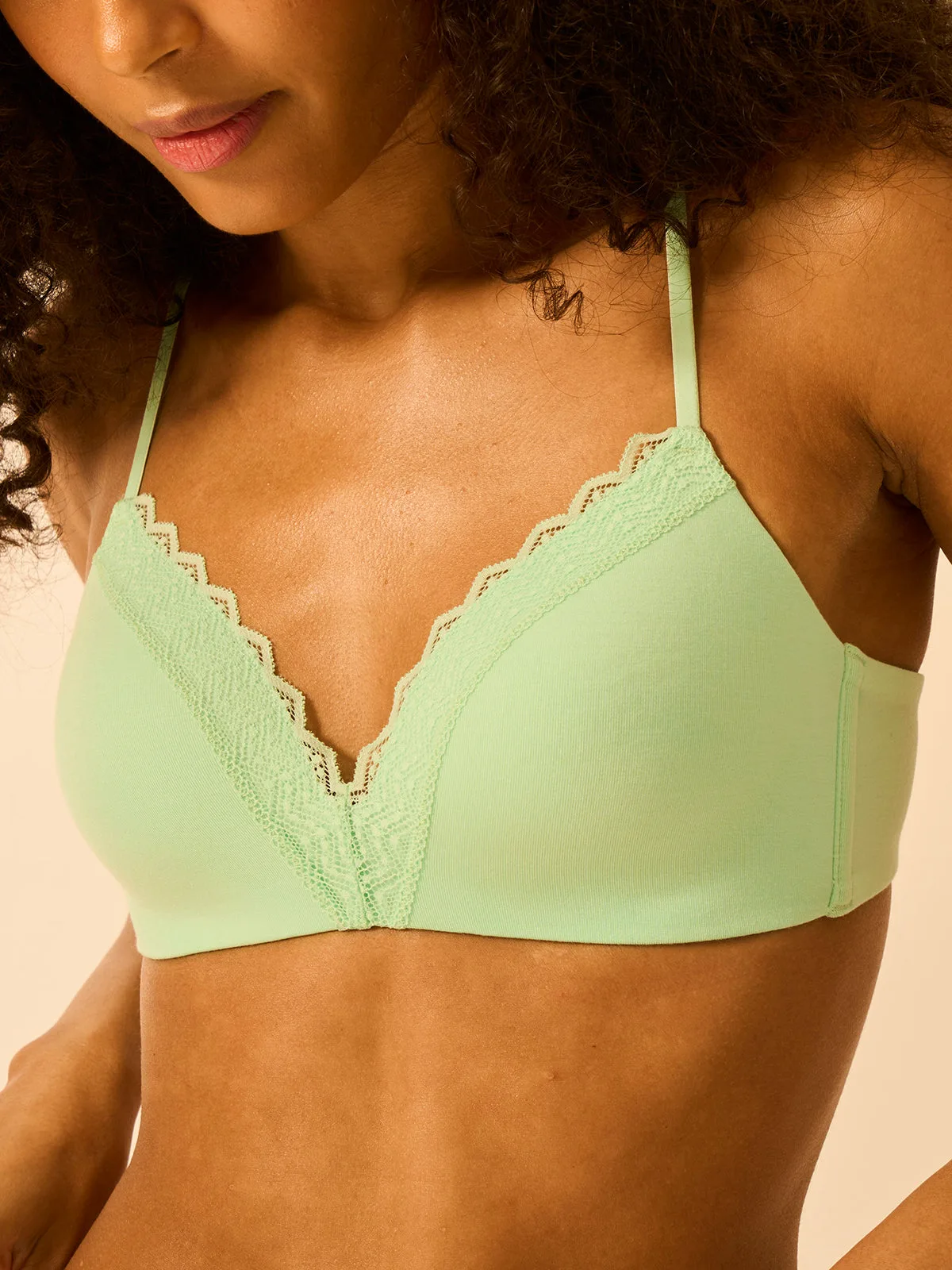
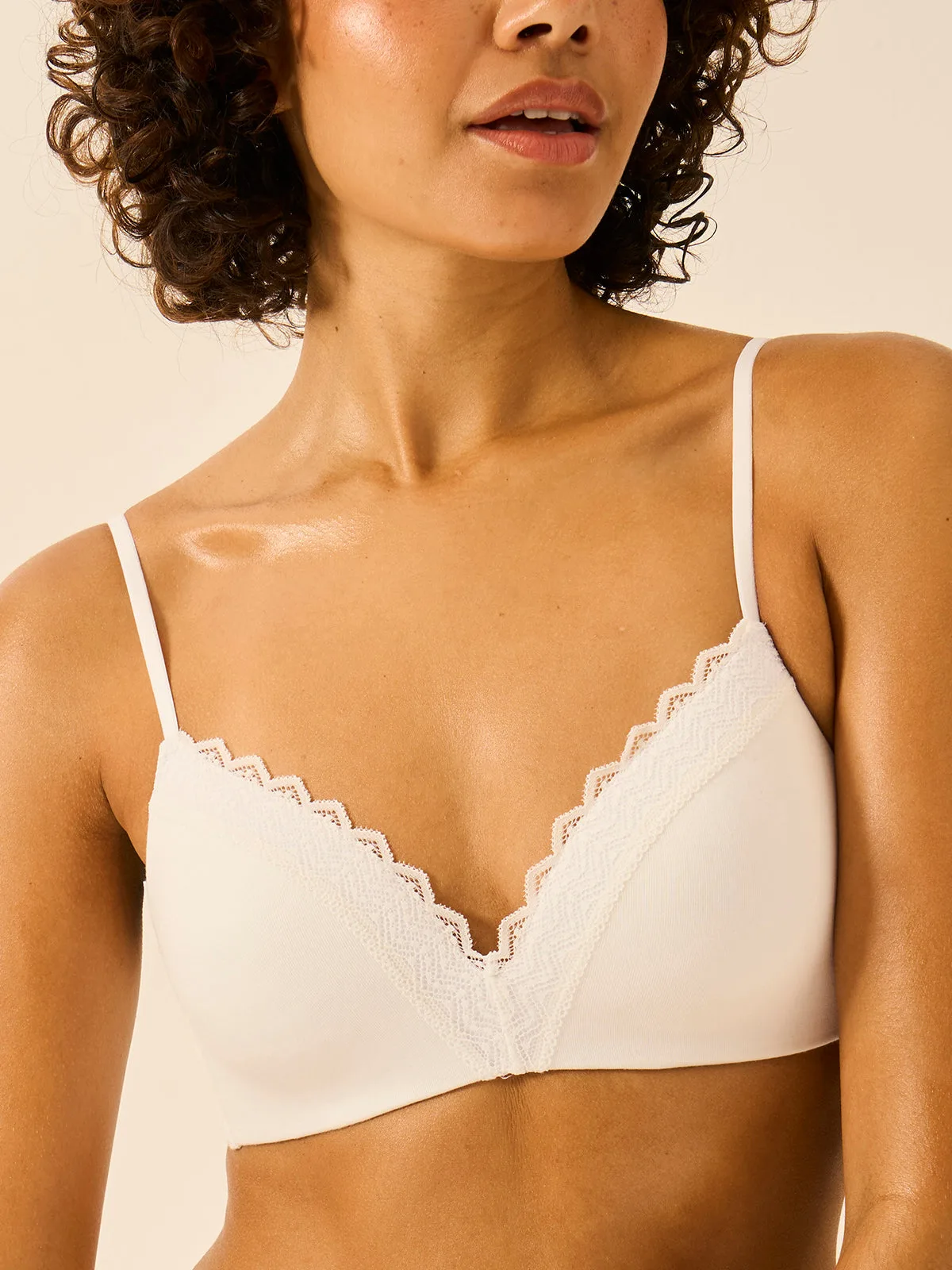
- ZigZag Lace Demi Bra - Spearmint: The ZigZag Lace Demi Bra in Spearmint has light padding, medium support, and a centre-front cut. Medium support and a structured centre front help the band sit level and stay in place, especially if you need a firmer feel than a light support bra.