Quick answer
Slipping straps are almost always a fit problem, not a worn-out bra. Tighten each strap only until it stays put without digging in, then check whether the band is doing its share of the support. If the band rides up or the straps still slide after adjustment, the bra is likely the wrong size or style for your frame.
You sit down, stand up, or reach for something, and one strap slides off your shoulder again. It is one of the most common lingerie fit complaints, and it is rarely caused by a defective bra. Straps slip when the band is too loose, the straps are overextended, or the style does not match your shoulder shape.
The good news is that you can diagnose most strap problems in a minute or two. This guide walks through the likely causes, the adjustments that actually help, and the point where you should stop fiddling and choose a different bra style instead.
Check the band before you touch the straps
Most of a bra's support should come from the band, not the straps. If the band rides up your back or shifts when you raise your arms, the straps have to work harder and will slide. Put the bra on and fasten it on the loosest hook first. The band should sit level and snug enough that you can slide two fingers under it, but not pull it away easily.
If the band climbs, try fastening it one hook tighter. A band that stays level keeps the straps anchored, which is often enough to stop them from wandering. If tightening the band makes breathing or sitting uncomfortable, the band size is wrong and adjusting straps will not solve it.
- Always start on the loosest hook so the bra can be tightened as the elastic relaxes over time.
- A band that leaves red marks or restricts breathing is too tight, not too loose.
Adjust straps correctly, not just tighter
Strap adjustment is about balance. Tighten each side a little at a time, then move your arms and shoulders. The strap should stay on your shoulder without pressing a groove into your skin. If one strap needs to be much shorter than the other, that is a clue: your shoulders may be uneven, or the bra cup is not sitting correctly.
Check that the slider is not at the very end of the strap. When the adjuster is maxed out, the strap has no room to flex and will pull loose as you move. If you are already at the shortest setting and the strap still slides, the bra is too large in the band or the straps are simply too long for your torso.
- Adjust both sides evenly first, then fine-tune one side if your shoulders differ.
- Recheck the straps after five minutes of normal movement, not just while standing still.
Match the style to your shoulder shape
Some shoulders are sloped or narrow, and straps on a classic cut will slide no matter how well you adjust them. In that case, the fix is a different construction rather than more tightening. A longline bra or a bra with a wider, integrated support panel spreads the anchoring over more of your torso, which reduces strap movement.
Look for bras with a leotard back, crossed straps, or a racerback option if slipping is a daily problem. These designs keep straps closer to the center of your back and make it harder for them to travel off the shoulder. If you prefer a smooth everyday look, a longline style can be a practical alternative to constantly readjusting.
- Sloped shoulders often do better with a leotard back or convertible straps.
- If you need a bra for movement, choose one with a built-in support panel rather than relying on thin straps.
When to stop adjusting and replace the bra
Straps that slide after a correct band fit and a balanced adjustment usually mean the bra has reached the end of its useful life. Elastic stretches with wear and washing, and no amount of tightening brings it back. If the band no longer stays level on the loosest hook, or the straps are permanently shortened, it is time to replace it.
If you have tried a tighter band, a different strap length, and a style with more coverage, and the slipping continues, the issue is the size or the cut, not your technique. Get measured again or try a different model. A bra that fits properly should stay in place through normal daily movement without constant readjustment.
- Replace a bra when the band rides up even on the tightest hook.
- If two or three styles all slip in the same way, get a fresh measurement before buying more.
Strap slip diagnosis
- Band rides up your back: The band is too loose, so the straps are doing the work. Fasten one hook tighter and check that the band sits level all the way around. If the band still climbs on the tightest hook, the bra is worn out or the band size is too large.
- Straps slide only on one side: One shoulder may be lower or more sloped, or the cup on that side may not be sitting correctly. Adjust that strap slightly shorter and reposition the cup. If the same side always slips across different bras, look for a style with a leotard back or convertible straps.
- Straps are already at the shortest setting: The straps are too long for your torso, or the band has stretched. There is no more adjustment left to give. Stop adjusting and replace the bra, or switch to a longline or racerback style that anchors differently.
DIM styles that help with strap stability
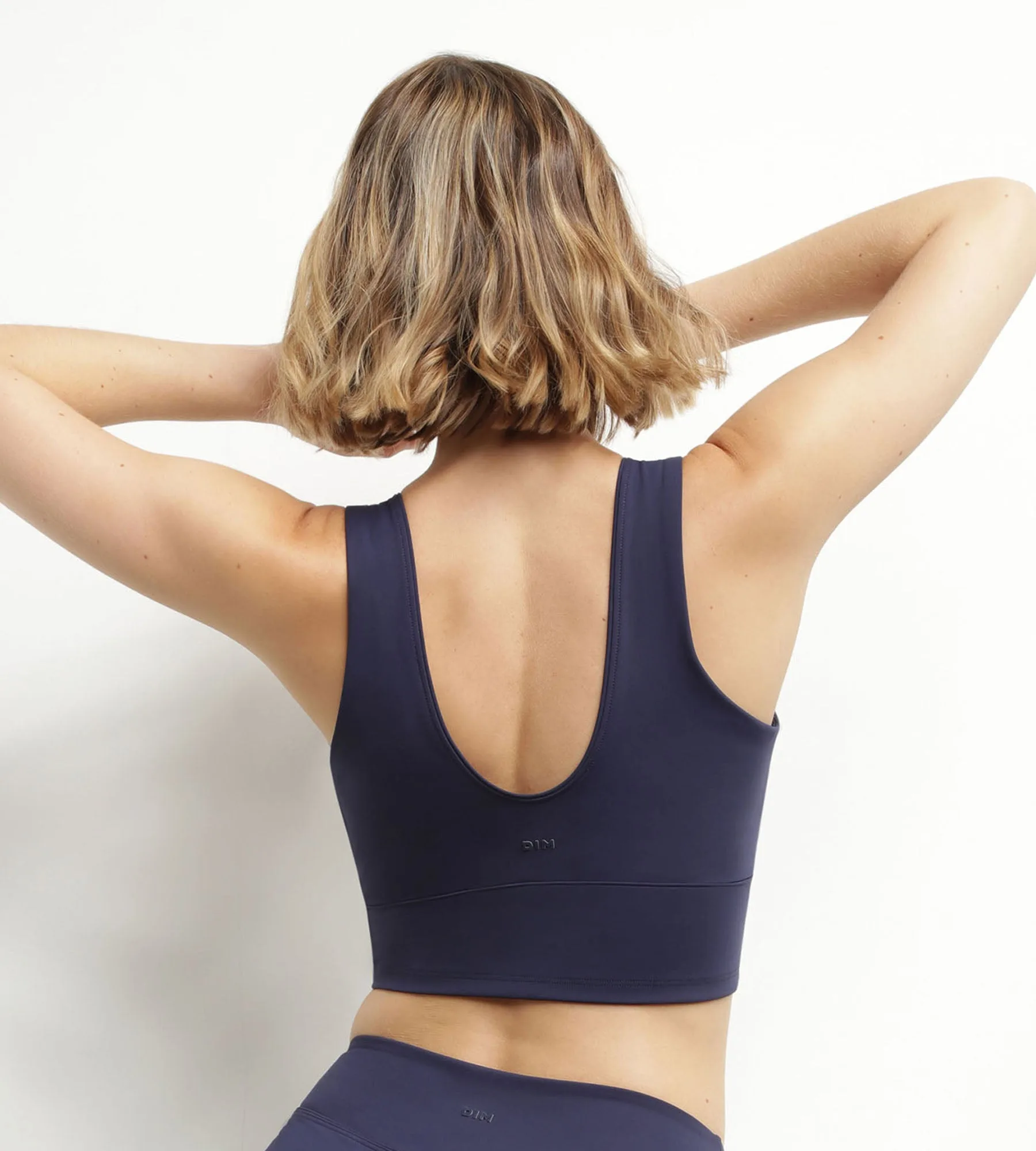
- Brassière de sport femme longue Bleu Nuit Dim Move: Longline microfibre design with an integrated bra for effective, discreet support and a V-neckline with an open back. A longline shape spreads support across the torso, so straps do not have to carry the full weight of the bust and are less likely to slide during movement.
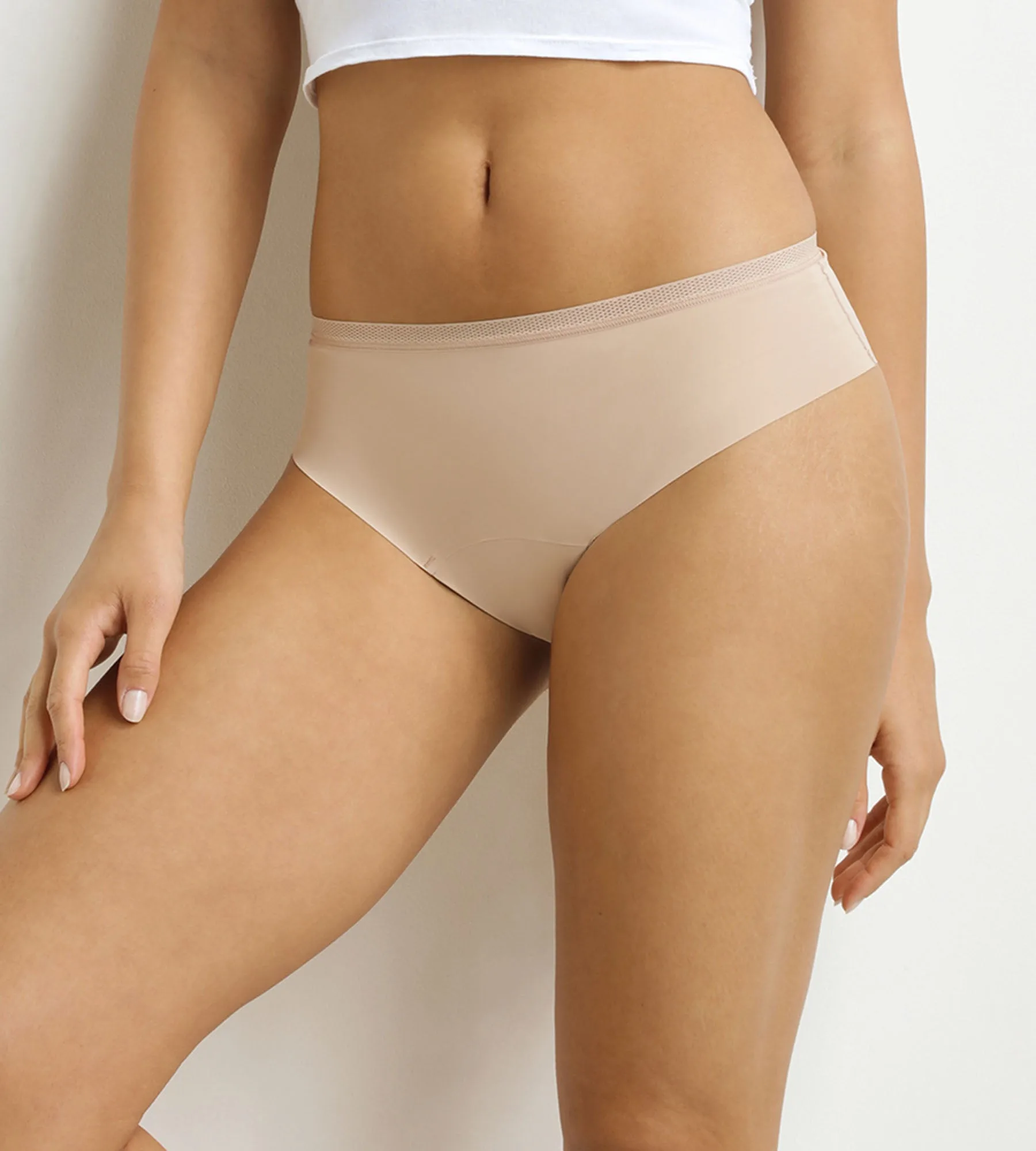
- Culotte de règles invisible femme Nude Dim Protect: Invisible microfibre menstrual brief with clean-cut edges and up to 12 hours of protection for medium to heavy flow. A smooth, low-profile base layer reduces bulk under clothing, which helps your bra band sit correctly and keeps straps from being pushed out of place.
Slipping straps are a signal, not a sentence. Check the band first, adjust the straps in small steps, and if the problem persists, change the style rather than fighting the fit. A bra that stays put lets you forget about it, which is exactly how it should feel.