Quick answer
Regular worming treatment protects your cat from internal parasites that can cause weight loss, vomiting, and even serious illness. A consistent deworming schedule is a cornerstone of cat health care.
Why routine worming matters
Indoor and outdoor cats alike can pick up worms from fleas, prey, or contaminated soil. Tapeworms and roundworms are the most common types in the UK. Even if your cat seems healthy, a light infestation may not show symptoms until it becomes severe.
Untreated worms can lead to malnutrition, intestinal blockages, and anemia. Kittens and senior cats are especially vulnerable. Regular treatment keeps your cat comfortable and reduces the risk of spreading worms to other pets or family members.
Choosing between spot-on and tablets
Both formats are effective, but your cat's temperament and your routine matter. Spot-on treatments are ideal for cats that refuse pills or are difficult to handle. Tablets can be hidden in food and work quickly against multiple worm types.
Check the active ingredients: praziquantel targets tapeworms, while pyrantel covers roundworms. Some products treat only one type, so read labels carefully. If your cat hunts or goes outdoors, a broad-spectrum product is usually a safer bet.
How to diagnose and act on worming needs
- Symptom: Watch for visible signs: rice-like segments near the tail, weight loss despite a good appetite, a dull coat, or scooting on the floor. Vomiting or diarrhea can also indicate worms. If you see these signs, schedule a treatment right away.
- Likely cause: Cats pick up worms from ingesting infected fleas during grooming, eating raw prey (birds, rodents), or walking on contaminated soil. Indoor cats are not immune—fleas can hitch a ride indoors on clothing. Flea control is a key part of preventing worms.
- Corrective action: Choose a suitable wormer: spot-on for tapeworms (e.g., Beaphar WORMclear Spot-On) or a broad-spectrum tablet for both roundworms and tapeworms (e.g., Beaphar WormClear Tablets). Follow the weight-based dosage exactly. Repeat every 3 months for adult cats, or monthly for kittens and outdoor hunters. Set a recurring reminder—consistency is more important than the product format.
- When to stop or choose another option: If your cat is pregnant, nursing, or has a known medical condition, consult your vet before worming. If your cat is under 6 weeks old or weighs less than 1 kg, do not use these products—seek a vet-recommended alternative. If symptoms persist after treatment, see a vet to rule out other issues. Always read the label and consult a vet for kittens, pregnant cats, or persistent symptoms.
Products that help
-
Beaphar WORMclear for Cats Worming Spot-On Solution x 2: Beaphar WORMclear for Cats Worming Spot-On Solution contains praziquantel and treats tapeworms. Suitable for cats and kittens over 1 kg. A good choice if your cat resists tablets or you prefer a mess-free application on the back of the neck.
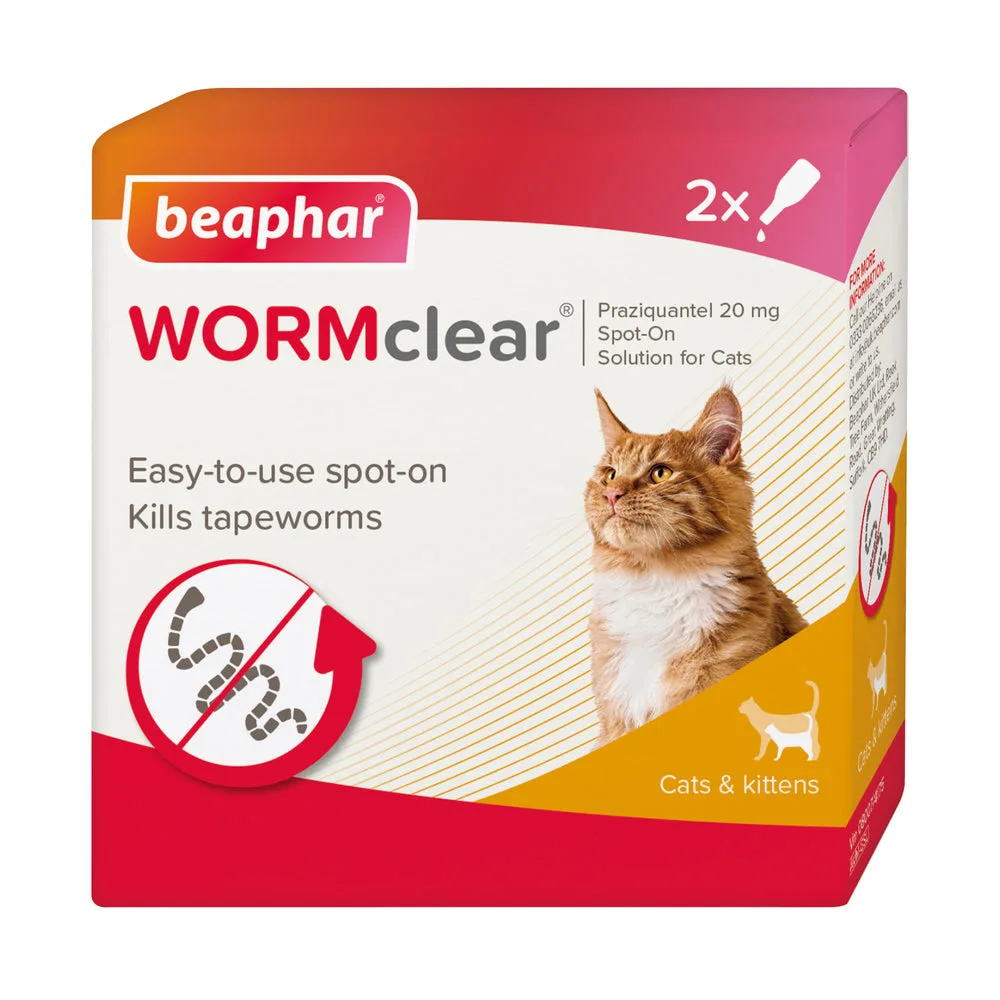
Beaphar WORMclear for Cats Worming Spot-On Solution x 2
-
Beaphar WormClear Worming Tablets for Cats x 4: Beaphar WormClear Worming Tablets for Cats contain pyrantel and praziquantel to treat both roundworms and tapeworms. They are meat-flavored and suitable for cats from 6 weeks old. Provides broad-spectrum coverage in a tasty tablet that most cats accept with or without food.
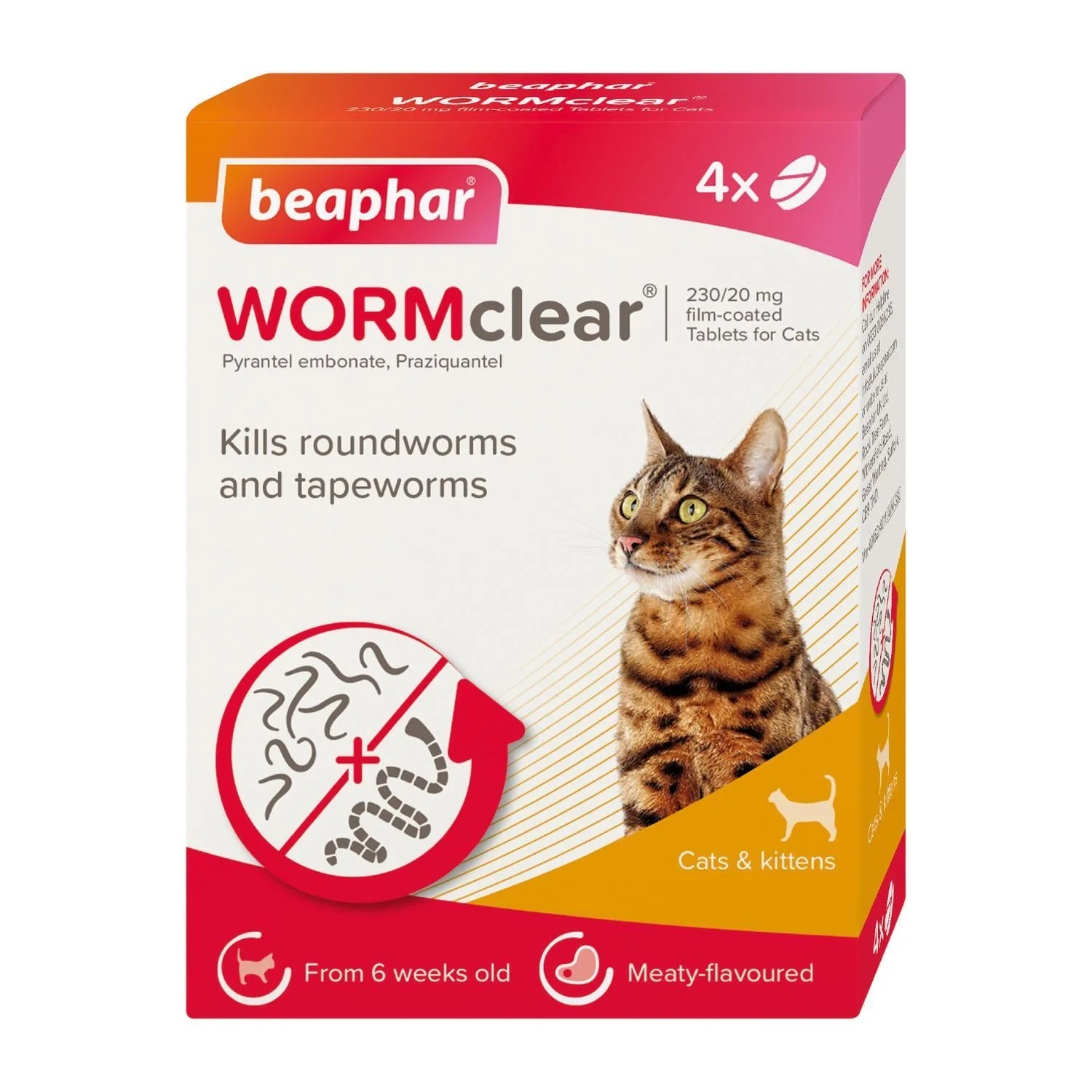
Beaphar WormClear Worming Tablets for Cats x 4