Quick Answer
A corset that creeps up is usually a sign of a too-loose ribcage fit or lacing that isn't snug enough. Start by tightening the laces and adjusting the band, then consider sizing down if the problem persists.
Why Fit Matters More Than Tightness
Corsets are designed to sit firmly around your torso, with most of the support coming from the ribcage and hips. When the fit is off, the garment will migrate upward or downward, which not only feels uncomfortable but also reduces the shaping effect you want.
The most common cause of creeping is a ribcage measurement that is too large for the corset. If the band is loose, there's nothing to anchor it in place, so it rides up when you move. Another culprit is lacing that has loosened over time, especially in the back, which lets the corset shift.
Diagnose and Fix the Creep
- Symptom: The corset shifts upward when you sit, bend, or walk.
- Likely Cause: The ribcage measurement is too loose, or the lacing has loosened, reducing the grip that keeps the corset anchored.
- Corrective Action: Tighten the back laces evenly, starting from the waist and working outward. If the corset still creeps, measure your ribcage snugly and consider sizing down to the closest smaller size. After adjusting, check that the corset stays put when you move; if it still rides up, a smaller size or a different style may be needed.
- When to Stop or Choose Another Option: If the corset digs into your ribs or causes pain even after sizing down, stop wearing it and consult the size guide. For shorter torsos, a cropped stays style may offer a better fit than a full-length corset. Comfort is non-negotiable—if the fit can't be corrected, explore alternative styles.
A Style That Helps
-
Candid Short Stays: Inspired by historical corsetry stays, this cropped bra style top can be styled as underwear or outerwear. A cropped, stays-inspired design can offer a shorter silhouette that may reduce the tendency to ride up on shorter torsos.
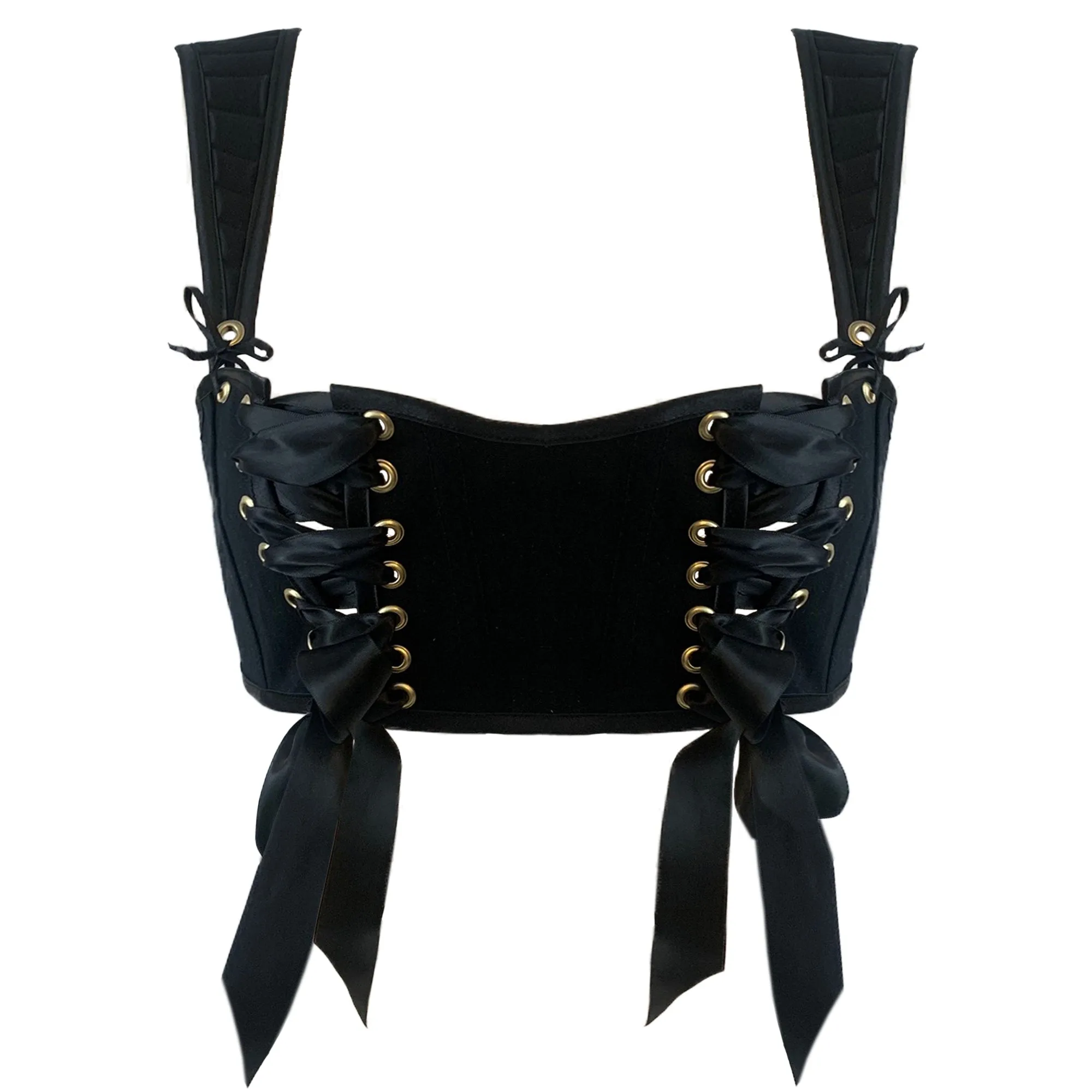
Candid Short Stays