Quick answer
Most dogs who fight grooming are reacting to pain, fear, or a tool that pulls. Before you train calm behavior, rule out mats, skin pain, and clipper or brush tug. Then pair one tool with one second of handling and a treat, and stop while your dog is still comfortable. If your dog snaps, freezes, or panics, stop and book a vet or professional groomer instead of pushing through.
Symptom: Your dog pulls away the moment the brush touches them
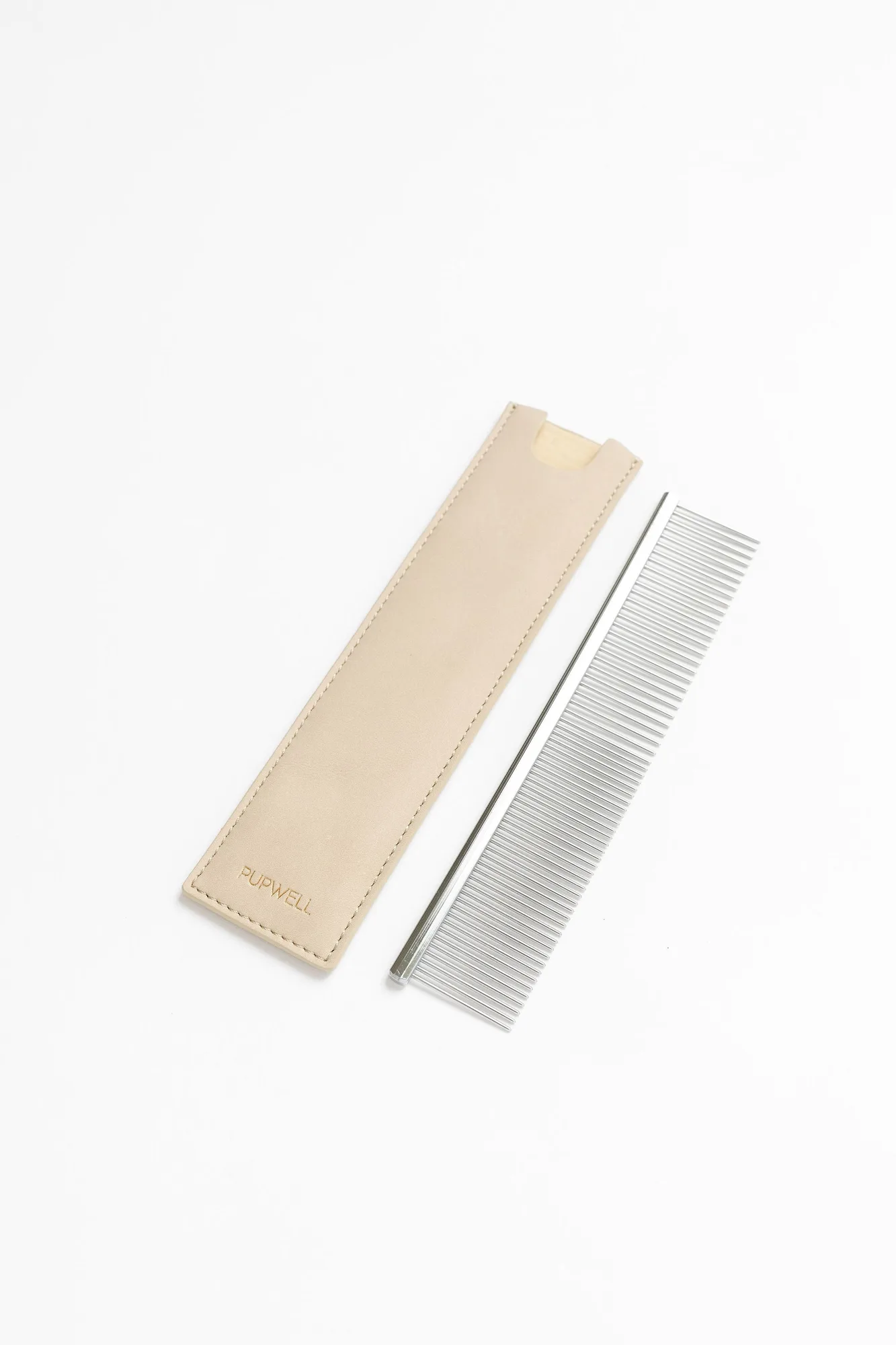
A dog who backs away from a brush but stands still for a bath is usually telling you the tool hurts. Detangling brushes and combs catch on mats, and a matted coat pulls the skin with every stroke. Run your fingers through the coat first. If you hit a knot you cannot easily separate, do not brush over it. Work it out with your fingers or a wide-tooth comb, or have a groomer remove it. Brushing over a mat teaches your dog that the brush equals pain, and that lesson sticks.
Symptom: Your dog freezes or snaps during nail trims
Freezing is not cooperation. It is often a fear response, and it can escalate to a snap. Nail trims involve restraint, a loud tool, and pressure on a sensitive foot. If your dog only reacts to nails, the problem is usually the nail trim, not grooming as a whole. Handle one paw for two seconds, treat, and release. Build up to touching the clipper without clipping. If your dog has already had a nail cut too short, they may remember it. Go slower than you think you need to.
Symptom: Your dog is fine at home but panics at the groomer
Some dogs are calm on their own table and overwhelmed in a busy salon. That is a different problem from a dog who hates being groomed at home. Ask what happens during the appointment: other dogs barking, a dryer, or a stranger handling their feet. If the answer is environment, a quieter appointment time or a mobile groomer may fix it. If your dog is fine at home, do not assume they need more training. They may need a different setting.
Symptom: Your dog was fine for months and now hides when you pick up the brush
A sudden change in tolerance is a pain signal until proven otherwise. Check for ear infections, sore hips, dental pain, or a cut or hot spot hidden under the coat. Older dogs and dogs with arthritis often stop tolerating standing for long grooming sessions. Shorten sessions, use a non-slip mat, and let your dog lie down if standing hurts. If the change came with limping, head tilting, or appetite changes, see your vet before you resume grooming.
Diagnosis: Which cause fits your dog
- Pain or mats: Your dog pulls away from the brush, yelps, or only reacts when you hit a certain spot. Check for knots, skin redness, or sore joints before you train anything. Fix the pain first. If you find a wound, swelling, or limping, stop and call your vet.
- Fear of a specific tool: Your dog is relaxed for baths and brushing but panics at the clipper or nail trimmer. The tool, not grooming, is the trigger. Desensitize that one tool in two-second sessions. If your dog still panics after several calm sessions, book a professional groomer.
- Overwhelm or a bad past experience: Your dog hides when you bring out any grooming supply, or was fine until one rough appointment. The whole routine has become a warning sign. Restart with one tool, one minute, and a treat, and stop before your dog tenses. If your dog snaps or cannot recover, choose a groomer or vet rather than pushing through.
Tools that match the cause
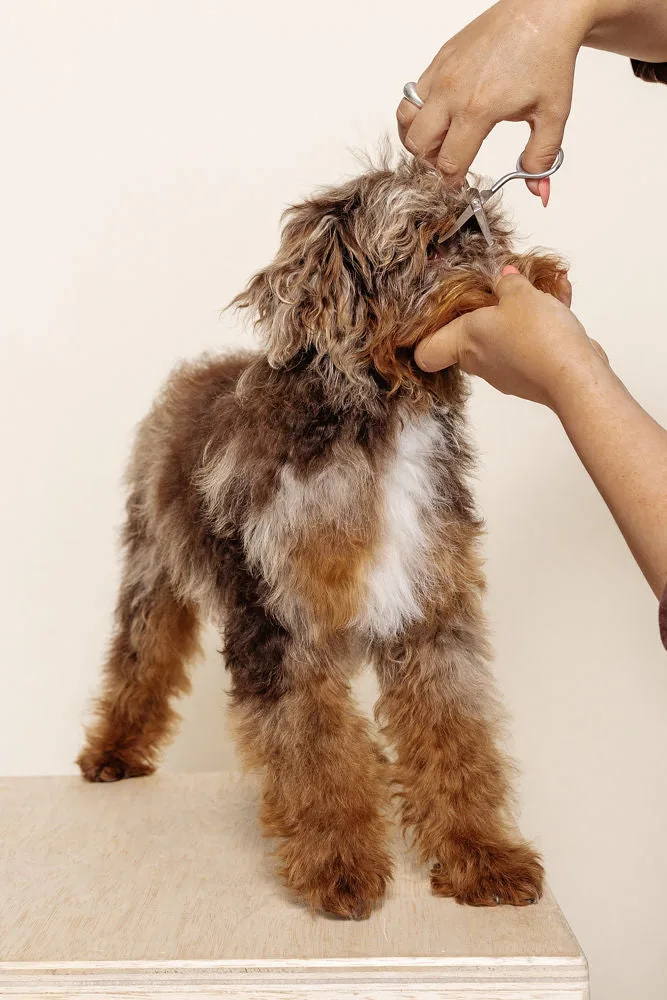
- Puppy Grooming Kit: The Puppy Grooming Kit is designed for puppy parents and walks through grooming needs, which tools a puppy needs, how to use them, and how to socialize and prevent fear or stress. It includes five tools such as a mini gentle detangling brush, mini safety shears, and mini nail clippers. If your dog is young or new to grooming, this kit pairs small tools with step-by-step education, which is the opposite of guessing with full-size tools that scare a puppy.
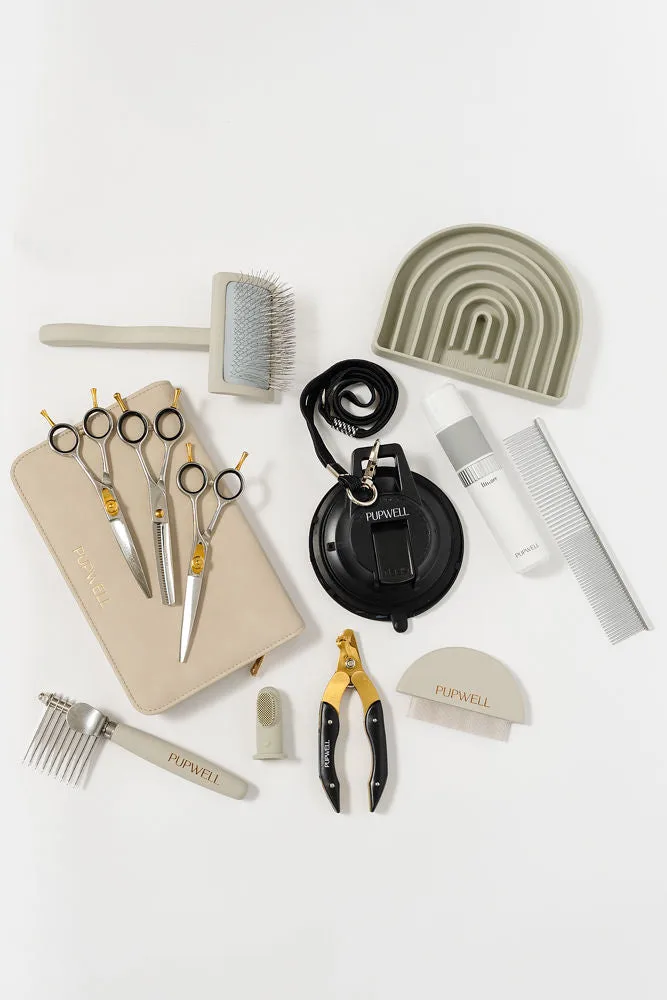
- Ultimate Dog Grooming Kit: The Ultimate Dog Grooming Kit is built around professional tools and includes education on how to use the grooming tools you own. If you have already ruled out pain and fear and want to groom at home long term, this kit is the option that includes instruction rather than tools alone.
- Puppy Breath Toothbrush (wholesale): The Puppy Breath Toothbrush is a food-grade silicone finger toothbrush, free from BPAs, BPSs, PVCs, and other phthalates, and the catalog advises brushing daily for about one minute to remove plaque. Mouth handling is part of grooming. A soft finger brush lets you practice touching teeth and gums for a few seconds at a time, which builds tolerance for other handling.