Quick Answer
Most dogs ignore puzzle toys because the challenge is too hard, the reward is not motivating enough, or the toy was introduced without guidance. Start by resetting the toy with visible, high-value treats, then gradually increase difficulty as your dog succeeds.
Symptom: Your Dog Walks Away From the Toy
A common sign of disinterest is the dog sniffing the puzzle toy once and then leaving. This often means the dog does not understand that the toy holds food or that the effort to get it is not worth the reward. Dogs are pragmatic: if a puzzle does not pay off quickly, they move on.
Likely Cause: Mismatched Difficulty or Low Motivation
The most frequent reason a dog ignores a puzzle toy is that the difficulty level exceeds the dog's current skill. A toy that requires multiple steps or precise manipulation can frustrate a beginner. Another common cause is using low-value treats—dry kibble rarely motivates a dog to work through a puzzle when a stuffed Kong or a piece of cheese would. Finally, introducing the toy without showing the dog how it works can leave the dog confused.
Corrective Action: Reset and Reintroduce the Toy
Start by making the puzzle toy extremely easy. Place a few high-value treats (small pieces of chicken, cheese, or liver) on top of or right inside the toy so the dog sees and smells them immediately. Let the dog eat those treats without any puzzle mechanism. Once the dog is comfortable approaching the toy, hide one treat under a single flap or inside a single compartment. Repeat this a few times, then slowly increase the number of compartments or steps. Always supervise and celebrate small wins. If the dog still shows no interest after three sessions, the toy design may not suit your dog's learning style—some dogs prefer rolling toys or snuffle mats over sliding puzzles.
When to Choose a Different Toy Type
Not every dog enjoys the same kind of enrichment. If your dog consistently ignores a static puzzle toy after several adjusted attempts, consider switching to a treat-dispensing ball, a snuffle mat, or a simple box with crumpled paper. The goal is engagement, not a specific toy. For dogs that are highly food-motivated but not persistent, a simpler toy with immediate payoff builds confidence before you try a more complex puzzle again.
Diagnosis: Why Your Dog Ignores a Puzzle Toy
- Symptom: Dog sniffs the toy once and walks away, or shows no interest after the first treat is eaten. The toy is not communicating value or the challenge is too high.
- Likely Cause: Difficulty mismatch, low-value reward, or lack of demonstration. Check treat value and toy complexity before blaming the dog.
- Corrective Action: Reset the toy with visible high-value treats, then gradually increase difficulty over several sessions. If no progress after three sessions, try a different toy type.
Products That Can Help
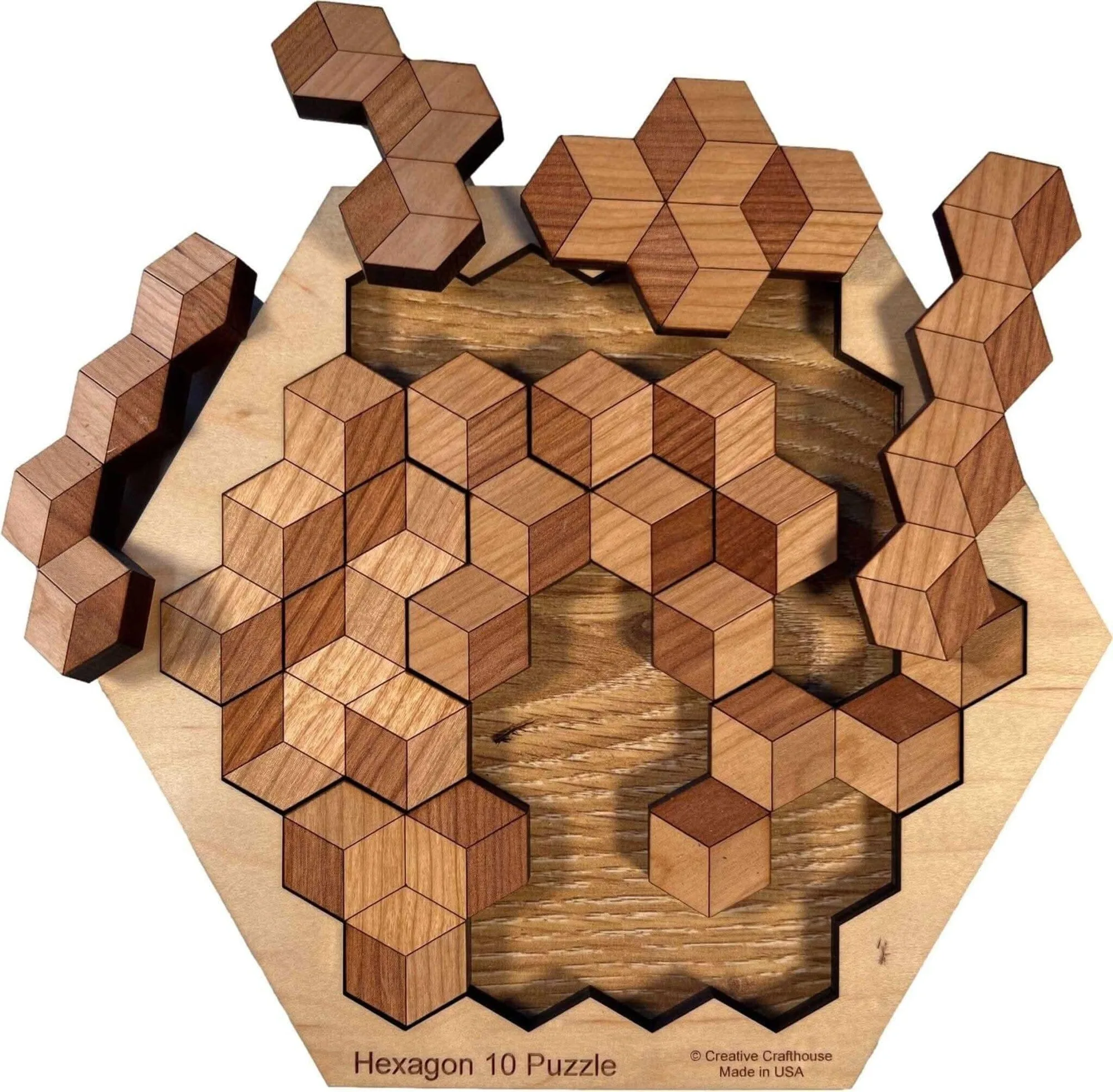
- Hexagon 10 Wood Puzzle | 10 Piece Wooden Brain Teaser: Hexagon 10 is a handcrafted wooden packing puzzle for kids ages 8 and up, designed by Dave Janelle, founder of Creative Crafthouse. Its ten pieces, each a different combination of small hexagons, fit together inside a hexagon-shaped frame. It arrives already solved, so you can see the finished shape, then take it apart and rebuild it. While designed for humans, this puzzle's clear starting state and multiple solutions make it a good example of how a visible goal can reduce frustration. For dogs, you can apply the same principle: show the reward first, then hide it.