Quick answer
A dog escapes a harness because the straps are too loose, the harness style doesn't match your dog's body shape, or the dog has learned to back out of it. Tighten the girth strap so you can fit only two fingers underneath, adjust the neck opening so it can't slip over the shoulders, and if your dog still backs out, switch to a harness with a contoured chest plate that sits deeper on the ribcage.
The Fit Check That Takes 30 Seconds
Put the harness on your dog and try to pull it straight up over the head without unclipping anything. If it slides off easily, the neck opening is too large. A properly fitted harness should not be able to pass over the widest part of the skull or the shoulders. Next, check the girth strap around the ribcage. You should be able to slide two fingers flat under the strap, but not a whole hand. If you can fit more than two fingers, the harness is too loose and your dog can twist and back out.
Why Backing Out Happens More Than Slipping Forward
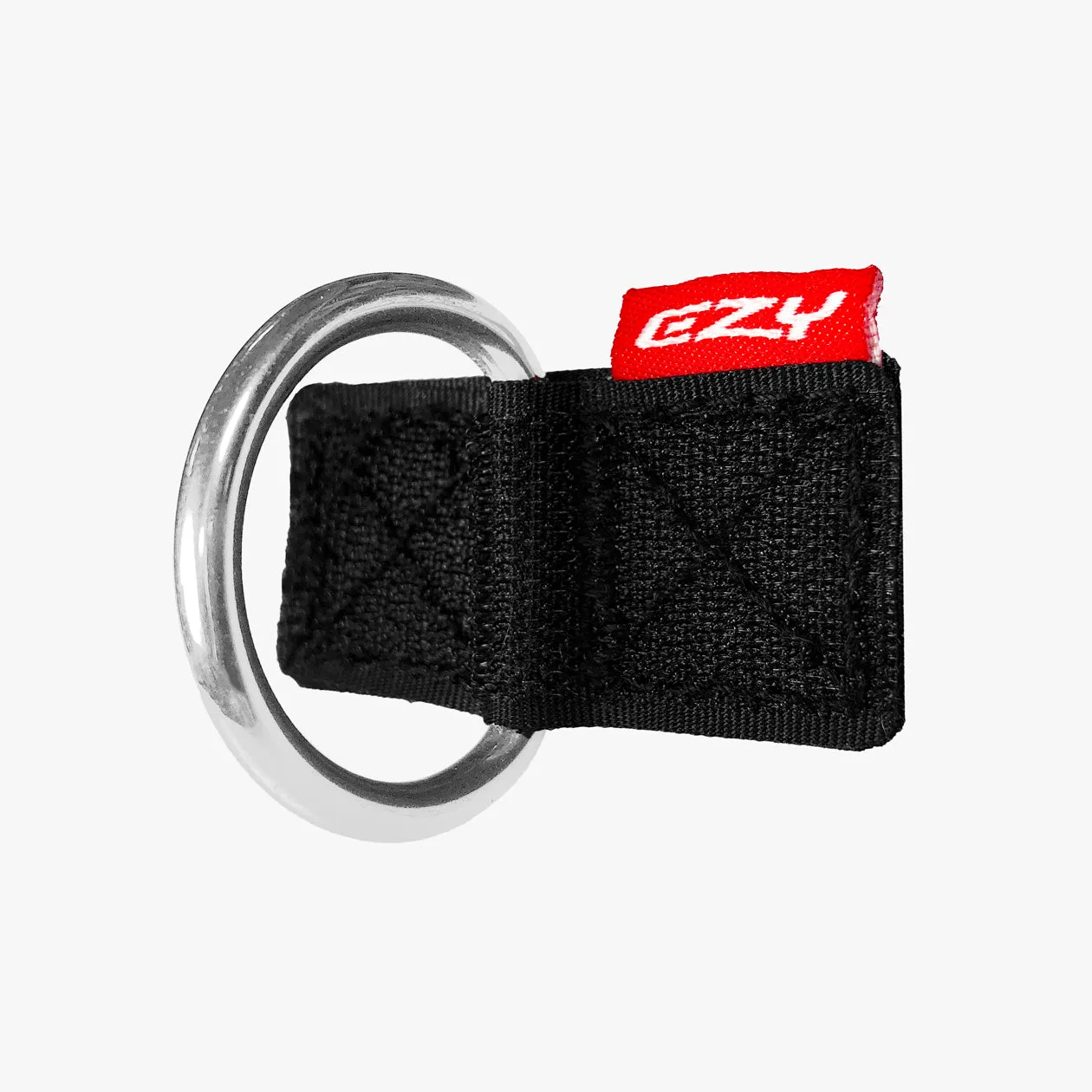
Dogs that panic or resist pressure often back up. When they do, a loose harness slides forward over the shoulders and off the body. This is especially common in dogs with narrow heads, deep chests, or a sloping shoulder shape. A harness that only has a single strap across the chest and no stabilizing plate will rotate and loosen as the dog pulls backward. Adding a front leash attachment changes the physics: when the dog pulls forward, the leash redirects them sideways instead of letting them build backward momentum. The UpFront Leash Attachment turns a standard harness into a training tool by anchoring the leash at the chest, which discourages the backward escape motion.
When to Stop Adjusting and Change Harnesses
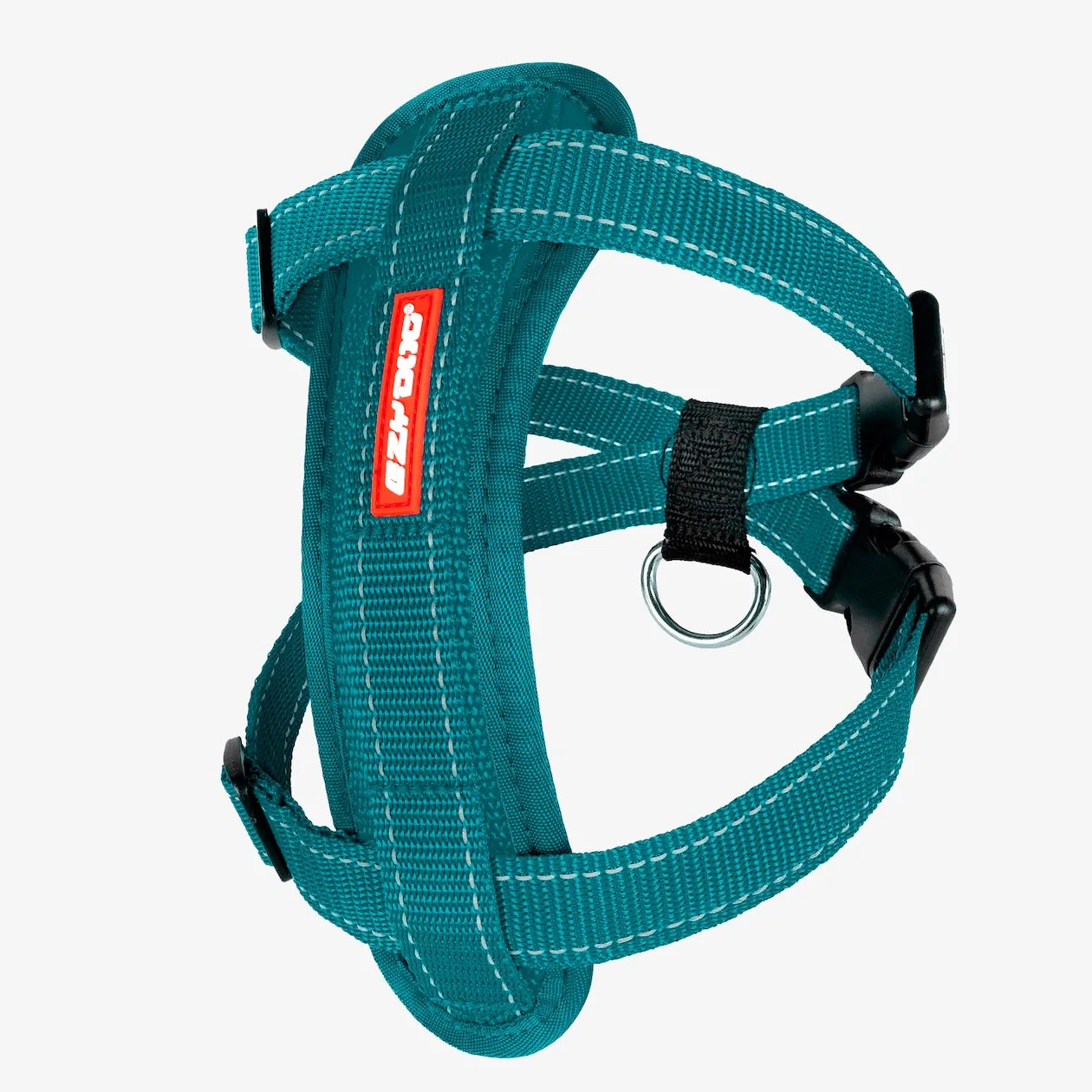
If you have tightened every strap to the two-finger rule and your dog still slips out, the harness shape is wrong for your dog's body. No amount of adjustment will fix a harness that sits too high on the neck or has a neck opening that cannot be made small enough. At that point, choose a harness with a contoured chest plate that molds to the dog's shape and distributes pressure across the ribcage rather than the throat. The Chest Plate Dog Harness is designed for this: its EVA foam plate sits deep on the chest and stays secure even on strong pullers, and it fits dogs from 7 lbs and up. If your dog is a dedicated escape artist, pair it with the UpFront attachment for front-control walking.
Diagnosis: Why Your Dog Escapes and What to Do
- Harness slides off when you pull up on the neck opening: The neck straps are too loose or the neck opening is too large for your dog's head. Tighten the neck straps until you can fit only two fingers under them, then test again.
- Harness twists to one side when your dog pulls: The girth strap is too loose or the harness lacks a chest plate to stabilize it. Tighten the girth strap to the two-finger rule. If twisting continues, switch to a harness with a contoured chest plate.
- Dog backs out even after tightening all straps: The harness shape does not match your dog's body, or your dog has learned that backing up works. Stop adjusting and choose a different harness style. Add a front leash attachment to interrupt the backward escape pattern.
Products That Help Prevent Harness Escapes
- Chest Plate™ Dog Harness: The Chest Plate Dog Harness offers a snug, escape proof fit with a contoured EVA foam chest plate that molds to your dog's shape, designed for deep-chested breeds and dogs from 7 lbs and up. The deep chest plate prevents the harness from sliding over the shoulders when a dog backs up, which is the most common escape route.
- UpFront™ Leash Attachment: The UpFront Leash Attachment transforms an EzyDog Convert or Express Harness into a training harness with a front leash anchor that provides enhanced control over dogs that pull. A front attachment redirects forward pulling and reduces the backward motion dogs use to slip out of a harness.