Quick answer
Your dog likely stops walking because the new leash feels, smells, or sounds different from the old one. With gradual introduction and positive association, most dogs adjust within a few short sessions.
Why a new leash can trigger hesitation
Dogs rely heavily on familiar scents and sensations. A new leash brings an unfamiliar texture, weight, and clip sound that can feel alarming at first. Even the absence of your dog's own scent on the material can make them suspicious.
The clip mechanism is another common culprit. A metal clasp that rattles or clicks differently than the old one may startle a sensitive dog. The Le Noof Modern Geometric Print Dog Leash uses a secure black metal clip that is designed for smooth everyday control, but any new clip sound can still be unfamiliar on the first few uses.
When it is not the leash itself
Sometimes the problem is not the leash but the context. If your dog associates walks with a previous negative experience—like a sudden noise or a pull from another dog—they may refuse to move regardless of the leash. In that case, the new leash is just a visible trigger.
If your dog happily walks indoors with the new leash but freezes at the door, the issue is likely the outdoor environment or your walking route, not the leash. Focus on rebuilding positive outdoor associations before swapping gear.
Diagnosis: Why your dog stops walking
- Symptom: Your dog freezes, sits, or backs away when you attach the new leash. They may sniff it repeatedly or avoid eye contact.
- Likely cause: The new leash smells, sounds, or feels unfamiliar. Dogs rely on scent and routine; a sudden change can trigger caution or mild anxiety. If your dog also hides or trembles, consider a different leash style or a longer acclimation period.
- Corrective action: Leave the new leash near your dog's bed or food bowl for 1–2 days so it picks up familiar scents. Then attach it indoors without walking—let your dog drag it around for a few minutes. Reward calm behavior with treats. Finally, take a short walk in a quiet area, keeping the leash loose. Repeat each step until your dog is relaxed before moving to the next. Most dogs adjust in 2–4 sessions.
- Stop or choose another option: If after one week of gradual introduction your dog still refuses to walk or shows signs of fear (cowering, tucked tail, whining), the leash material or clip may be genuinely uncomfortable for them. Try a different leash design or consult a positive-reinforcement trainer.
Product spotlight
-
Modern Geometric Print Dog Leash: A lightweight, durable leash with a secure black metal clip for smooth, everyday control. Built to last and easy to handle for daily walks. Finished in Le Noof’s signature print and comes in one size: 4.9 feet. Its lightweight build and smooth clip reduce the sensory shock of switching from an old leash, making it easier for your dog to accept the change.
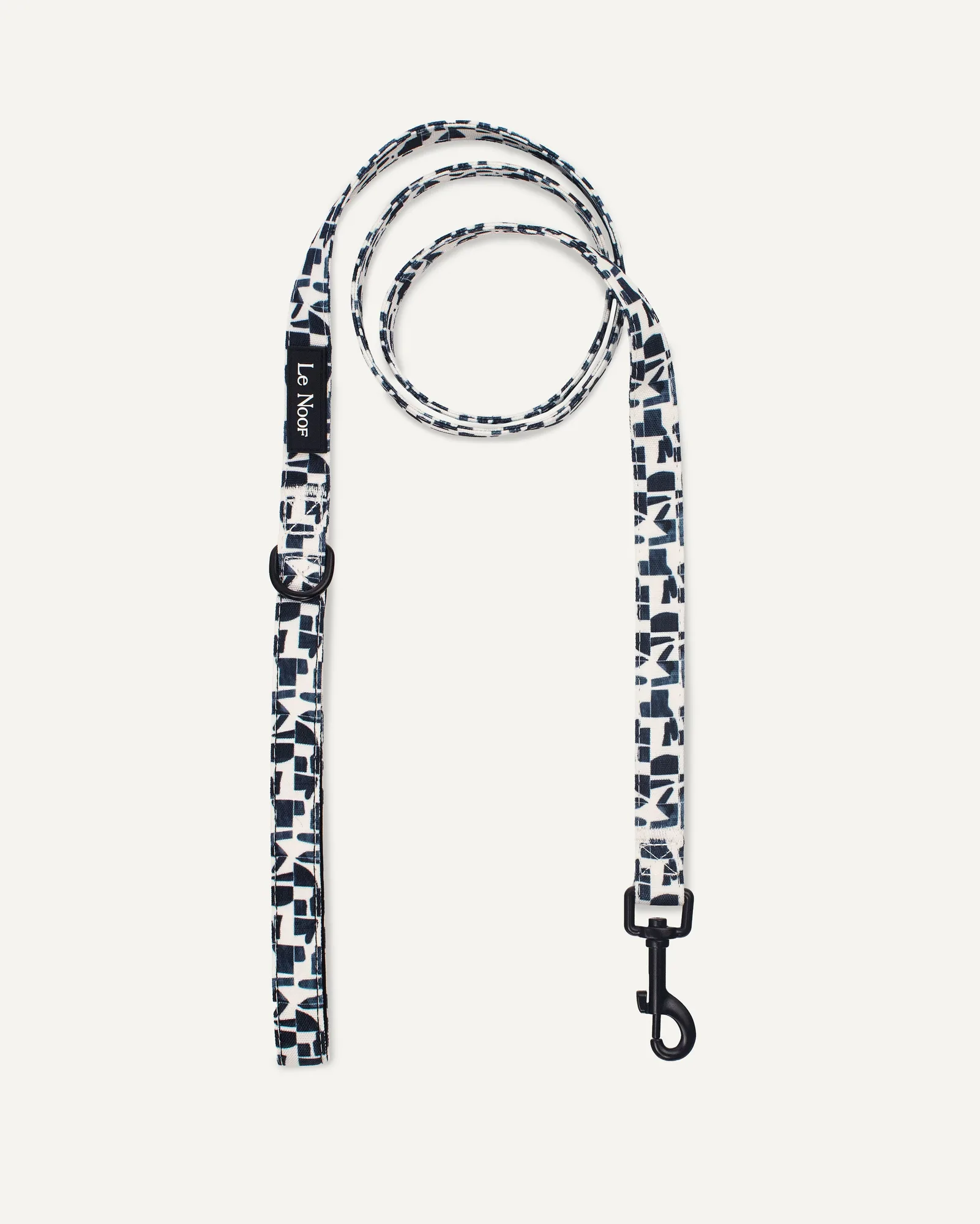
Modern Geometric Print Dog Leash