Quick answer
Leash clips fail most often from corrosion, debris buildup, or bent prongs. Regular cleaning, lubrication, and choosing a leash with a swivel connector can prevent premature failure and keep your dog secure.
Why clips fail even on well-made leashes
A leash clip is a mechanical part that takes repeated stress, moisture, and dirt. Even quality hardware can jam or weaken over time. The most common failure points are the spring mechanism, the hinge pin, and the prong that hooks the D-ring. Corrosion from rain, snow, or saltwater accelerates wear, while sand and grit can block the spring from closing fully.
Another overlooked cause is twisting. When a leash twists repeatedly during walks, the clip rotates against the D-ring, wearing down both surfaces and bending the prong. A swivel connector reduces this twisting, extending clip life.
When to repair vs. replace
If the clip still closes but feels gritty or stiff, cleaning and lubrication often restore smooth operation. If the prong is visibly bent, the spring no longer returns, or the hinge pin is loose, replace the leash or clip immediately. A compromised clip can release unexpectedly, risking your dog's safety.
For leashes with replaceable clips, you can swap the hardware. For sewn or riveted clips, replacement of the entire leash is the safer route.
Leash clip diagnosis and prevention steps
- Symptom: Clip feels gritty, stiff, or won't close fully. You may hear a grinding sound or see rust spots.
- Likely cause: Corrosion from moisture or salt, or debris (sand, mud, grass) trapped inside the spring mechanism.
- Corrective action: Rinse the clip with fresh water, dry thoroughly, and apply a drop of light machine oil or silicone lubricant to the spring and hinge. Work the clip open and closed several times to distribute the lubricant. If the clip still feels rough after cleaning and lubrication, inspect the prong and hinge pin for wear.
- Stop or choose another option: If the prong is bent, the spring does not snap back, or the hinge pin is loose, stop using the leash. Replace the clip if possible, or upgrade to a leash with a swivel connector to prevent future twisting damage. A swivel-equipped leash like the Extreme Traffic Leash with Swivel can eliminate the twisting that leads to premature clip failure.
Product that helps prevent clip failure
-
Extreme Traffic Leash with Swivel: The Extreme Traffic Leash with Swivel features 3 layers of military grade nylon webbing, a Kong Frog connector, and a swivel attachment point. The built-in swivel reduces twisting stress on the clip, preventing the most common cause of prong bending and spring jamming.
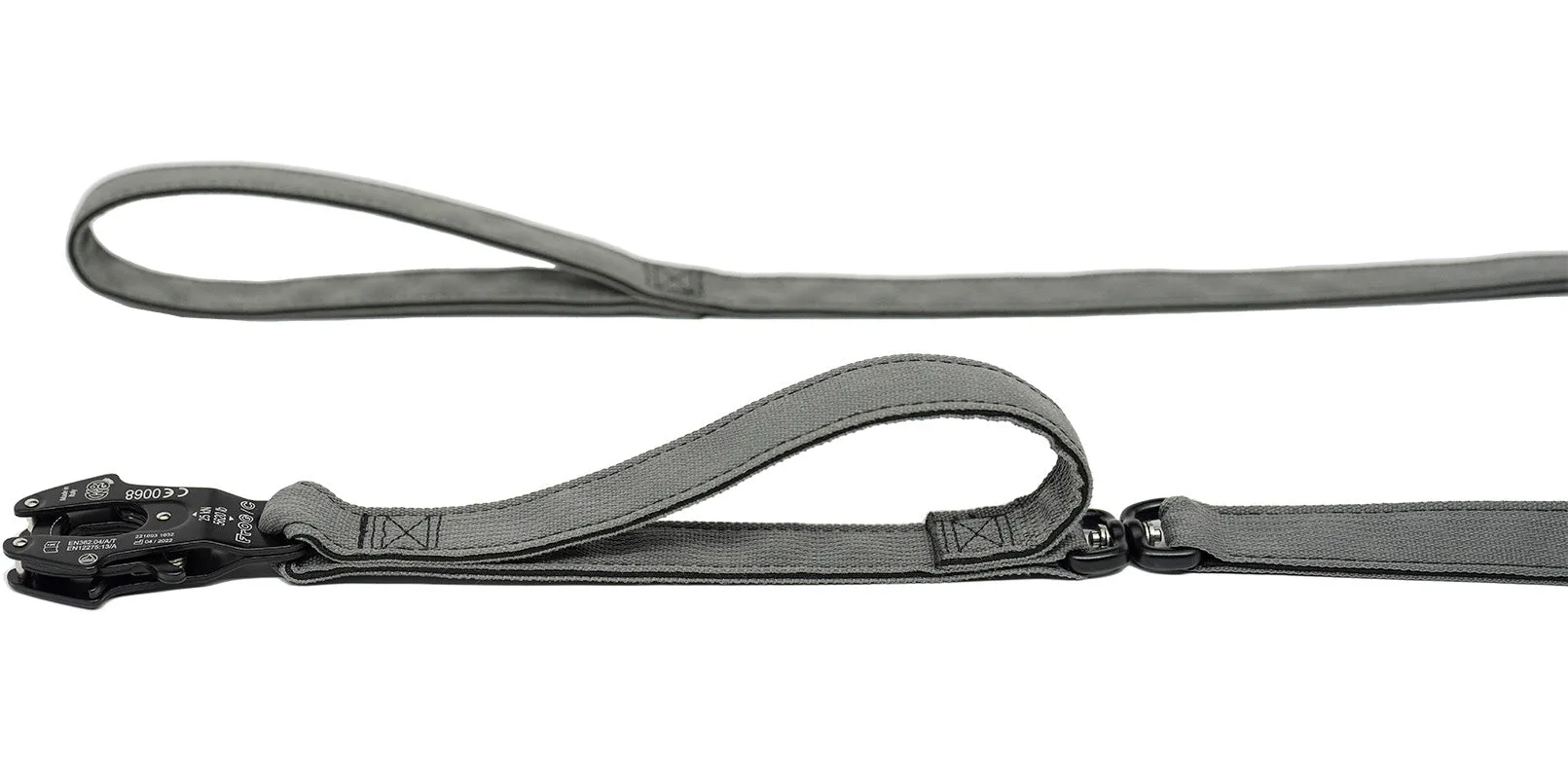
Extreme Traffic Leash with Swivel