Quick Answer
Macro lenses hunt because autofocus needs contrast to lock, and at close distances depth of field becomes extremely shallow. The fix is to stop letting the camera choose the focus point. Use single-point AF on a high-contrast edge, stop down to f/8 or f/11, or switch to manual focus and move the camera slightly instead of turning the ring.
Why Close-Up Autofocus Fails More Often Than You Expect
At 1:1 magnification, a macro lens may only have a few millimeters of depth of field. The autofocus system has to find a contrast edge inside that tiny zone, and any movement of the camera or subject pushes the plane of focus out of range. The lens then racks back and forth trying to reacquire it. This is not a defect. It is the autofocus system working as designed in a situation it was not optimized for.
The problem gets worse with low-contrast subjects like flower petals, fabric, or smooth metal. Phase-detect systems need a pattern to compare; contrast-detect systems need texture. When neither is present, the lens keeps searching. Adding light or changing the angle to catch a harder edge often solves the hunt before you touch a menu.
Three Fixes That Work Without Changing Lenses
First, set the camera to single-point autofocus and place that point on the most textured part of the subject. Do not use wide-area or eye-detection modes for macro. Second, stop down to f/8 or f/11. This widens the acceptable focus zone and gives the AF system more room to lock. Third, if your lens has a focus limiter switch, set it to the close range only. That prevents the lens from racking all the way to infinity and back, which is often the slowest part of the hunt.
When Manual Focus Is Faster and More Accurate
Manual focus is not a fallback for macro. It is often the primary technique. Set the lens to the magnification you want, then move the camera forward and back by a few millimeters until the subject snaps into focus. This is faster than turning a focus ring because you are not changing the lens-to-subject distance through the helicoid; you are changing it directly.
If your camera has focus peaking, turn it on at a low sensitivity setting. Use magnification to check critical focus, then return to the full frame to compose. For static subjects like coins, stamps, or product details, this method gives repeatable results that autofocus cannot match.
A Used Macro Lens That Avoids the Problem
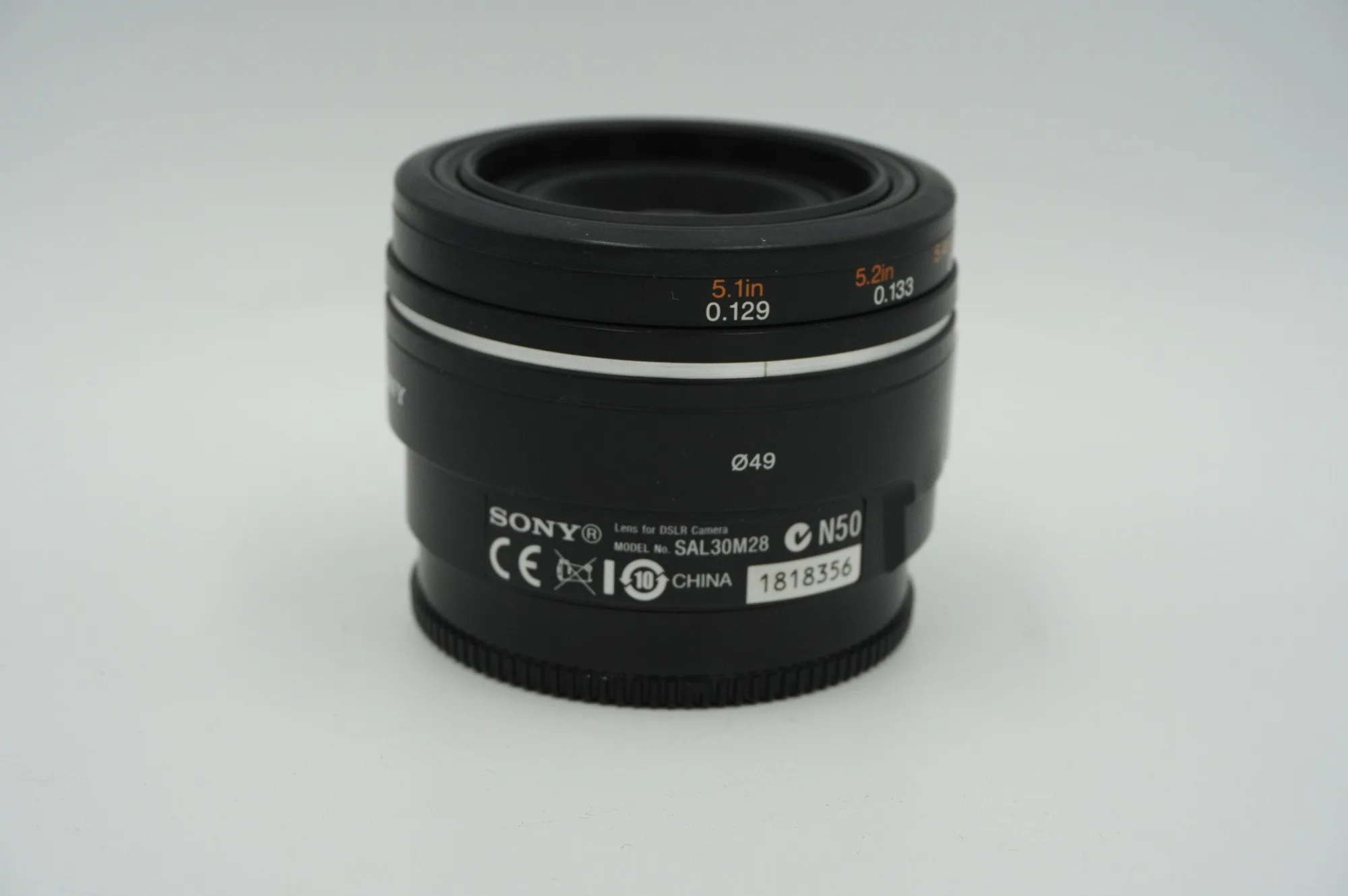
The Used Sony 30mm F2.8 Macro SAM Lens (A mount) is a simple, lightweight option for close-up work on A-mount bodies. It is in Excellent+ condition, which means the glass is clean and there are no scratches or dings, and it includes a 100-day warranty. Because it is a dedicated macro lens, it can focus continuously from infinity down to 1:1 without a separate close-up filter or extension tube. That makes it easier to set a working distance and then move the camera rather than relying on the AF system to hunt through the entire range.
A Note on Used Gear and Focus Behavior
If you buy a used macro lens, test the autofocus at close range before you rely on it. Some lenses that are in Good condition may show minor marks on the glass that do not affect image quality but can reduce contrast slightly, which makes hunting more likely. That is not a reason to avoid used gear, but it is a reason to check the return policy and the warranty. A 100-day warranty covers you if the focus mechanism turns out to be inconsistent.
Diagnosis: Symptom, Cause, Action, Stop Point
- Symptom: Lens racks back and forth and never locks: The autofocus system cannot find a contrast edge inside the shallow depth of field. This happens most often on smooth or low-contrast subjects. Action: switch to single-point AF, aim at a textured edge, and stop down to f/8. If it still hunts, go to manual focus.
- Symptom: Lens locks but focus is slightly off: The camera may be focusing on the nearest part of the subject rather than the part you want. At macro distances, a few millimeters of error is visible. Action: use magnified live view to place focus manually. Stop here if the subject is static; autofocus is not the right tool.
- Symptom: Lens hunts only at the closest focus distances: The focus limiter may be set to full range, forcing the lens to search through its entire travel. Some lenses also slow down near 1:1 to improve accuracy. Action: set the limiter to close range only. If the lens has no limiter, accept the slower lock or switch to manual focus for 1:1 work.
Product Facts
- Used Sony 30mm F2.8 Macro SAM Lens (A mount): Used Sony 30mm F2.8 Macro SAM Lens (A mount) is in Excellent+ condition and includes a 100 day warranty. Excellent+ means the glass is clean and the barrel has no scratches or dings, so you can judge focus performance without cosmetic distractions. The 100-day warranty gives you time to test close-up autofocus and manual focus before committing.
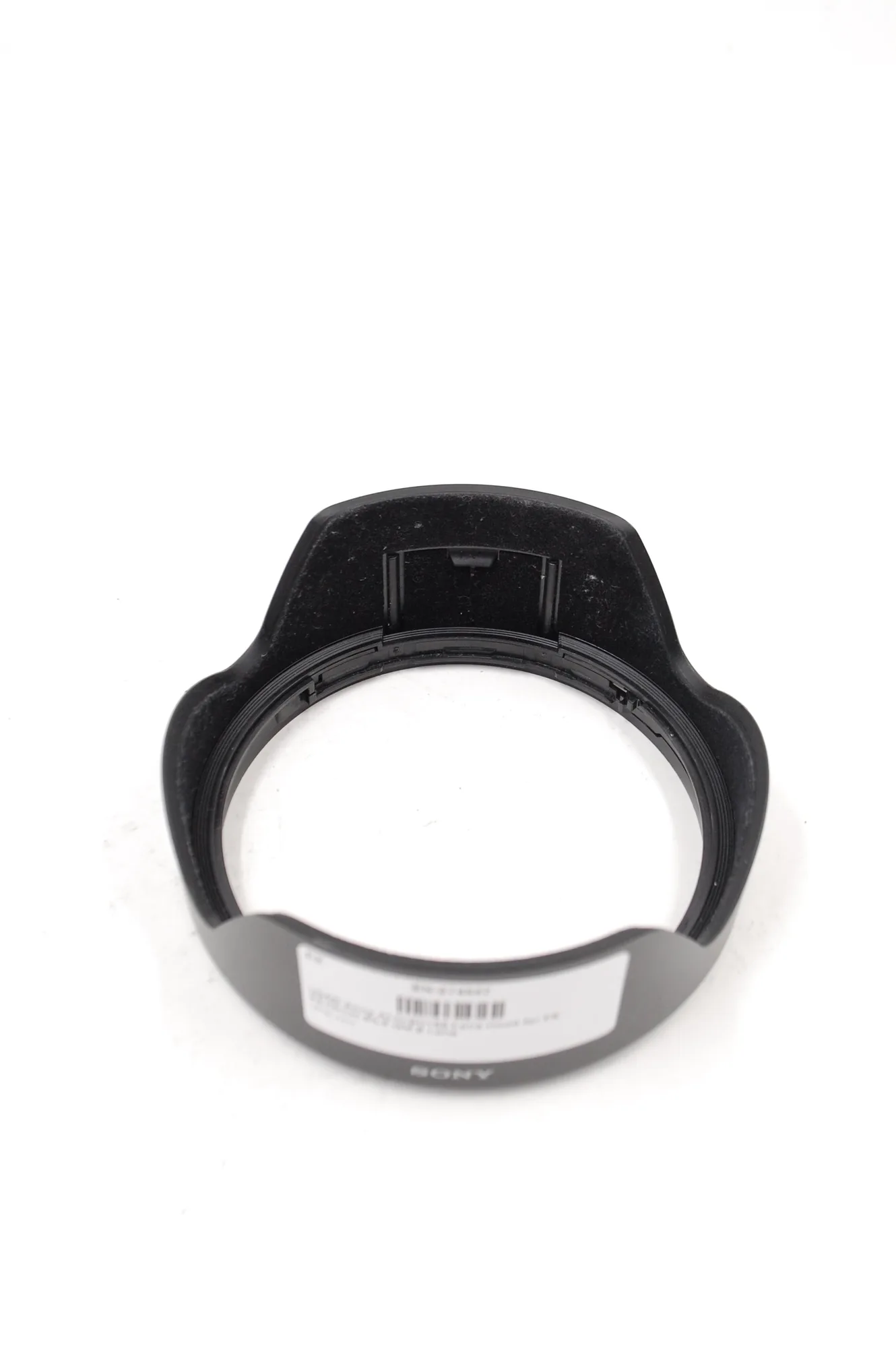
- USED Sony ALC-SH168 Lens Hood for FE 24-70mm f/2.8 GM II Lens: USED Sony ALC-SH168 Lens Hood for FE 24-70mm f/2.8 GM II Lens is the original accessory and is fully functional. A hood blocks stray light that reduces contrast, which is one of the main reasons autofocus hunts. If you shoot close-up with a zoom, this hood helps keep the AF system locked on.