Quick answer
Most needle minders fall off because the two magnets are separated by fabric that is too thick, the minder was placed near a bulky seam, or the enamel front has bent so the magnets no longer sit flat. Start by moving the minder to a single layer of fabric away from seams. If it still slides, check that the back magnet is centered and the front is not warped. A minder with a sturdy flat enamel body, like the Halloween Haunted House Magnetic Needle Minder, holds best on smooth, single-layer fabric.
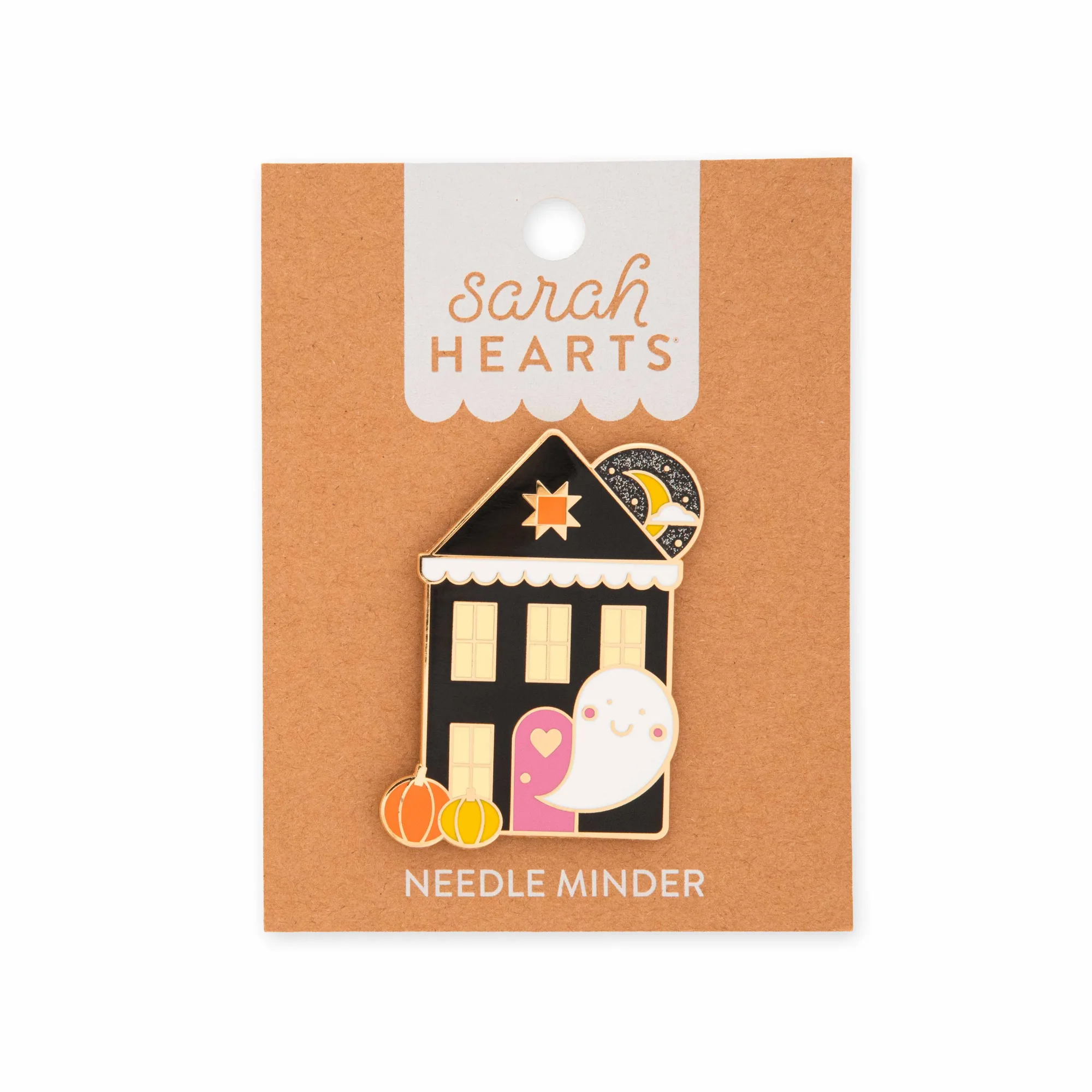
Halloween Haunted House Magnetic Needle Minder
You sit down to stitch, set your needle on the minder, and the whole thing slides off the arm of the chair. A needle minder that will not stay put is one of the most common frustrations in hand sewing, and it is almost always a physics problem rather than a bad product.
The good news is that most needle minder problems have a clear cause and a simple fix. This guide walks through the symptoms you are seeing, the likely reason, and the corrective action, so you can get back to stitching instead of chasing magnets.
Symptom: the minder slides sideways instead of holding
If your minder drifts across the fabric when you set the needle down, the magnets are probably not pinching the fabric tightly enough. That happens when the fabric is thicker than the magnet pair can compress, or when the two magnets are offset rather than stacked directly on top of each other. Thick quilting cotton, batting, or a folded hem can all create enough distance to weaken the hold.
Start by moving the minder to a single layer of fabric away from seams, hems, and quilt binding. Then check that the back magnet sits directly behind the decorative front, not off to one side. If the minder still slides on a single layer, the magnet strength or the flatness of the front is the next thing to inspect.
- Test the minder on a single layer of cotton before assuming it is broken.
- Keep at least 2.5 cm (1 inch) away from seams, zippers, and thick hems.
- Stack the back magnet directly behind the front piece, not beside it.
Symptom: the minder holds for a moment, then drops
A minder that grabs and then lets go is usually fighting a warped or bent front piece. Enamel fronts can bend if they are dropped or stored under heavy project bags, and even a slight curve lifts the magnet away from the fabric. Once the gap opens, the magnetic field weakens quickly and the minder releases.
Lay the front piece on a flat table and look for rocking or a visible gap under the edges. If it rocks, the minder is unlikely to hold reliably again. If it sits flat, the problem is more likely the back magnet being too small or too thin for the fabric you are using.
- Check flatness on a hard table, not on fabric.
- Store needle minders flat rather than loose in a project bag.
- A front that rocks on a table will not hold on fabric.
Symptom: the minder only fails on certain projects
If the same minder works on one project and fails on another, the fabric is the variable. Thick wool, layered quilting, and heavy canvas simply need more magnetic force than a lightweight cotton. This is a decision limitation, not a defect: a single small minder cannot be expected to grip every fabric weight in your stash.
Keep a second, stronger minder for heavy projects, or use a magnetic minder only on the lighter layers and switch to a pin-based minder or a magnetic tray for thick work. Matching the minder to the fabric is faster than fighting the magnet.
- Light cotton and linen: most magnetic minders work well.
- Quilting with batting: expect reduced hold, especially near seams.
- Heavy wool or canvas: use a stronger minder or a different tool.
Symptom: the minder leaves a mark or rust spot on fabric
Dark smudges or rust-colored spots usually mean moisture has reached the magnet or the metal backing. Magnets can corrode over time, especially if they are stored in a humid sewing room or washed with the project. Once corrosion starts, the surface is compromised and the magnet will continue to shed residue onto fabric.
If you see rust, stop using that minder on light-colored or heirloom projects. Clean the area with a dry cloth and store future minders in a dry place. A minder with a sealed enamel front and a clean back magnet is much less likely to mark your work.
- Keep minders away from steam irons and damp pressing cloths.
- Wipe magnets dry after handling with lotion or damp hands.
- Retire any minder that leaves rust residue on fabric.
Needle minder diagnosis checklist
- Slides on smooth fabric: The magnets are offset or the fabric is too thick for the pair. Center the back magnet behind the front and move to a single layer. If it still slides on a single layer, the magnet pair is too weak for that fabric.
- Grabs then drops: The front piece is likely warped or bent. Test flatness on a hard table and look for rocking. A rocking front will not hold reliably; replace it rather than trying to bend it back.
- Fails only on heavy projects: The fabric weight exceeds the minder's magnetic force. This is a matching problem, not a defect. Use a stronger minder for heavy work or switch to a pin-based minder.
- Leaves rust or dark marks: Moisture has reached the magnet or backing and corrosion has started. Stop using it on light or heirloom fabric and replace the minder.
Product facts that matter for hold
- Halloween Haunted House Magnetic Needle Minder: Sturdy enamel design with a friendly ghost, pumpkin accents, and a touch of sparkle, plus a coordinating Halloween Label Multipack suggestion. A flat, sturdy enamel front sits closely against the fabric, which helps the magnets pinch evenly and reduces the sliding that causes most needle minder falls.
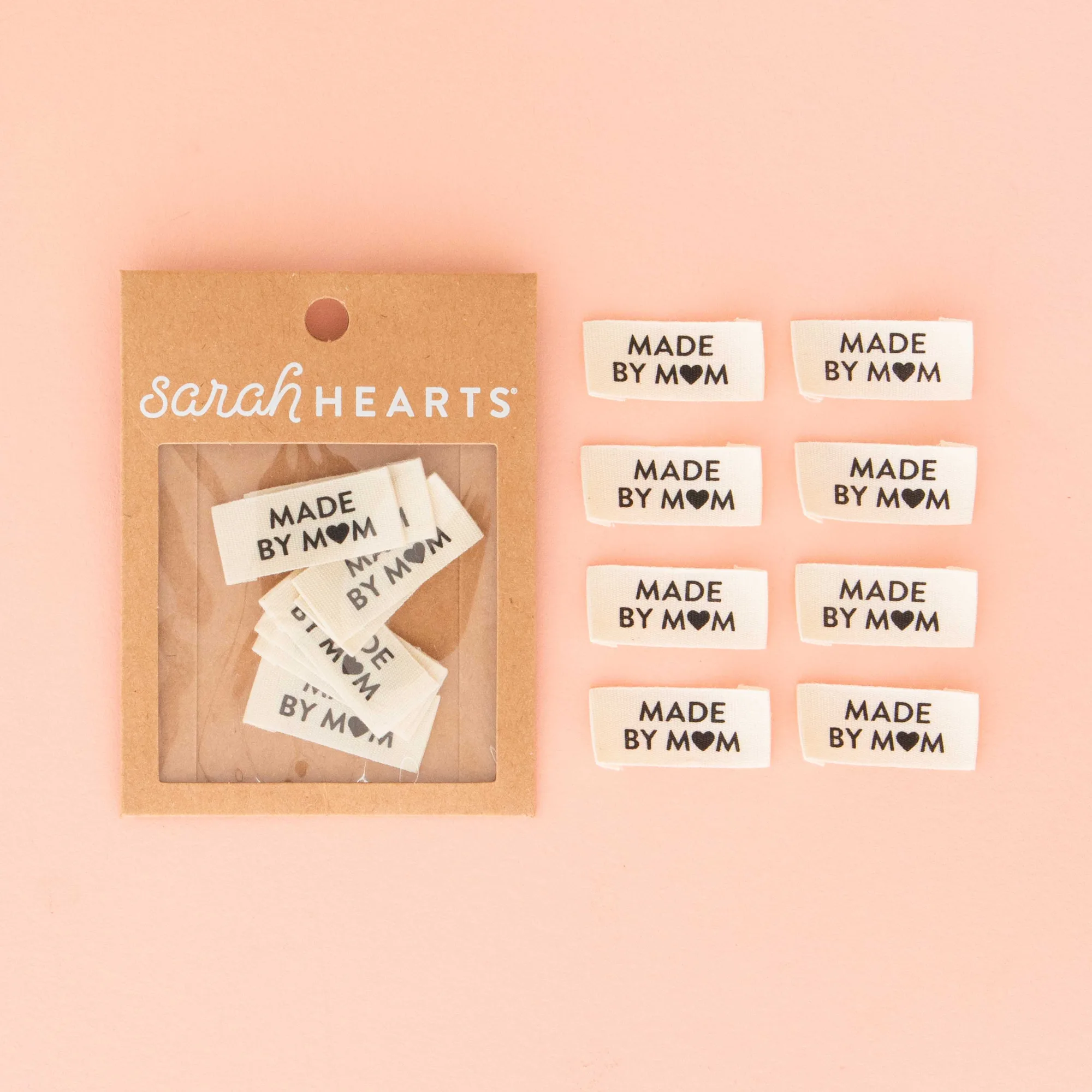
- Made by Mom Organic Cotton Sewing Labels: Soft woven labels that are fully washable and can handle the heat of the dryer, sold in packs of 8 and OEKO-TEX Standard 100 certified. If you finish projects with a minder nearby, washable labels let you clean the finished piece without worrying that the label will scratch or degrade, so you can focus on the stitching.
Most needle minder falls come down to fabric thickness, magnet alignment, or a bent front piece. Work through the diagnosis above before buying a replacement, and match the minder to the fabric weight you actually sew. A flat, sturdy minder on a single layer of cotton will hold through most projects, and knowing when to switch tools saves you from chasing a magnet that was never the right fit.