Quick answer
Scratched negatives are almost always caused by debris, rough handling, or improper storage during or after development. The fix starts with identifying the pattern of the scratch.
Common causes of scratched negatives
Scratches can appear during development if your developing tank reels have rough edges or if you force film into a misaligned reel. Dust or grit on the squeegee, drying clips, or even your fingers can also leave fine lines. After drying, improper storage—stacking negatives without sleeves or using PVC-based pages—can cause new scratches over time.
The scratch pattern tells you a lot. Long, parallel lines that repeat every frame usually come from the camera or the developing tank. Random, curved marks often happen during handling or cleaning. A single straight line across multiple frames points to a dirty pressure plate or felt light trap in the camera.
When to stop and consult a lab
If your negatives are scratched but the images are still usable, you can often polish out light surface scratches with a film cleaner or a commercial scratch remover like Edwal No-Scratch. Deep scratches that cut through the emulsion are permanent. If you're unsure about the depth, stop and ask a lab for a second opinion—further handling can make the damage worse.
Diagnosis guide for scratched negatives
- Symptom: Fine, parallel lines that appear on every frame in the same position. Likely cause: debris or a rough edge on the developing reel or camera pressure plate.
- Likely cause: Dirt or dried emulsion on the reel, or a burr on the camera's film gate. Check the reel under bright light and run a cotton swab along the film path in the camera. Clean the reel with a soft brush and warm water. Inspect the camera gate with a loupe.
- Corrective action: For light surface scratches, apply a film cleaner like Edwal No-Scratch with a soft cloth, wiping in the direction of the scratch. For deeper scratches, the damage is permanent. Test on a sacrificial negative first.
- Stop or choose another option: If the scratch is deep enough to feel with your fingernail, do not attempt to polish. The emulsion is damaged and further handling will worsen the image loss. Accept the loss or scan and digitally retouch. Prevention is the only reliable fix for deep scratches.
Product that helps prevent scratches
-
Print File 35-7B Archival Storage Negative Pages - 25 Pack: Archival quality polyethylene – NO PVC – safe for long term storage. PAT passed. Strong continuous seams prevent negative hang up. Using archival pages like these eliminates the risk of PVC off-gassing and rough edges that can scratch negatives during storage.
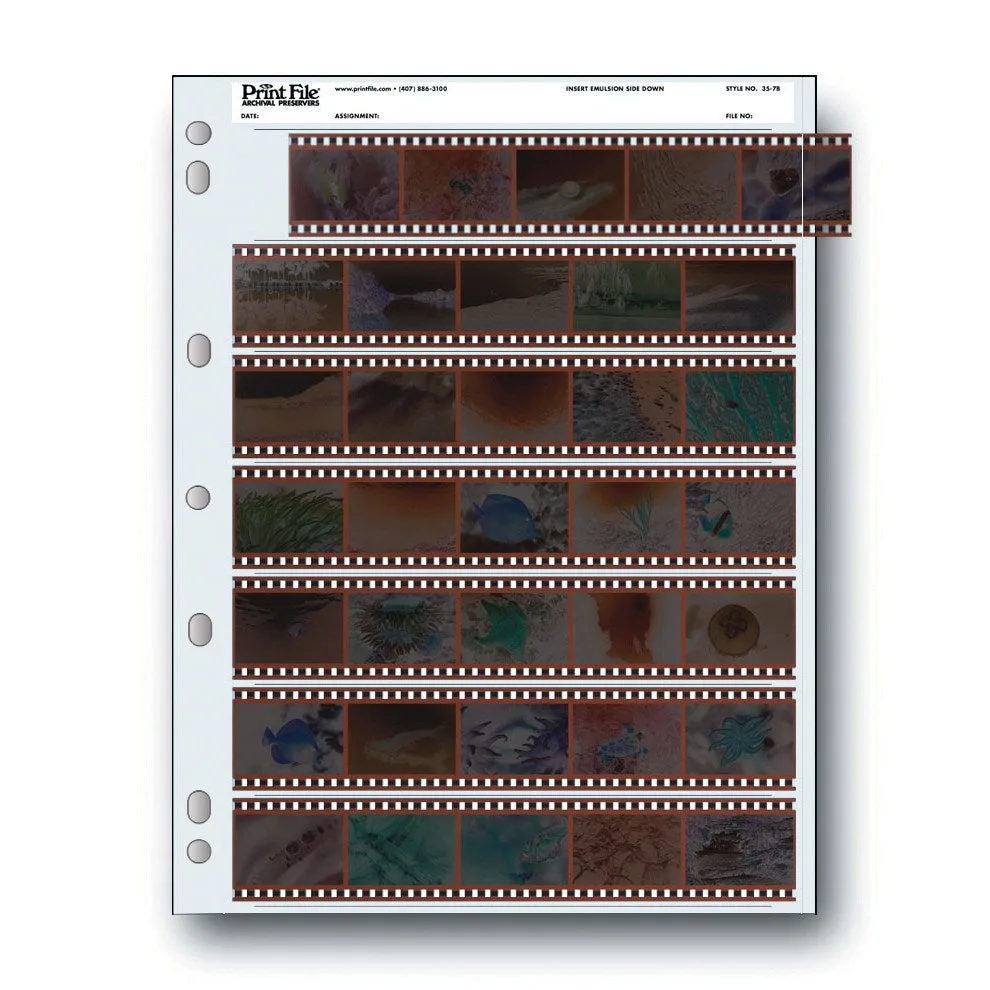
Print File 35-7B Archival Storage Negative Pages - 25 Pack