Quick answer
If your rabbit is chewing furniture, digging at carpets, or pacing the same route, a wooden foraging puzzle gives that energy a job. Start with five to ten minutes once a day, place a few pellets or a small piece of a safe chew inside, and let your rabbit work it out. If the destructive behavior continues after two weeks of daily puzzle time, the cause is likely environmental or medical rather than boredom alone.
Symptom: What Boredom Actually Looks Like in a Rabbit
Boredom in rabbits rarely looks like a sad, still animal. It looks like a rabbit that chews baseboards, pulls at carpet fibers, tips food bowls, or nips at cage bars. These are not personality flaws. They are a rabbit with strong natural drives and nothing to direct them toward. A rabbit that suddenly starts chewing furniture after months of calm behavior may have a different problem, such as dental pain or a change in routine, so note when the behavior started before assuming it is boredom.
Likely Cause: Why a Rabbit Chews and Digs
Rabbits are foragers by nature. In the wild they spend much of their waking time searching for food, and their teeth grow continuously, so gnawing is a need rather than a hobby. A bowl of pellets delivered at the same time each day removes the search. The rabbit still has the urge, so it redirects to whatever is available: skirting boards, sofa legs, and houseplants. A wooden foraging puzzle works because it restores the search step. Your rabbit has to nose, lift, and dig to reach food, which uses the same muscles and problem-solving that wild foraging would.
Corrective Action: How to Introduce a Wooden Foraging Puzzle
Start with the puzzle empty for a day. Let your rabbit sniff it, climb on it, and push it around without any pressure. The next day, place two or three pellets in the easiest compartment and leave the harder sections empty. Once your rabbit clears those reliably, add food to one more section. This gradual approach prevents frustration, which is the main reason rabbits abandon a new puzzle. Keep sessions short at first, and always supervise the first few uses so you can see whether your rabbit is solving the puzzle or just chewing the wood. If your rabbit ignores the puzzle entirely, try smearing a tiny amount of banana on one corner to create interest, then fade that out.
Pairing the Puzzle With Other Rabbit Boredom Solutions
A puzzle is one tool, not a complete enrichment plan. Rotate it with other activities so it stays novel. Offer a safe chew item on the days the puzzle is put away, and give your rabbit time outside the enclosure to run, jump, and explore. Rabbits that get free-roam time and a rotating set of chews are far less likely to fixate on furniture. If you have a guinea pig, the same principle applies: a foraging puzzle guinea pig owners use for rabbits often works, but adjust the food inside to guinea pig-safe pellets and vegetables.
When to Stop and Choose Another Option
Stop using the puzzle if your rabbit shows signs of dental discomfort, such as drooling, dropping food, or eating less. A puzzle will not fix a medical problem. Stop if your rabbit becomes frustrated and starts attacking the puzzle rather than solving it; in that case, simplify the puzzle or switch to a chew toy that offers immediate satisfaction. If two weeks of daily puzzle time plus free-roam exercise does not reduce the destructive chewing, the issue is likely environmental, such as too small a living space, or medical. At that point, consult a rabbit-savvy vet rather than buying more toys.
Diagnosis: Is a Puzzle the Right Fix?
- Chews furniture only when alone: This points to boredom or separation-related stress rather than a permanent habit. A puzzle introduced before you leave the room can give your rabbit something to do during alone time. Try a puzzle for two weeks, paired with a safe chew.
- Chews furniture even when you are present and active: This is less likely to be simple boredom. Check whether your rabbit has enough space, whether the diet is balanced, and whether a recent change, such as a new pet or moved furniture, has caused stress. Address the environment first; a puzzle alone will not solve this.
- Drools, drops food, or eats less while chewing: These are signs of dental pain, not boredom. A puzzle could make the problem worse by encouraging more chewing on painful teeth. See a rabbit-savvy vet before buying any new chew or puzzle.
- Ignores the puzzle after several introductions: Some rabbits prefer chewing to problem-solving. That is normal. Switch to a willow or clover chew that delivers immediate feedback instead of a multi-step puzzle. Choose a chew toy rather than forcing the puzzle.
Products That Fit This Approach
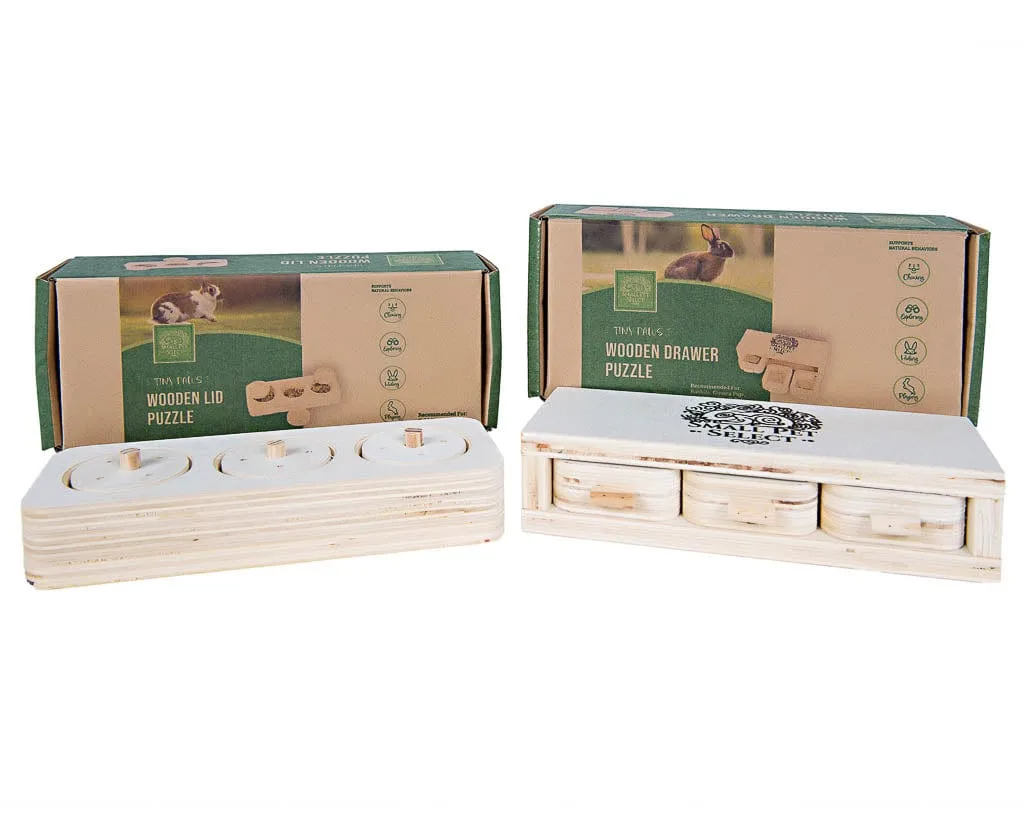
- Tiny Paws - Wooden Foraging Puzzle and Wooden Drawer Puzzle Bundle: The Tiny Paws Wooden Foraging Puzzle and Wooden Drawer Puzzle Bundle combines two enrichment toys in one set, made from pet-safe natural wood. Having two puzzles lets you rotate them so your rabbit does not lose interest, and the bundle costs less than buying each separately.
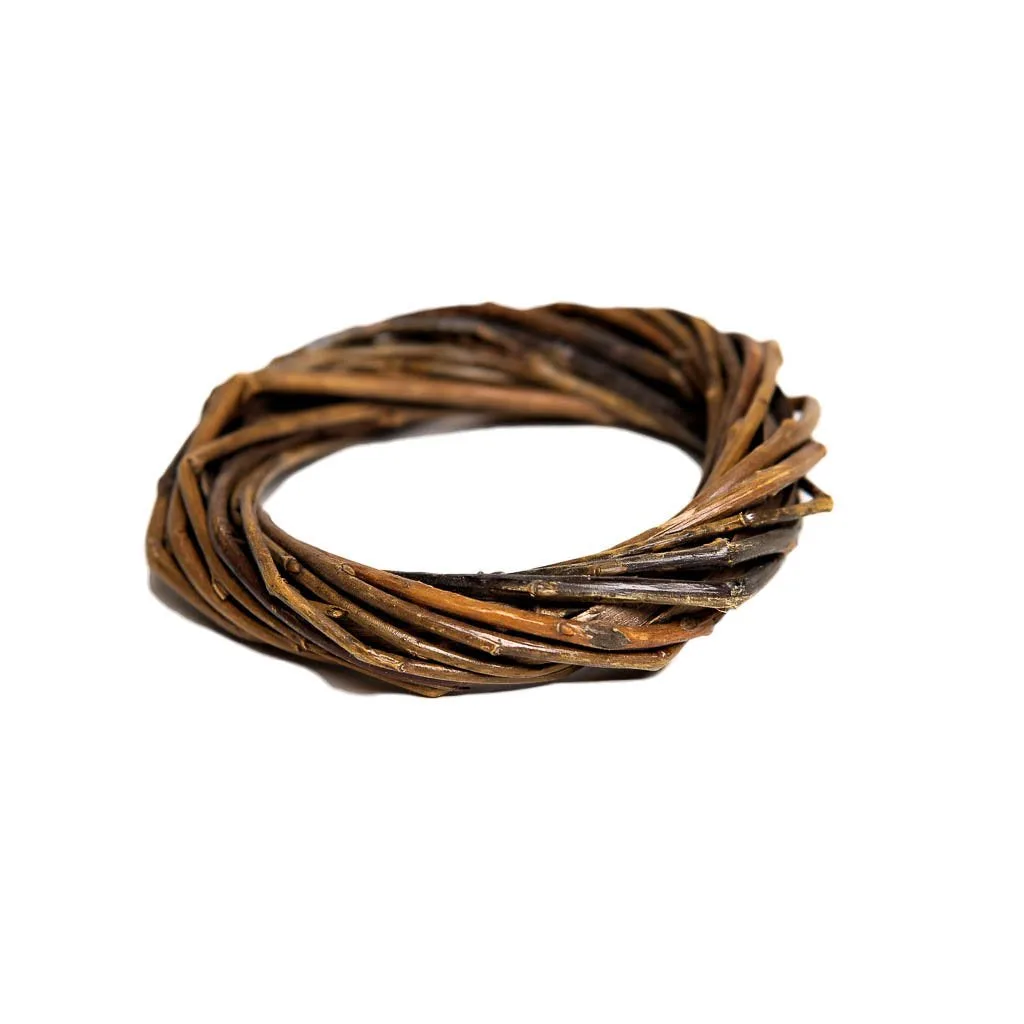
- Tiny Paws - Willow Chew Ring: The Tiny Paws Willow Chew Ring is made from 100% all-natural, unpeeled willow and is designed to satisfy a pet's instinct to gnaw while helping trim teeth. Use this as a companion chew on days when the puzzle is put away, so your rabbit always has a safe outlet for gnawing.
- Clover Ring: The Clover Ring is a hand-made, pesticide-free clover chew with a little crunch and chew, suitable for rabbits, hamsters, guinea pigs, and gerbils. A small, low-cost chew like this is useful for testing whether your rabbit prefers chewing to problem-solving before you invest in a larger puzzle.