Quick Answer
To fix curling rug corners, start by unrolling the rug in the opposite direction, then use rug tape or corner weights to hold it flat. If the curling persists after a week, the rug may have a permanent crease or damaged backing, and it's time to consider a replacement.
Why Rug Corners Curl
Rug corners typically curl because of the way the rug was rolled for shipping or storage. The fibers and backing develop a memory, especially in flatwoven rugs, which are more flexible and prone to bending. Humidity and temperature changes can also make the backing expand or contract, worsening the curl.
Another common cause is the rug's placement. If the rug sits on a slippery or uneven floor, or if it's constantly walked on in the same direction, the edges can gradually lift. In some cases, the curling is a sign of a manufacturing defect or a worn-out backing, which no amount of flattening will fix.
When to Stop and Choose Another Option
If your rug is old, has visible damage to the backing, or has been curling for months despite your best efforts, it's probably not worth the struggle. A rug that won't lie flat is a trip hazard, and no amount of tape or weights will restore a broken backing. In that case, replacing the rug is the safer and more practical choice.
Also, if the rug is new and curling severely, it may be a defect. Contact the manufacturer or retailer for a replacement or refund before attempting permanent fixes.
Diagnose and Fix Your Rug's Curling Corners
- Symptom: The corners of your rug lift up, creating a trip hazard or an unsightly curl. The curl may be more pronounced in high-traffic areas or after the rug has been washed.
- Likely Cause: The rug was rolled tightly for shipping or storage, causing the fibers and backing to retain a curl. Humidity, temperature changes, or a slippery floor can worsen it. In flatwoven rugs, the lack of a thick pile makes them more prone to folding. If the rug is new, the curl is often just a 'shipping memory' that can be corrected.
- Corrective Action: 1. Unroll the rug and lay it flat in a warm room. 2. Roll it in the opposite direction of the curl and leave it for 24-48 hours. 3. Place heavy books or furniture on the corners for a few days. 4. Use double-sided rug tape or corner weights to hold the edges down. 5. If the rug is washable, rewash and dry it flat, then follow the same flattening steps. Give the rug at least a week to settle before deciding it's a lost cause.
- When to Stop or Choose Another Option: If the curling persists after a week of flattening attempts, or if you notice cracks in the backing, fraying edges, or a strong odor, the rug has permanent damage. Stop trying to fix it and consider replacing it with a new, flat-laying rug. A rug that won't lie flat is a safety hazard; replacement is the safer choice.
A Rug That Stays Flat
-
Samara Soft Grey Rug: The Samara Soft Grey Rug is water-resistant, stain-resistant, and fully machine-washable. A machine-washable rug is less likely to develop permanent creases from washing, and its water-resistant backing helps prevent moisture-related curling.
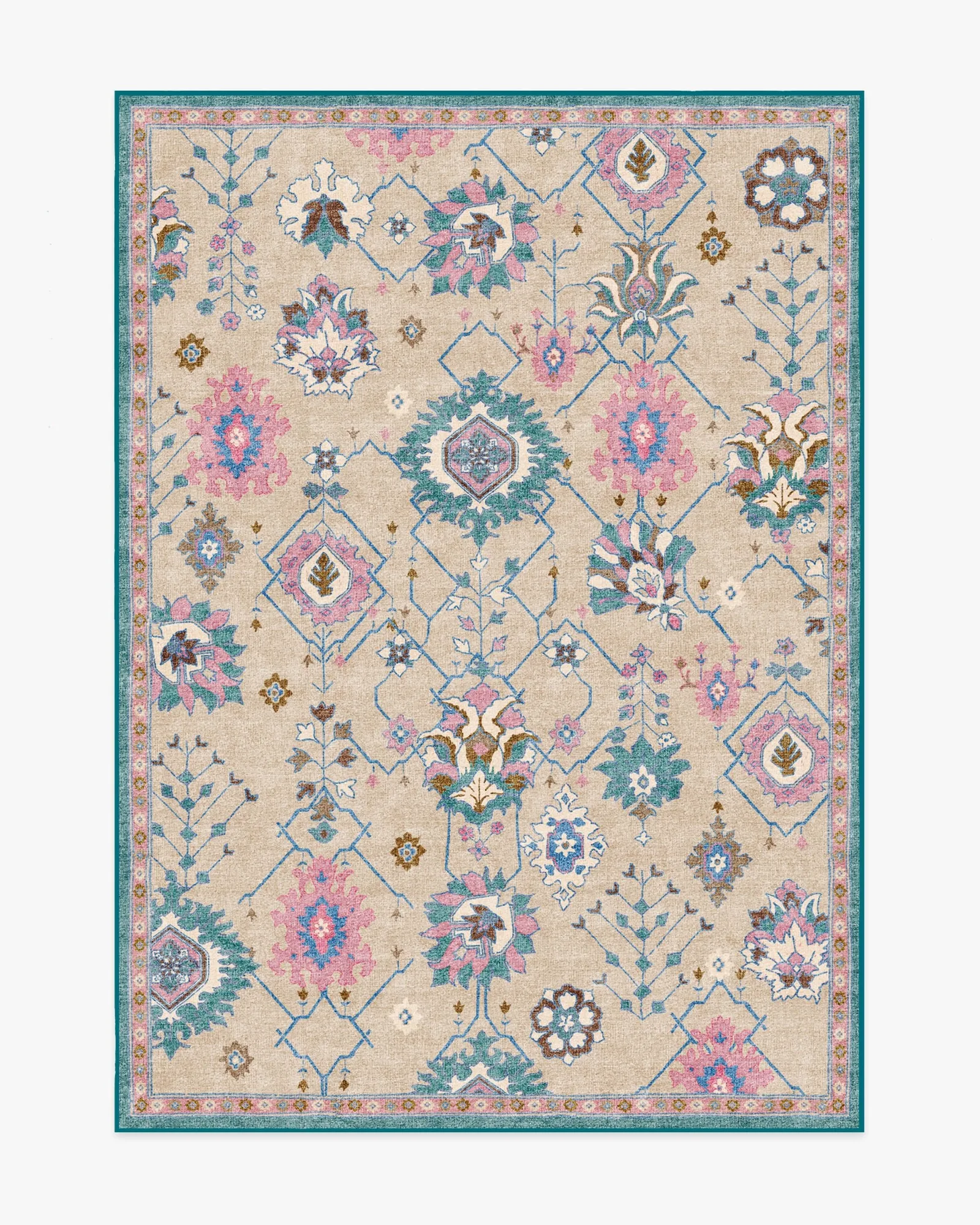
Samara Soft Grey Rug