Quick answer
A thong rides up when the back panel is too narrow for your body or the waistband sits too low, so the fabric migrates inward with movement. The fix is usually one size up, a wider gusset, or a higher-rise cut. If the band leaves marks or the gusset twists after two hours, stop adjusting and change the style.
Check the waistband position first
Most thong fit problems start at the waist. If the band sits below your hip bone, every step pulls the back panel downward and inward. A thong should rest on or just above the hip bone, parallel to the floor. Pull it up so the front and back are level, then walk ten steps. If the back panel slides down again, the rise is too low for your torso.
Measure the gusset, not just your hip
A thong sizing guide that only lists hip measurement misses the part that causes riding up. The back panel needs to be wide enough to stay put under movement. Measure the width of a thong that stays comfortable and compare it to the one that rides up. If the riding-up pair is narrower by more than a finger width, size up or choose a cut with a wider back.
Match the cut to your movement
A low-rise thong with a thin string back is the most likely to migrate during walking, stairs, or sitting. A higher-rise cut with a slightly wider back panel distributes tension better. If you wear thongs for workouts or long days, choose a style with more coverage at the back rather than a minimal string.
When fabric choice makes it worse
Slippery fabrics slide against outer clothing, which can pull a thong out of place. Silk and silk-blend knickers feel smooth but may need a higher rise to stay put. Bamboo and cotton blends grip slightly better. Neither is wrong; just match the fabric to how much you move.
Diagnose your thong fit problem
- Symptom: back panel disappears between your cheeks within minutes: Likely cause: the back panel is too narrow or the rise is too low. Corrective action: size up one step or switch to a higher-rise cut with a wider back. If it still happens after one size up, the cut is wrong for your body, not the size.
- Symptom: waistband rolls or leaves red marks: Likely cause: the band is too tight or sitting too low. Corrective action: move the band to rest on or above the hip bone and check that it lies flat, not twisted. If marks remain after repositioning, the band size is too small.
- Symptom: constant adjusting all day: Likely cause: the fabric is too slippery for your outer clothing or the style is too minimal for your movement level. Corrective action: try a bamboo blend or a style with more back coverage. If you still adjust more than twice a day, choose a different style rather than forcing this one.
Products that address common fit causes
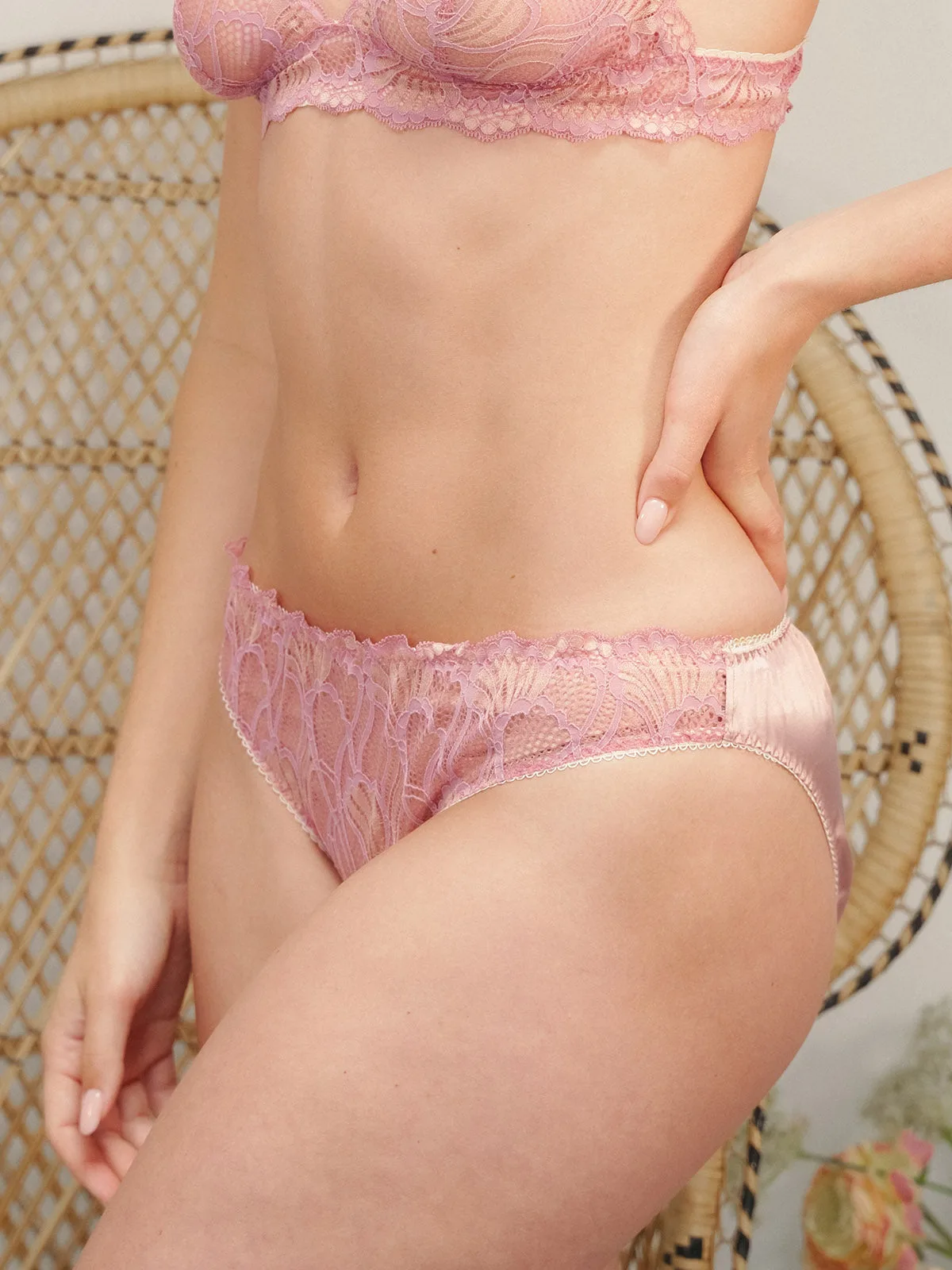
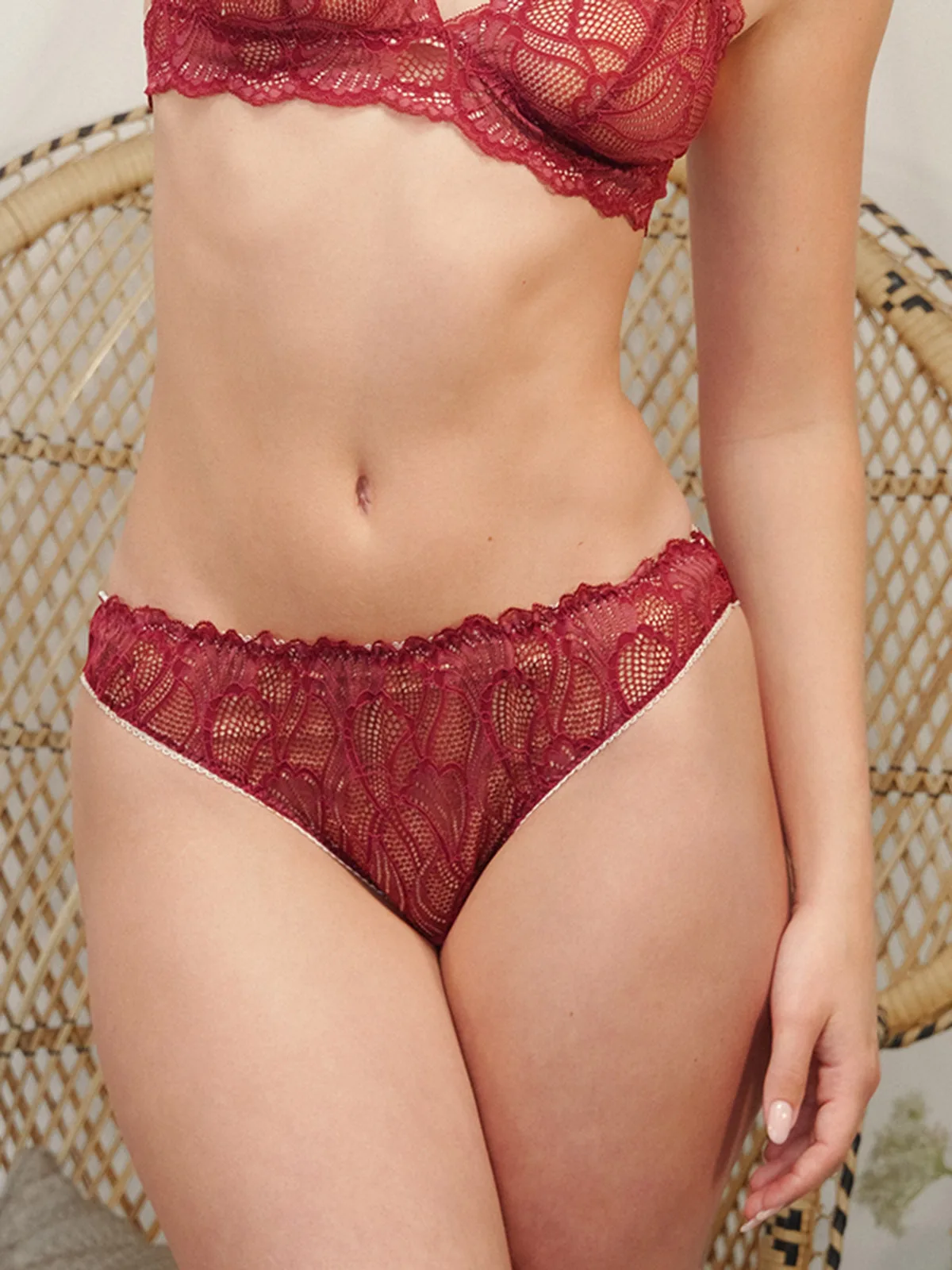
- Beneath The Bloom Rose Silk Knicker: Handcrafted in the Brighton studio from dusty rose silk with matching Oeko-Tex certified lace, finished with rose elastic at the waist and legs. The elastic at both the waist and leg openings adds grip points that reduce sliding, which helps if your thong rides up because the edges are too smooth.
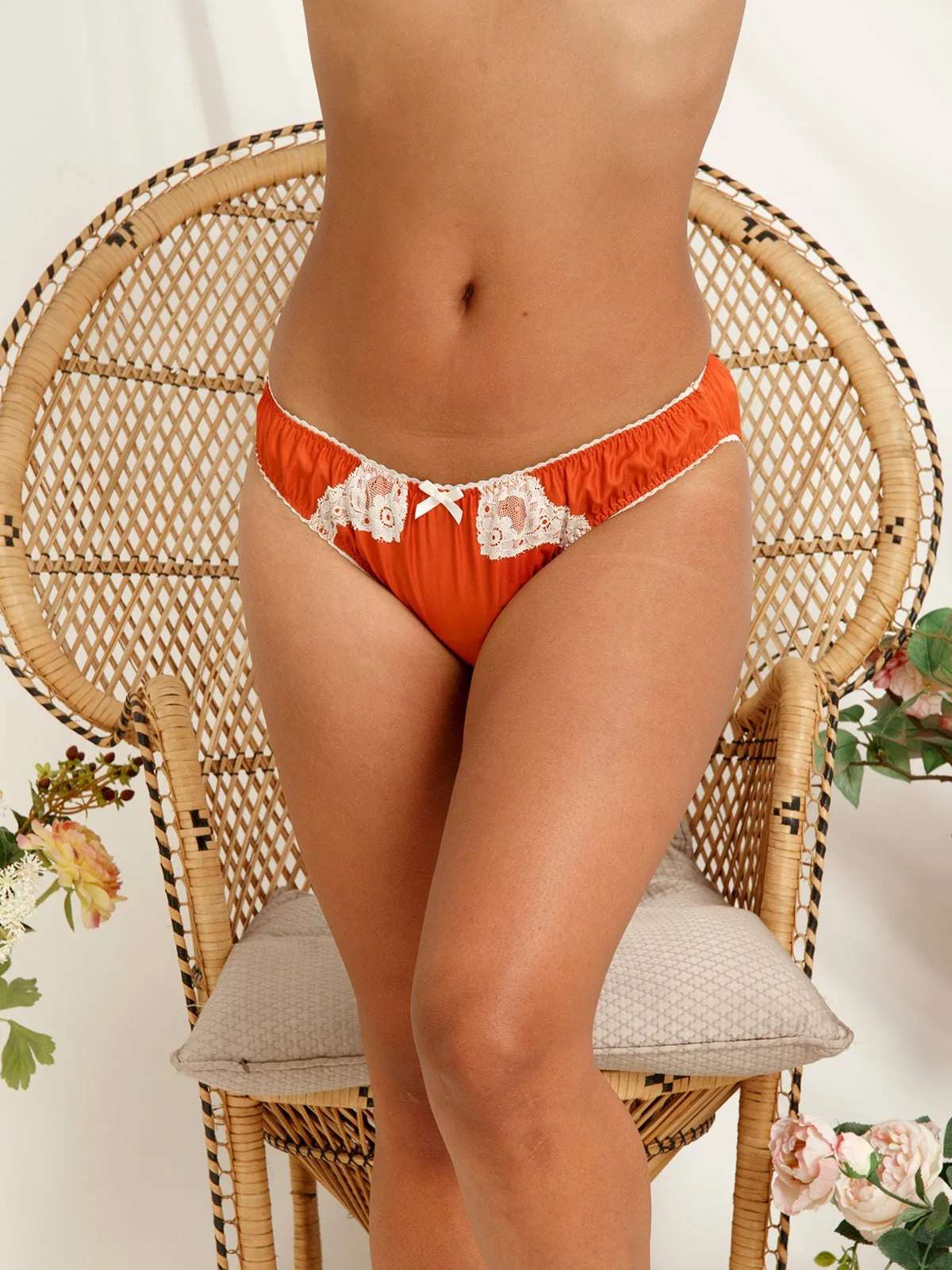
- Bella Orange Organic Bamboo Silk Knicker: Made with 100% organic bamboo fibres, dyed with Oeko-Tex certified dyes, and trimmed with floral English lace from The Cluny Lace Company. Bamboo has more surface texture than silk, so it grips outer clothing less and stays in place better during walking or sitting.